
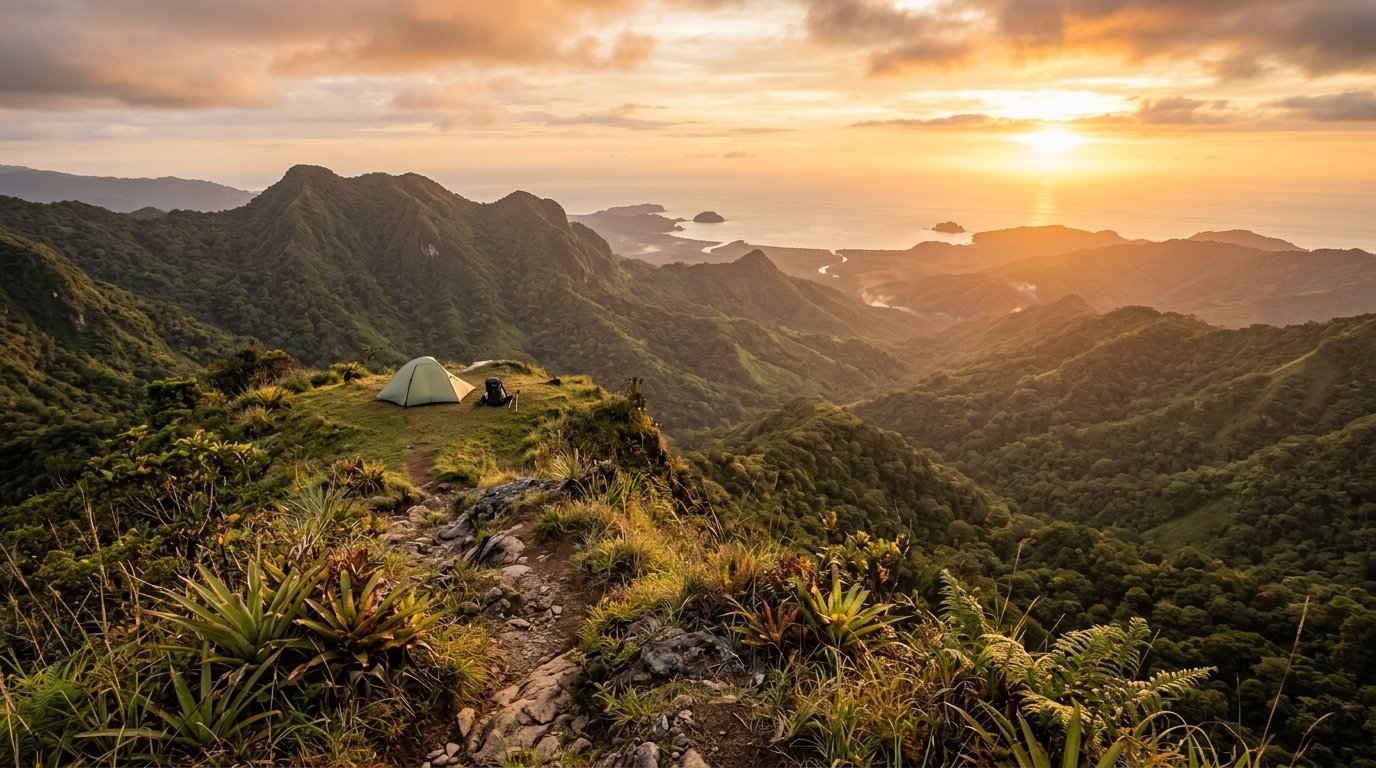
1. 🏕️ The Short Answer
Wild and dispersed camping in Panama falls into a legal grey area; while not strictly illegal on public land, true public land is scarce, and setting up camp is heavily restricted by private property boundaries, protected national parks, and autonomous indigenous territories. For foreign tourists and van lifers, wild camping is generally tolerated on public beaches and remote roadsides, but due to safety concerns and private land rights, utilizing official national park campsites, eco-lodges, or seeking permission to park on private property is highly recommended.
2. 🌲 Wild & Dispersed Camping Rules
- Is camping outside official campsites legal? There is no overarching national law banning wild camping, but land in Panama is almost entirely categorized as private property, government-protected land, or indigenous territories (Comarcas). If a beach or stretch of land is truly public, camping is usually tolerated. However, if the land is fenced (even without a house in sight), it is private property, and camping there is trespassing.
- Duration and distance rules: Panama does not have specific distance rules (e.g., camping a certain number of feet from roads or water). There are no official duration limits for wild camping on public land, but tourists are advised to limit stays to 1-2 nights to avoid drawing unwanted attention.
- Enforcement: Enforcement by police is generally rare unless a private landowner complains. However, local police or SENAN (the national aeronaval service) patrol public beaches and may ask you to pack up and move along purely for your own safety, as petty theft against tourists in isolated areas is a known issue.
3. 🏞️ National Park & Protected Area Rules
- Permit systems: Panama’s national parks and protected areas are managed by the Ministry of Environment (MiAmbiente). To camp in parks like Parque Nacional Volcán Barú or Parque Nacional Altos de Campana, tourists must pay a small entrance and camping fee.
- Designated sites and booking: Camping inside national parks is strictly limited to designated ranger station areas or specific trail campsites. It is strongly recommended (and sometimes explicitly required) to email the regional MiAmbiente office in advance to request permission and reserve a spot, followed by registering in person with the park rangers upon arrival.
- Seasonal closures: Panama experiences a severe rainy season from May to November. During this time, trails and backcountry camping areas are frequently closed without notice due to dangerous mudslides, impassable roads, and flash flooding.
4. 🚐 Van Life & Overnight Vehicle Sleeping
- Is overnight vehicle sleeping legal? Sleeping in your vehicle is generally tolerated in Panama. There are no federal laws prohibiting you from spending the night in a car or campervan in a public space, provided you are legally parked.
- Parking vs. Camping: While overnight parking is fine, “camping” in a parking lot is not. If you set up awnings, pull out camping chairs, or cook outside your vehicle in a public lot or gas station, you will likely be asked to leave. Keep a stealthy, low profile.
- Designated overnight areas: Panama does not have a network of official public rest stops or RV parks. Overlanders typically rely on 24-hour gas stations (like Terpel or Puma), paid eco-hostels that rent out driveway space, or municipal lots. Pro-Tip: It is a very common and highly recommended practice for tourists to ask the local Policía Nacional if they can park overnight outside the police station for security. The police are generally very accommodating to foreign travelers.
5. 🔥 Campfires & Practical Restrictions
- Campfire rules: Open campfires are universally prohibited inside Panama’s National Parks. Outside of parks, fires are highly discouraged and heavily restricted during the dry season (mid-December to April) due to the extreme risk of wildfires. Always use a portable gas stove for cooking rather than relying on a wood fire.
- Key no-camp zones:
- The Darién Gap: This remote jungle region bordering Colombia is heavily militarized by border police (SENAFRONT) and controlled by cartels and smugglers. It is extraordinarily dangerous and strictly off-limits for recreational backcountry travel or camping.
- Indigenous Comarcas: Autonomous regions like Guna Yala (San Blas), Ngäbe-Buglé, and Emberá-Wounaan have their own laws. You absolutely cannot wild camp in these territories without explicit prior permission from the local chief (Sahila) or community, which usually requires paying a fee or renting their specific accommodations.
- Urban Centers: Avoid attempting to stealth camp in Panama City or Colón due to high crime rates in certain neighborhoods and heavy traffic enforcement.
6. 🔗 Official Sources & Links
For the most accurate and up-to-date information regarding park fees, trail closures, and camping permits, travelers should consult the official environmental authority and tourism board:
- MiAmbiente (Ministry of Environment) – The official government body managing all national parks, protected areas, and camping permits.
- Visit Panama – The official tourism board of Panama, offering safety guidelines and regional travel advice.
Disclaimer: Land-use regulations, national park access, and local safety conditions in Panama change frequently. Always verify current rules, seasonal weather warnings, and security conditions with official local authorities or park rangers immediately prior to your trip.

Adrenaline junkie with a passion for exploring off-the-beaten-path destinations and finding unique ways to stay active. Expect stunning scenery, challenging workouts, awesome travel tips and a whole lot of fun. Let’s get sweaty and explore the world together!