
1. 🏕️ The Short Answer
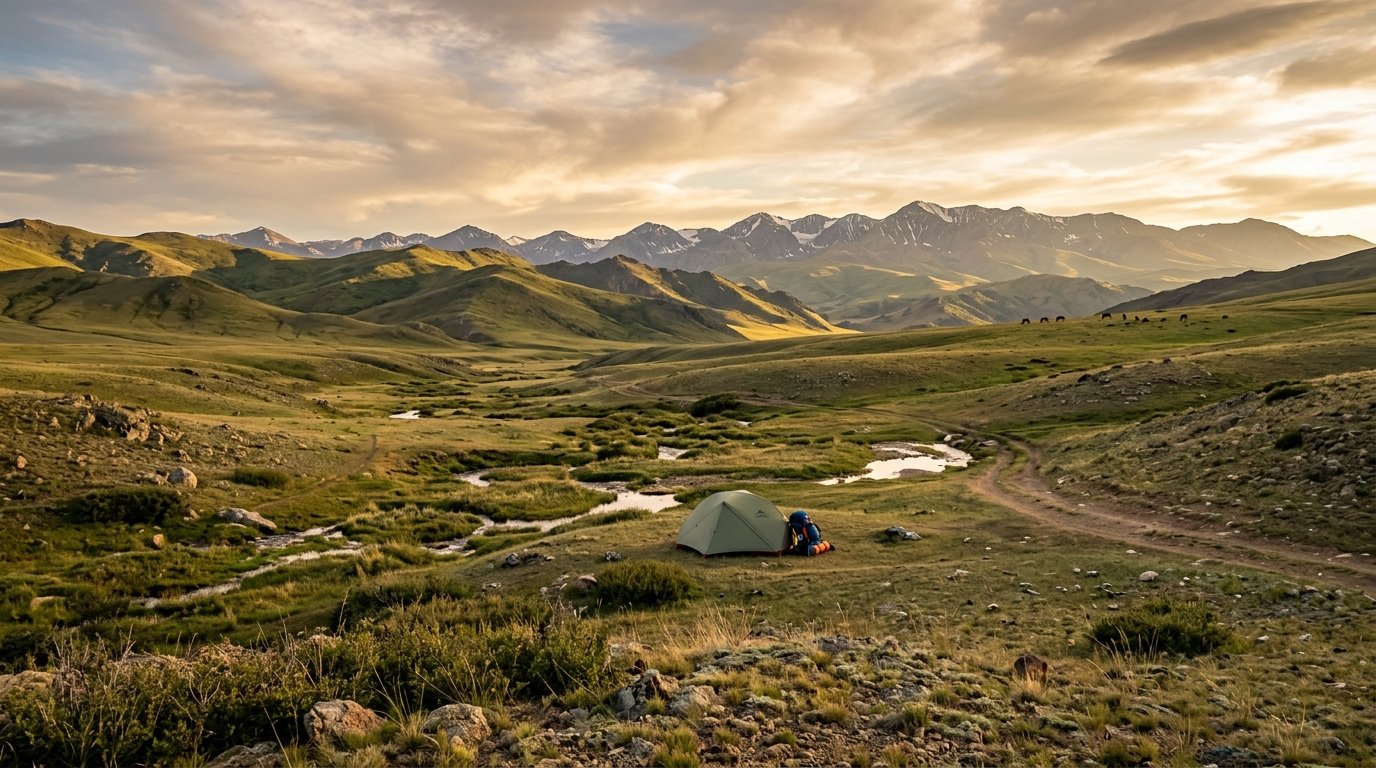
Wild and dispersed camping is completely legal, widely practiced, and highly encouraged for foreign tourists in Mongolia. Thanks to a deeply rooted culture of nomadic freedom and vast stretches of unfenced, state-owned land, Mongolia is one of the most accessible countries in the world for overlanding and backcountry camping without the fear of fines or restrictions.
2. 🌲 Wild & Dispersed Camping Rules
- Legality on public land: Wild camping outside of official campsites is fully legal for tourists. In fact, it is the standard way to travel, as formal Western-style campgrounds are virtually non-existent in the countryside.
- Duration and distance rules: There are no strict legal limits on how many nights you can stay in one spot. However, safety and environmental best practices dictate setting up camp at least 100 meters away from lakes and rivers. You should also never camp in dried riverbeds due to the high, unpredictable risk of flash floods.
- Enforcement: Because wild camping is a protected cultural norm, there is no police enforcement against pitching a tent or parking a camper. You will not be bothered by authorities. It is highly likely, however, that local nomadic herders will approach your camp to say hello, which is considered standard countryside etiquette rather than an act of enforcement.
3. 🏞️ National Park & Protected Area Rules
- Permit systems: While camping itself is free, entering National Parks and Protected Areas generally requires paying a small entry fee at the park gate. More importantly, parks located in frontier regions—such as Altai Tavan Bogd National Park—legally require a military border permit that must be obtained well in advance.
- Designated sites and booking: Most general national park land remains open for wild camping, but in specific “Strictly Protected” ecological zones, rangers may require you to pitch your tent in designated locations. Advance campsite booking is not required in Mongolia; camping is strictly first-come, first-served.
- Seasonal closures: Entire area closures are rare, but strict regional fire bans are frequently enacted by park rangers during the dry season and forest fire season to protect the fragile steppe.
4. 🚐 Van Life & Overnight Vehicle Sleeping
- Sleeping in vehicles: Sleeping in a 4×4, camper van, or rooftop tent is completely legal anywhere you can safely and legally drive.
- Parking vs. Camping: Mongolian law makes no practical distinction between parking and camping. If you pull off a dirt track into the open steppe to sleep for the night, you are entirely within your rights.
- Designated overnight areas: There is no network of paved rest stops or RV parks, largely because the vast majority of the country’s rural roads are unpaved dirt tracks. If overlanders want amenities like hot showers, toilets, or cooked meals, they can pay a small fee to park and sleep at a tourist “Ger camp” (traditional yurt camps that serve as rural hotels).
5. 🔥 Campfires & Practical Restrictions
- Campfire rules: Open fires are generally allowed on the open steppe, but they are strictly prohibited inside National Parks. Furthermore, seasonal fire bans are aggressively enforced country-wide during dry periods due to the severe risk of fast-spreading steppe and forest fires. Note that firewood is extremely scarce in Mongolia; locals and travelers alike typically burn dried livestock dung.
- No-camp zones: Never pitch a tent or park your vehicle directly next to an ovoo (a sacred shamanic pile of rocks or wood usually found on hilltops and passes). Additionally, avoid camping right next to a nomad’s ger (yurt) without greeting them and asking for permission, and stay out of sensitive military border-zone areas unless you are carrying the correct permits.
6. 🔗 Official Sources & Links
To verify the latest entry rules, travel advisories, and regional park restrictions, please consult:
Disclaimer: Land-use laws, national park entry fees, and border permit requirements can change. While wild camping is fundamentally ingrained in Mongolian culture, foreign travelers should always verify current regional regulations, weather alerts, and fire bans with local authorities or their vehicle rental company before venturing into the backcountry.

Adrenaline junkie with a passion for exploring off-the-beaten-path destinations and finding unique ways to stay active. Expect stunning scenery, challenging workouts, awesome travel tips and a whole lot of fun. Let’s get sweaty and explore the world together!