
1. 🚦 The Short Answer
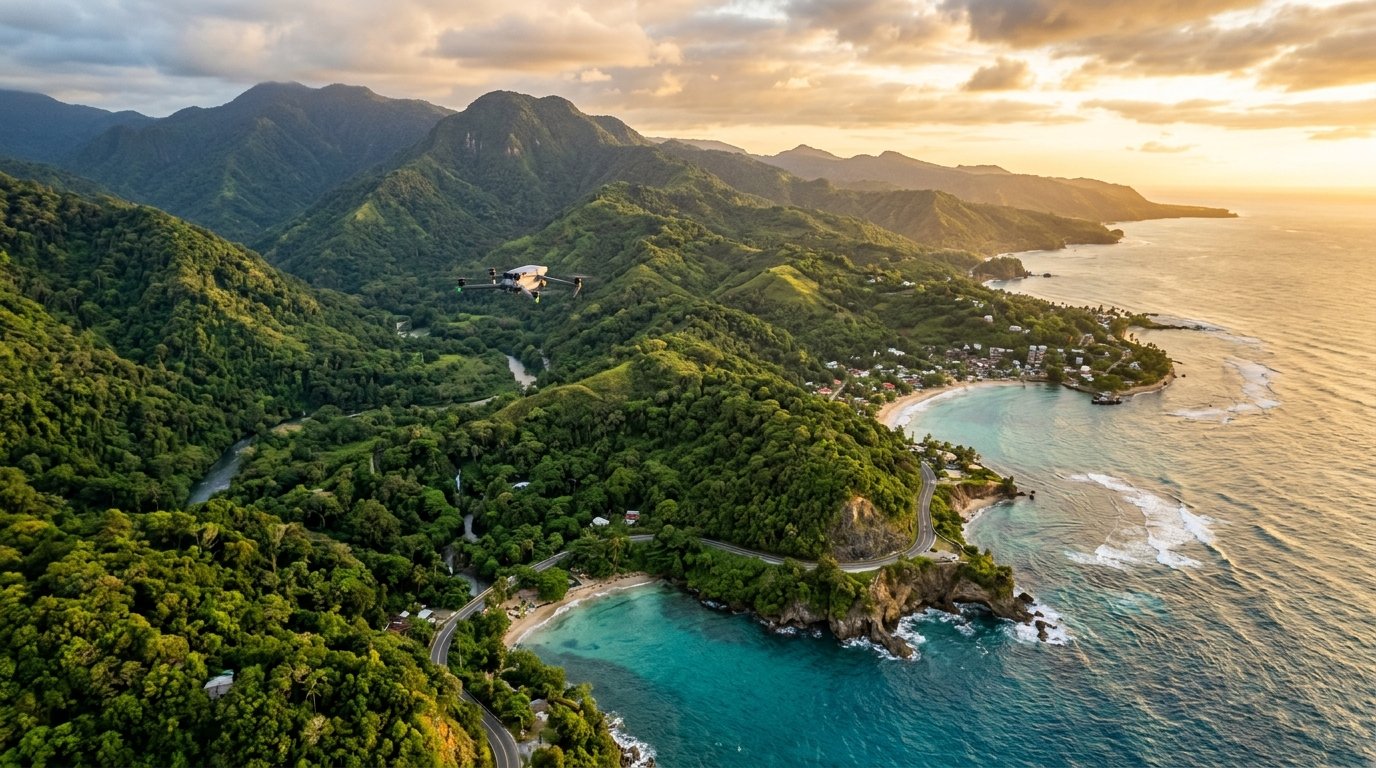
Recreational drones are generally allowed in Jamaica for foreign tourists, provided you follow basic operational rules and fly strictly for fun. However, because border control is very strict, tourists are highly advised to register their drone with the local aviation authority prior to travel to avoid confiscation at customs.
2. 🛃 Customs & Importation Rules
- Legal Importation: Yes, a tourist can legally bring a recreational drone into Jamaica through airport customs. Remember to pack all lithium-ion drone batteries in your carry-on luggage to comply with standard airline fire safety rules.
- Mandatory Declarations: You MUST declare your drone on your passenger customs form upon arrival. Tell the customs officers clearly that it is for personal, recreational use only.
- Confiscation Risk: If you fail to declare the drone, or if customs officials suspect you are doing commercial photography without the proper business permits, your drone can be temporarily confiscated. Carrying a printed clearance email from the aviation authority is the best way to ensure smooth entry.
3. 📝 Registration & Permit Process for Tourists
- Do you need a permit beforehand? Officially, basic recreational flights do not require the formal “Special Aerial Work Permit” (which is strictly for commercial operators). However, because of recent strict customs enforcement, foreign tourists are strongly encouraged to request a temporary recreational clearance before arriving.
- The Process: At least 2 to 4 weeks before your trip, send an email to the Jamaica Civil Aviation Authority (JCAA). You should include a copy of your passport, proof of ownership, your drone’s specifications (make, model, and serial number), and a list of the locations/resorts where you intend to fly.
- Fees and Timelines: There is generally no fee for a basic recreational clearance. Approval usually takes a few weeks, so plan well in advance of your vacation.
4. 🚫 Key Flight Rules & Restrictions
- Standard Rules: You must fly below a maximum altitude of 400 feet (122 meters) and keep the drone within a maximum horizontal distance of 1,640 feet (500 meters). Visual Line of Sight (VLOS) is mandatory at all times; using First-Person View (FPV) goggles does not satisfy this requirement.
- Weight Classes: Standard rules apply to all consumer drones, but if your equipment weighs more than 15 lbs (7 kg), mandatory formal registration is required.
- No-Fly Zones: Do not fly within 5km (3 miles) of any airport (such as Sangster International in Montego Bay or Norman Manley in Kingston) or helipad. You must also stay at least 500 feet away from large crowds and 165 feet away from individuals. Avoid military bases, the National Stadium complex, prisons, and always ask for permission before flying over private resort properties.
5. 🔗 Official Sources & Links
For the most accurate and current information, or to apply for clearance, refer to the following official resources:
- Jamaica Civil Aviation Authority (JCAA) Official Website
- JCAA Drone Inquiries Email: uavrequests@jcaa.gov.jm
Disclaimer: Aviation laws and customs regulations change frequently. Travelers should always double-check with the official civil aviation authority of their destination country shortly before their trip to ensure full legal compliance.
Adrenaline junkie with a passion for exploring off-the-beaten-path destinations and finding unique ways to stay active. Expect stunning scenery, challenging workouts, awesome travel tips and a whole lot of fun. Let’s get sweaty and explore the world together!