
1. 🏕️ The Short Answer
Wild and dispersed camping in Iceland is heavily restricted and, for the vast majority of tourists, effectively illegal. Anyone traveling in a campervan, motorhome, or roof-tent vehicle must spend the night at an official, designated campsite. While there are extremely narrow exceptions for traditional tent camping on remote, uncultivated land, tourists should always plan to use Iceland’s extensive network of over 170 campsites to avoid massive fines and protect the fragile environment.
2. 🌲 Wild & Dispersed Camping Rules
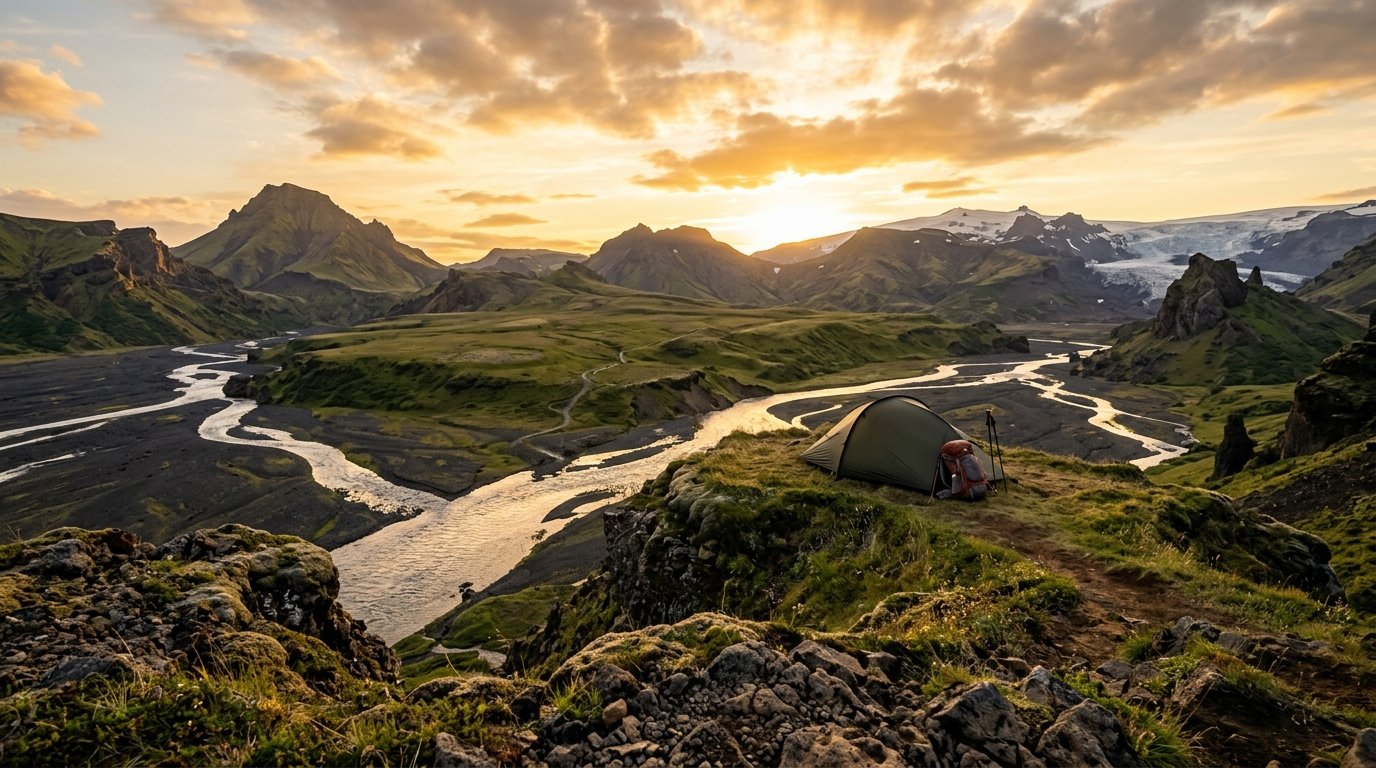
- Tent Camping: Pitching a traditional tent outside a campsite is only legal under very strict conditions: it must be for just one night, on uncultivated and uninhabited land, far from public routes, and only if there is absolutely no designated campsite nearby. You cannot pitch more than three tents without landowner permission.
- Vehicles & Campervans: Following a major law change in November 2015, it is strictly illegal to spend the night in a campervan, RV, caravan, or tent-trailer outside of an organized campsite without explicit, written permission from the landowner.
- Enforcement: These rules are heavily enforced by local police and rangers, and locals frequently report illegal camping. Fines for illegal camping range from 10,000 ISK for minor infractions to over 100,000 ISK (roughly $700+ USD) if environmental damage, such as trampling sensitive moss, occurs.
3. 🏞️ National Park & Protected Area Rules
- Camping Locations: In all of Iceland’s national parks—including Vatnajökull, Þingvellir, and Snæfellsjökull—wild camping is strictly prohibited with no exceptions. You must use the designated campsites within the parks.
- Booking & Permits: Icelandic campsites generally operate on a first-come, first-served basis, meaning advance booking is not always required. However, during the peak summer months (July and August), securing a spot early in the day or booking ahead if the site permits is highly recommended. Special wilderness areas may require you to check in with a ranger for permits.
- Seasonal Closures: Due to extreme winter weather, the majority of highland roads and interior campsites are only open from May or June until September. Outside of this window, access to interior protected areas is restricted to protect travelers and prevent deep rutting on thawing ground.
4. 🚐 Van Life & Overnight Vehicle Sleeping
- Overnight Parking Restrictions: Sleeping in your vehicle overnight on roadsides, rest stops, or in public car parks (including anywhere in the capital city of Reykjavík) is strictly illegal.
- Parking vs. Camping: Icelandic authorities strictly distinguish between day parking and overnight sleeping. You are welcome to park at scenic pullouts during the day to eat, rest, or hike, but you cannot legally remain there to sleep overnight.
- Designated Areas: Iceland does not have free roadside “aires” or overnight rest stops. Van lifers must use official campsites. To save money, many tourists purchase the Iceland Camping Card, which provides prepaid access to roughly 30 to 40 campsites across the country for up to 28 nights.
5. 🔥 Campfires & Practical Restrictions
- Campfires: Open campfires are generally prohibited outside of specifically marked fire pits at designated campsites. Iceland has very little natural woodland, and gathering sparse vegetation for wood is not allowed. Furthermore, fires pose a massive threat to Iceland’s fragile moss, which can take decades to recover if scorched or damaged.
- Key No-Camp Zones: Beyond national parks, wild camping is expressly forbidden in major nature reserves and tourist landmarks, including Dyrhólaey, Mývatn, Fjallabak, Dimmuborgir, and along the heavily trafficked Laugavegur trail outside of hut zones. Private farmland is entirely off-limits without permission. Off-road driving to find a camping spot is severely illegal everywhere in the country.
6. 🔗 Official Sources & Links
To verify the most up-to-date rules, check these official Icelandic resources before your trip:
- Environment Agency of Iceland (Umhverfisstofnun) – For detailed maps of protected areas and conservation laws.
- Visit Iceland – The official tourism board for campsite directories and travel safety tips.
Disclaimer: Land-use and camping laws in Iceland are highly subject to change due to the ongoing environmental impact of tourism. Always verify current local laws, road conditions, and closures with official local sources immediately prior to your trip.

Adrenaline junkie with a passion for exploring off-the-beaten-path destinations and finding unique ways to stay active. Expect stunning scenery, challenging workouts, awesome travel tips and a whole lot of fun. Let’s get sweaty and explore the world together!