
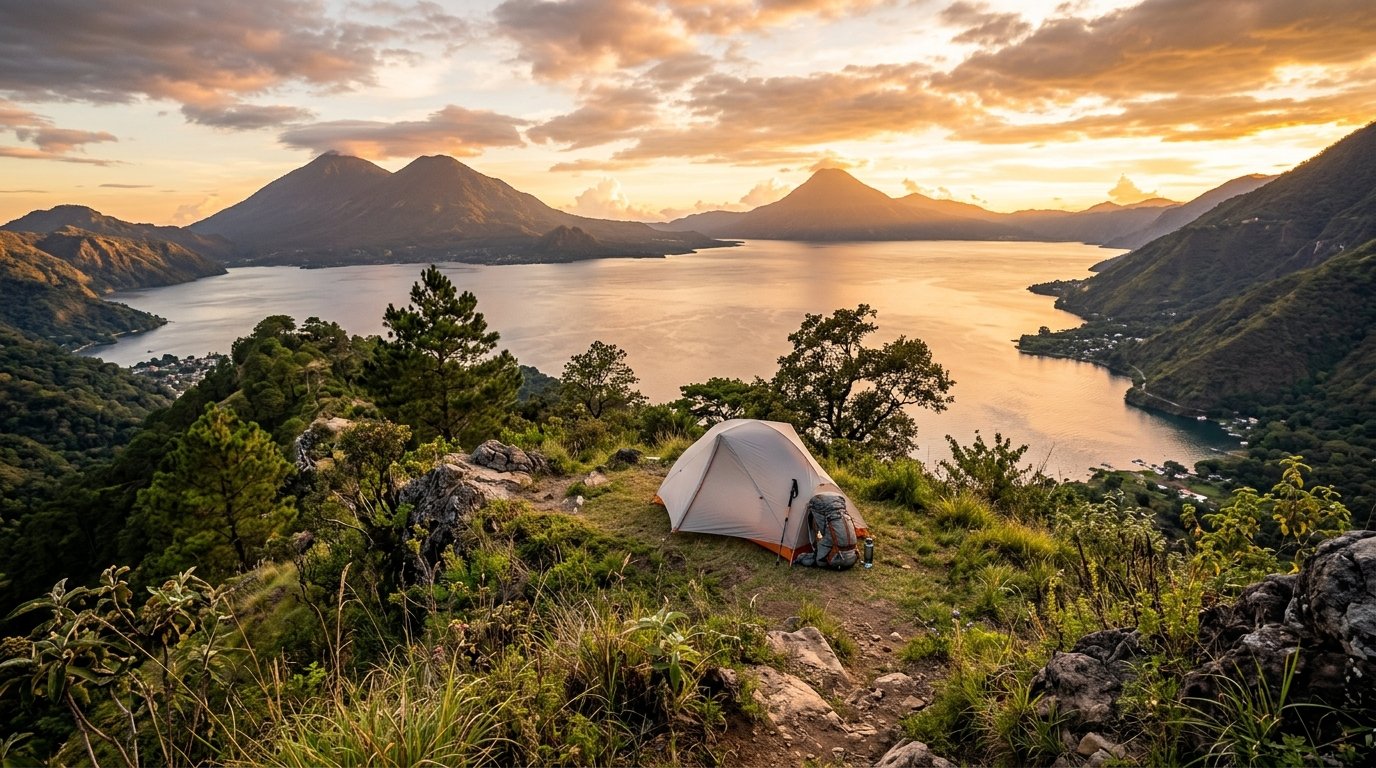
1. 🏕️ The Short Answer
While not explicitly outlawed on a national level, wild or dispersed camping in Guatemala is practically unfeasible and highly discouraged for foreign tourists due to severe safety risks, extensive private land ownership, and a lack of public land outside protected areas. Instead, tourists should rely on designated campgrounds, secure private property (with permission), or officially sanctioned camping zones within national parks.
2. 🌲 Wild & Dispersed Camping Rules
- Is camping outside official campsites legal for tourists on public land? In a strict legal sense, dispersed camping falls into a grey area outside of protected natural reserves, but functionally, “public land” as understood in North America or Europe does not really exist here. Almost all accessible rural land is either fenced private pasture, agricultural land, indigenous community territory, or government-protected nature reserves.
- Are there duration limits or distance rules? Because dispersed camping is not an established legal right or natively recognized recreational activity in Guatemala, there are no codified duration limits or distance rules for wild camping.
- Is this actively enforced? Enforcement by police or rangers is rare unless you are actively trespassing in a protected nature reserve or private farm. However, the real “enforcement” comes from local communities and severe security risks. Pitching a tent on random roadsides or in the bush puts you at a very high risk for robbery. Backpackers and cyclists instead practice “permission camping” by asking local farmers, rural restaurants (comedores), or gas stations to pitch a tent on their land, which is usually allowed for a small fee.
3. 🏞️ National Park & Protected Area Rules
- Do national parks have a separate permit system? Yes. Guatemala’s protected areas are managed by the National Council of Protected Areas (CONAP). There is no universal national camping pass; instead, you pay the specific entrance and camping fees required by the administering body of that individual park.
- Is camping restricted to designated sites? Absolutely. In iconic parks like Tikal, camping is strictly limited to the designated campground area near the park entrance (e.g., near the Jaguar Inn) and is strictly forbidden among the archaeological ruins. For volcano hikes like Acatenango, camping is restricted to designated basecamp zones managed by local communities and tour operators. Recent 2026 CONAP regulations have established strict Restricted Zones (Zonas de Veda Definitiva) on volcanoes to protect biodiversity and hiker safety. Unauthorized wilderness cabins are banned.
- Are there seasonal closures? Yes. Access to certain trails and volcanic camping areas can be closed without warning due to sudden volcanic activity (such as Volcán de Fuego), severe weather during the rainy season (May to October) which causes dangerous mudslides, or high forest fire risk during the dry season.
4. 🚐 Van Life & Overnight Vehicle Sleeping
- Is it legal to sleep overnight in a vehicle? It is not illegal to sleep in your vehicle, but boondocking or “stealth camping” on public city streets, rest stops, or rural roadsides is incredibly unsafe and highly advised against due to the risk of violent crime.
- Does local law distinguish between “parking” and “camping”? Traffic laws govern where you can park, but there is no heavily enforced legal distinction between parking and camping. The primary barrier is not law enforcement writing you a ticket for sleeping, but rather the very real threat of theft or assault in unmonitored areas.
- Are there designated overnight areas? Guatemala does not have a public network of rest areas or aires for van lifers. Overlanders heavily rely on crowdsourced networks to find safe, privately-owned overnight parking. Common secure options include paying for 24-hour guarded parking lots (parqueos), secure eco-lodges, hostels with locked courtyards, and 24-hour gas stations (like Puma or Shell) where the armed security guards will often allow you to park overnight for a small tip.
5. 🔥 Campfires & Practical Restrictions
- Are open campfires allowed? Campfires are generally tolerated on private rural land if you have the owner’s explicit permission, but they are strictly banned in almost all national parks, protected forests, and archaeological sites (including Tikal and the Lake Atitlán reserves). Forest fires are a devastating issue in Guatemala during the dry season, and violating fire bans in protected areas can result in heavy fines or expulsion by CONAP authorities.
- List any key no-camp zones tourists should avoid: You must avoid all border regions (especially the borders with Mexico and Honduras) due to narcotics trafficking and organized crime. The U.S. State Department strictly advises against travel to the San Marcos Department (Level 4: Do Not Travel) due to crime and violence. Furthermore, avoid camping anywhere near active volcanic danger zones (such as the restricted areas of Fuego and Pacaya) and strictly avoid setting up camp on unmarked private land or indigenous territory without explicit prior consent.
6. 🔗 Official Sources & Links
For the most accurate and up-to-date information regarding national park entry, protected area regulations, and safety advisories, tourists should consult:
- CONAP (Consejo Nacional de Áreas Protegidas) – The official government body regulating Guatemala’s protected areas, national parks, and wildlife reserves.
- INGUAT (Instituto Guatemalteco de Turismo) – The official Guatemala tourism board for traveler resources and registered guides.
Disclaimer: Land-use laws, national park regulations, and security situations in Central America can change rapidly. Always verify current rules, regional safety advisories, and weather conditions with official local authorities or certified tour operators immediately prior to your trip.

Adrenaline junkie with a passion for exploring off-the-beaten-path destinations and finding unique ways to stay active. Expect stunning scenery, challenging workouts, awesome travel tips and a whole lot of fun. Let’s get sweaty and explore the world together!