
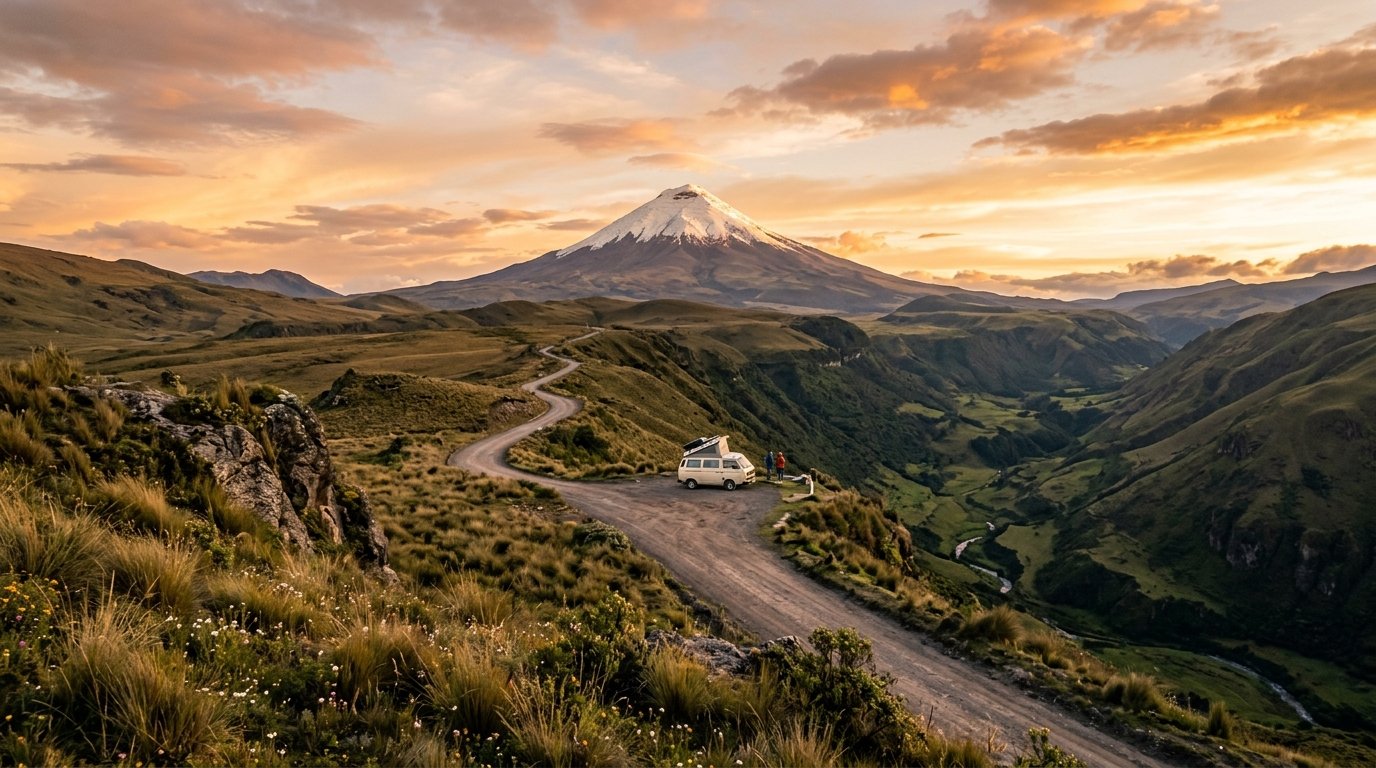
1. 🏕️ The Short Answer
While wild camping in mainland Ecuador exists in a legal grey area and is generally tolerated, it is highly discouraged for foreign tourists due to serious safety and security risks. Travelers are strongly advised to stick to official campsites, protected National Parks, or secure privately-owned land rather than pitching a tent or parking a van in random public spaces.
2. 🌲 Wild & Dispersed Camping Rules
- Legality on Public Land: There is no overarching national law that explicitly bans dispersed camping on unregulated public land. However, most rural land belongs to private owners or indigenous communities. You must always ask for permission (and often pay a small community fee) before setting up camp.
- Duration and Distance Rules: Ecuador does not have strict, codified duration limits or distance-from-road rules for wild camping outside of protected areas. However, if you do attempt to wild camp, it is best practice to stay out of sight, arrive late, leave early, and only stay for one night.
- Enforcement: Police and military rarely issue citations for the act of camping itself. Instead, if you are discovered camping in a public or roadside area, authorities will likely wake you up and move you along for your own physical safety due to the high risk of armed robbery and theft.
3. 🏞️ National Park & Protected Area Rules
- Permits and Administration: Ecuador is home to the National System of Protected Areas (SNAP), which manages mainland parks, while the Galápagos Islands are governed by the Galápagos National Park Directorate (GNPD). Mainland park entry is generally free, but you must register with park rangers upon arrival at the entrance gate.
- Designated Sites and Booking: In mainland parks like Cotopaxi or Cajas, camping is strictly restricted to designated areas (which are usually free or cost a nominal community fee) and you must check in with rangers. In the Galápagos, wild camping is strictly prohibited. You may only camp in a few authorized zones, which require a special GNPD permit requested at least 48 hours in advance, and you must be accompanied by a certified guide.
- Seasonal Closures: Yes. Parks frequently restrict access or close camping zones due to active volcanic alerts (e.g., Cotopaxi yellow alerts), extreme weather, or high fire risk during dry seasons in the fragile Andean páramo ecosystems.
4. 🚐 Van Life & Overnight Vehicle Sleeping
- Sleeping in Vehicles: It is not technically illegal to sleep overnight in your vehicle in public car parks or on the side of the road in Ecuador.
- Parking vs. Camping: Local laws do not heavily distinguish between parking and camping. However, deploying awnings, tables, and chairs in a public parking area is culturally frowned upon and will attract unwanted—and potentially dangerous—attention.
- Designated Areas and Safety: Because roadside sleeping poses extreme security risks, van lifers and overlanders in Ecuador rely heavily on crowdsourced platforms like iOverlander. To sleep safely, tourists utilize 24-hour guarded gas stations (with the manager’s permission), paid secure parking lots, or private eco-hostels and fincas that allow vehicle camping.
5. 🔥 Campfires & Practical Restrictions
- Campfire Rules: Open campfires are strictly prohibited in the Galápagos and practically all mainland National Parks. The high-altitude páramo is highly susceptible to devastating wildfires, and the unique flora takes decades to recover. Fires are only allowed on private campsites in specifically designated, pre-built fire rings.
- No-Camp Zones: Tourists must absolutely avoid camping near the northern border with Colombia (Esmeraldas, Carchi, and Sucumbíos provinces) due to the active presence of armed groups and narcotics trafficking. Additionally, avoid isolated coastal beaches at night, active military zones, and the immediate vicinity of restless volcanoes.
6. 🔗 Official Sources & Links
For the most up-to-date information, always verify your plans with local authorities:
- Ecuador Ministry of Environment, Water and Ecological Transition (MAATE) – Oversees the mainland SNAP park system.
- Galápagos National Park Directorate (GNPD) – Official rules, permits, and guidelines for the Galápagos Islands.
Disclaimer: Camping regulations, land-use laws, and security situations in Ecuador change frequently. Travelers should always verify current laws, volcanic alert levels, and regional safety advisories with official local sources and their home country’s embassy before embarking on their trip.

Adrenaline junkie with a passion for exploring off-the-beaten-path destinations and finding unique ways to stay active. Expect stunning scenery, challenging workouts, awesome travel tips and a whole lot of fun. Let’s get sweaty and explore the world together!