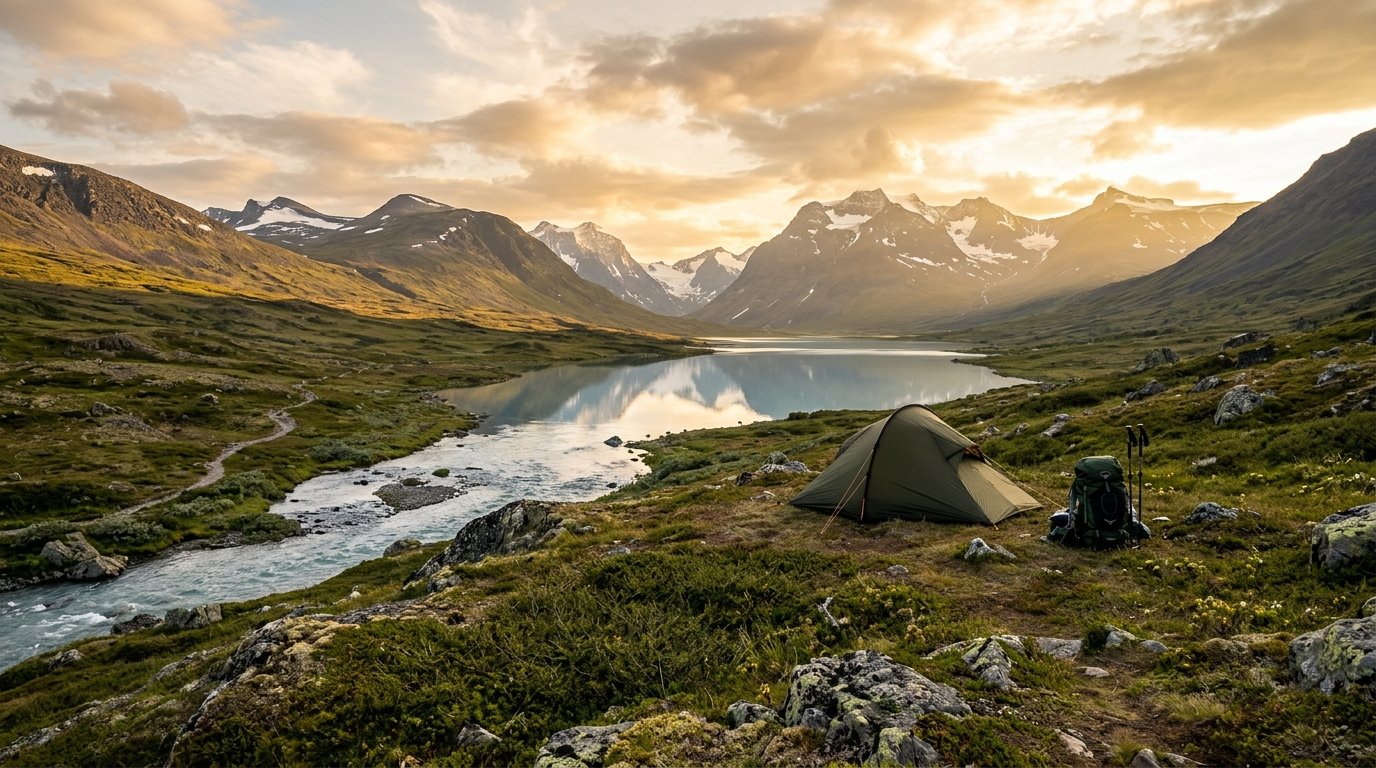
1. 🏕️ The Short Answer
Wild camping in Sweden is entirely legal, heavily encouraged, and deeply ingrained in the culture for both locals and tourists. Thanks to Allemansrätten (The Right of Public Access), you can pitch a tent almost anywhere in the Swedish countryside for free. However, this incredible privilege is strictly tied to the principle of “do not disturb, do not destroy,” and specific rules apply depending on whether you are using a tent or a motor vehicle.
2. 🌲 Wild & Dispersed Camping Rules
- Legality on Public and Private Land: Tourists are free to camp on public land and even most privately owned natural terrain (like forests and meadows) without asking for permission. You may not camp on cultivated farmland, grazing pastures, or private residential gardens.
- Duration and Distance Limits: You can stay in one spot for a maximum of 1 to 2 nights. You must pitch your tent out of sight and hearing from the nearest residential dwelling (a general rule of thumb is at least 70 meters away). If you are traveling in a large group with multiple tents, you must seek landowner permission.
- Enforcement: Sweden relies heavily on the honor system and deep respect for nature. While active policing of wild camping is rare in remote areas, locals will not hesitate to report campers who leave trash, damage property, or set up too close to homes.
3. 🏞️ National Park & Protected Area Rules
- Separate Permit Systems: Allemansrätten does not automatically apply in National Parks and Nature Reserves. Each protected area is governed by its own specific regulations.
- Designated Sites: In most Swedish National Parks, wild camping is strictly forbidden to protect fragile ecosystems. Instead, you must camp only in designated, pre-established camping zones. Advanced booking is usually not required for these basic sites, but traditional holiday campsites just outside the parks will require reservations.
- Seasonal Closures: Many protected areas enforce strict seasonal closures. You must be aware of bird nesting seasons and reindeer calving seasons (typically April to June), during which specific zones are completely off-limits to hikers and campers.
4. 🚐 Van Life & Overnight Vehicle Sleeping
- No Off-Road Driving: Allemansrätten does NOT apply to motorhomes, campervans, or cars. Sweden’s Off-Road Driving Act strictly prohibits driving or parking motor vehicles on unpaved natural terrain, including beaches, forests, and meadows. You must stick to asphalt, gravel, or designated parking surfaces.
- Sleeping in Vehicles vs. Camping: You are legally allowed to sleep in your vehicle at public parking lots and roadside rest areas (rastplatser) for a maximum of 24 hours on weekdays (or over the weekend until the next working day). However, the law distinguishes between “parking” and “camping.” To stay legal, all of your gear must remain strictly inside the vehicle. Rolling out an awning, setting up camping chairs, or cooking outside your van constitutes “camping” and is illegal in public parking lots.
- Designated Overnight Areas: Sweden has an extensive network of Ställplatser (motorhome parking areas/aires). These are dedicated, low-cost or free areas for campervans that often include basic facilities like waste disposal and fresh water.
5. 🔥 Campfires & Practical Restrictions
- Campfire Rules: Lighting a campfire is generally permitted under Allemansrätten if conditions are safe. However, you must never build a fire directly on bare rocks, as the heat causes them to crack and leaves permanent scars. It is always highly recommended to use established stone fire rings.
- Summer Fire Bans: During dry summer months, local municipalities and County Administrative Boards frequently issue strict fire bans (Eldningsförbud). When a ban is in place, all open fires—including in established fire rings—are totally illegal and carry heavy fines. Always check a local tourist office or the “Krisinformation” app before lighting a fire.
- No-Camp Zones: Beyond private gardens and farmland, tourists must strictly avoid camping in active military training areas (which are marked with warning signs and yellow barriers), industrial zones, and active reindeer herding pastures.
6. 🔗 Official Sources & Links
For the most current information, verify local regulations through these official authorities:
- Naturvårdsverket (Swedish Environmental Protection Agency) – The Right of Public Access
- Visit Sweden – Freedom to Roam
Disclaimer: Camping regulations, fire bans, and land-use laws are subject to change due to weather conditions, environmental protection measures, and local municipal decisions. Always verify the most up-to-date rules with official Swedish authorities or local visitor centers before beginning your trip.

Adrenaline junkie with a passion for exploring off-the-beaten-path destinations and finding unique ways to stay active. Expect stunning scenery, challenging workouts, awesome travel tips and a whole lot of fun. Let’s get sweaty and explore the world together!