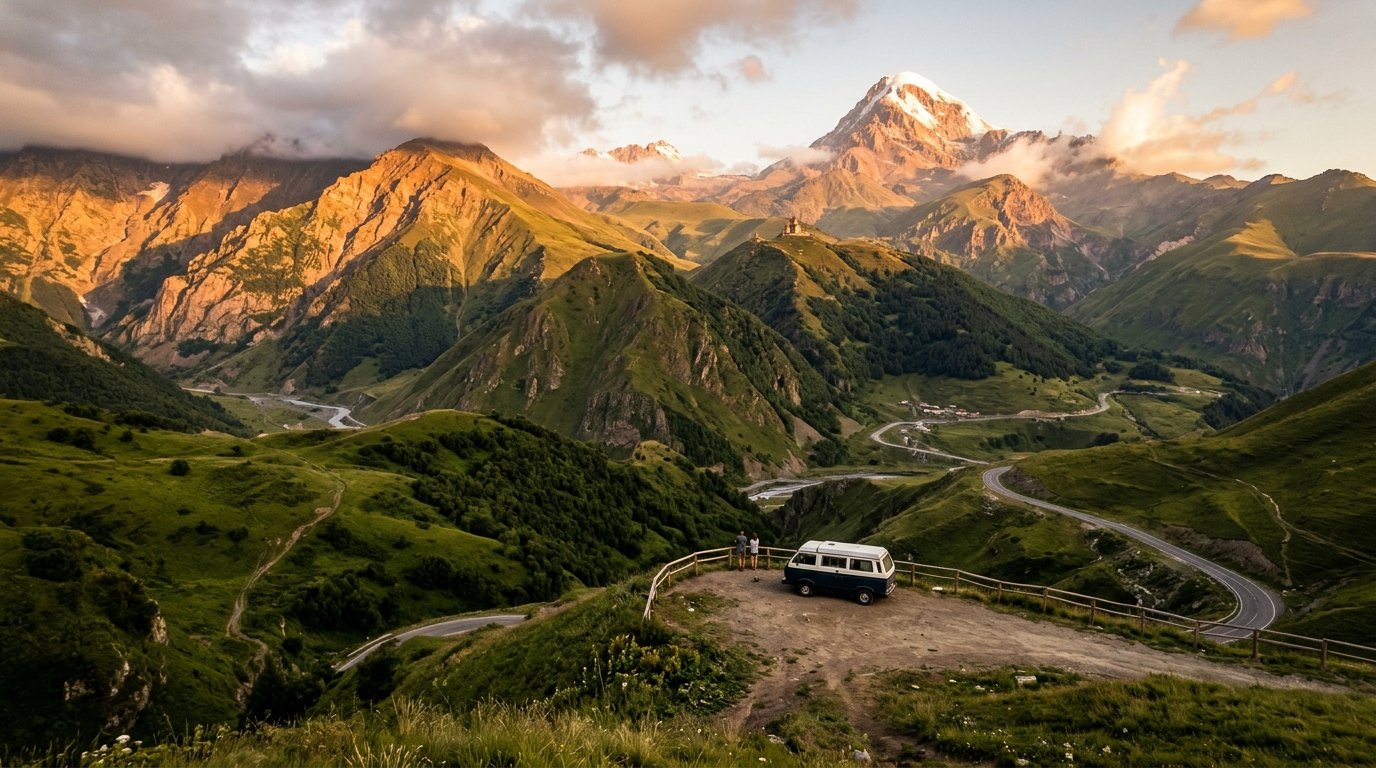
1. 🏕️ The Short Answer
Wild and dispersed camping is completely legal, highly tolerated, and widely practiced throughout the Republic of Georgia. For foreign tourists, van lifers, and backcountry travelers, it is one of the most camping-friendly countries in the world, with practically no restrictions outside of national parks and sensitive border zones.
2. 🌲 Wild & Dispersed Camping Rules
- Legality: Camping outside official campsites is perfectly legal on public land. Georgia has no national bans on wild camping.
- Duration and Distance: There are no formal duration limits or strict distance rules from roads and water sources. However, common sense dictates staying a respectful distance from private dwellings. Locals are famously hospitable and will often allow you to camp on their land for free or a small fee, occasionally offering use of their facilities.
- Enforcement & Practicalities: Enforcement is practically non-existent in the wild. The main practical hazard for tourists is encountering Caucasian Shepherd dogs guarding sheep flocks in the mountains. Campers are advised to keep their distance, stand their ground without running or showing fear, and carry hiking poles as a visual deterrent.
3. 🏞️ National Park & Protected Area Rules
- Permits and Registration: While wild camping is a free-for-all in general nature areas, Protected Areas (such as Borjomi-Kharagauli, Tusheti, and Kazbegi National Parks) have specific written rules. You must register at the park’s visitor center before beginning your trek.
- Designated Sites: In national parks, camping is officially restricted to designated campsites, marked zones, or wilderness shelters. Advance booking isn’t typically required, but signing in with rangers is mandatory.
- Seasonal Closures: High-altitude parks are subject to severe winter weather and snow. Many mountain routes (like those in Tusheti and Svaneti) are only safely accessible and free of snow from mid-July to mid-September.
4. 🚐 Van Life & Overnight Vehicle Sleeping
- Sleeping in Vehicles: It is entirely legal to sleep in your campervan or RV overnight in public car parks, rest stops, or on the roadside.
- Parking vs. Camping: Georgian law does not strictly distinguish between parking and camping. If you can legally park your vehicle, you can generally sleep in it without police harassment.
- Facilities & Vehicle Stays: There is no formal network of European-style “aires” (motorhome stopovers), but you can easily refill water at most gas stations and village springs. Important for foreigners: Pay close attention to vehicle import laws. Foreign-registered light vehicles (under 3.5 tons) are generally permitted to remain in Georgia for 90 days. Staying beyond this timeframe will result in daily fines at the border upon exit.
5. 🔥 Campfires & Practical Restrictions
- Campfires: Open campfires are generally permitted in wild areas, provided you use Leave No Trace principles. However, within National Parks and Protected Areas, fires are strictly limited to designated fire pits.
- Border Zones (No-Camp Zones): Do not camp near the administrative boundary lines of the breakaway regions of South Ossetia and Abkhazia due to heavy military presence and geopolitical tensions. Additionally, camping near the northern Russian border regions (e.g., Truso Valley, Black Rock Lake) requires you to carry your original passport and often mandates a special Border Police permit obtained in advance.
6. 🔗 Official Sources & Links
To verify the latest regulations, border zone requirements, and national park visitor center operations, consult these official sources:
- Agency of Protected Areas of Georgia (For all national park camping rules, designated sites, and trail maps)
- Georgia National Tourism Administration (Official travel advice and tourist information)
Disclaimer: Camping regulations, border zone access, and land-use laws are subject to change frequently. Always verify current local rules, weather conditions, and specific permit requirements with official Georgian authorities or local park rangers prior to your trip.

Adrenaline junkie with a passion for exploring off-the-beaten-path destinations and finding unique ways to stay active. Expect stunning scenery, challenging workouts, awesome travel tips and a whole lot of fun. Let’s get sweaty and explore the world together!