1. 🏕️ The Short Answer
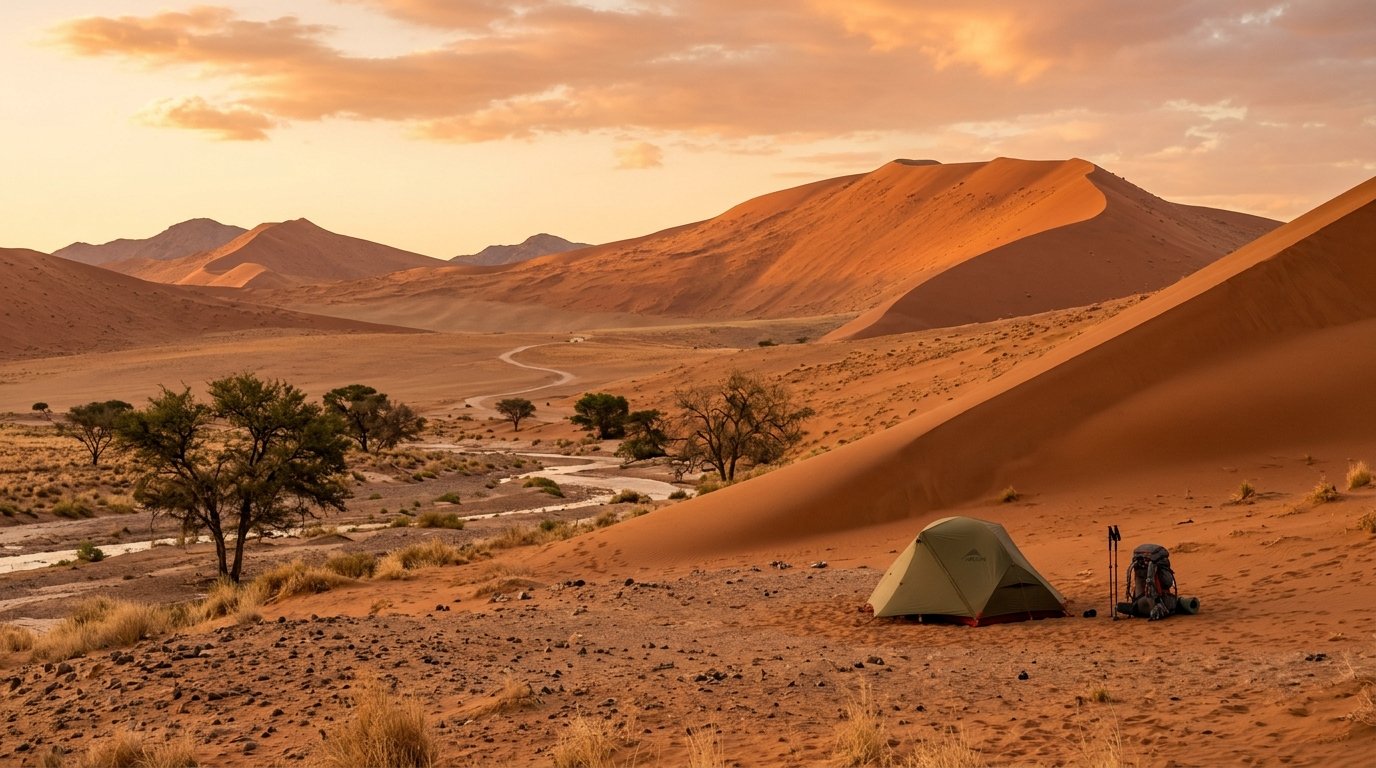
Wild and dispersed camping is effectively illegal and highly discouraged for tourists in Namibia without explicit prior permission. Because the vast majority of land is either privately owned commercial farmland, strictly protected national parks, or managed community conservancies, travelers must stick to designated campsites. While 4×4 overlanding is incredibly popular, you cannot legally pitch a tent or sleep in your vehicle wherever you choose.
2. 🌲 Wild & Dispersed Camping Rules
- Is it legal? No, wild camping on public or private land is not legal for tourists. Namibia does not have a “right to roam” law. The only exception to this rule is if you obtain explicit, direct permission from a private landowner or a local community headman in extremely remote, unfenced regions (such as the Kaokoveld or Damaraland community conservancies).
- Distance and setup rules: If you are granted special permission to camp in a remote communal area, strict environmental rules apply. You must camp far away from any water source or waterhole; failing to do so can prevent desperate wildlife (like desert-adapted elephants) from drinking. You must also leave no trace, which includes burying human waste deeply.
- Enforcement: Enforcement is strict. Private farmers fiercely protect their land against trespassing. In community conservancies, local game guards actively patrol. Illegally camping also poses a massive safety risk due to roaming predators (lions, hyenas) and harsh environmental conditions.
3. 🏞️ National Park & Protected Area Rules
- Permit system: Entering national parks requires a daily park permit paid to the Ministry of Environment, Forestry and Tourism (MEFT). However, your camping accommodation inside the park is booked and managed separately by a state-owned entity called Namibia Wildlife Resorts (NWR).
- Designated sites only: Inside national parks (such as Etosha, Namib-Naukluft, and Skeleton Coast), camping is strictly restricted to designated, fenced NWR campsites. Wild camping inside any national park is strictly prohibited.
- Advance booking: Booking your campsite months in advance is absolutely essential, especially during the dry season (May to October). If you arrive at a park gate without a confirmed NWR booking, you may be turned away.
- Curfews and closures: National parks enforce strict sunrise-to-sunset curfews. You must be inside your designated fenced camp before the sun goes down. Traveling outside the camp after dark is illegal, and walking outside your vehicle is prohibited except in enclosed camp boundaries.
4. 🚐 Van Life & Overnight Vehicle Sleeping
- Roadside sleeping: It is illegal and highly unsafe to sleep overnight in your vehicle on the side of the road, in public car parks, or at roadside rest stops. Most main roads are flanked by private farm fences anyway, leaving no safe or legal shoulder to pull over on.
- Parking vs. Camping: Namibia does not have legal loopholes distinguishing between “parking” and “camping” to allow van life in public spaces. If you are parked overnight on a road reserve, local police or farmers will force you to move for your own safety and for trespassing reasons.
- Designated overnight areas: There are no European-style free “aires” or overnight transit stops in Namibia. However, the country has an exceptional, extensive, and relatively affordable network of private and community-run campsites perfectly equipped for rooftop-tent overlanders and campervans.
5. 🔥 Campfires & Practical Restrictions
- Campfires: Campfires are a staple of Namibian camping but must be kept strictly within the designated concrete or metal fire pits (braais) provided at campsites. Open wild fires in the bush are illegal and pose a severe wildfire risk in the arid climate. Furthermore, tourists must buy firewood at camps or grocery stores; collecting deadwood is illegal in parks as it destroys vital micro-habitats.
- No-camp zones: Tourists must entirely avoid the Sperrgebiet (the strictly restricted diamond mining zone in the southwest), border control strips, and any fenced private farmland. Entering these areas without specialized permits can result in immediate arrest or severe fines.
6. 🔗 Official Sources & Links
For official park regulations, campsite bookings, and conservation rules, always consult the following authorities:
- Namibia Wildlife Resorts (NWR) – The official booking portal for all campsites located inside National Parks.
- Ministry of Environment, Forestry and Tourism (MEFT) – Official information on park entry permits and national environmental regulations.
Disclaimer: Land-use laws, park regulations, and environmental rules change frequently. As a foreign tourist, it is your responsibility to verify all camping restrictions with local authorities, your 4×4 rental company, or official tourism boards prior to your trip.

Adrenaline junkie with a passion for exploring off-the-beaten-path destinations and finding unique ways to stay active. Expect stunning scenery, challenging workouts, awesome travel tips and a whole lot of fun. Let’s get sweaty and explore the world together!