
1. 🏕️ The Short Answer
For tourists visiting Ireland, wild camping is technically illegal without explicit permission from the landowner, as there is no legal “Right to Roam” in either the Republic of Ireland or Northern Ireland. While discreet, Leave-No-Trace tent camping by multi-day hikers is often tolerated in remote mountainous areas, sleeping in vehicles or pitching a tent near roads, beaches, and tourist sites is highly restricted and actively discouraged.
2. 🌲 Wild & Dispersed Camping Rules
- Legality on Public Land: Almost all land in Ireland is privately owned or managed by state bodies like Coillte (the forestry service) or the National Parks and Wildlife Service. You do not have a legal right to camp on public or private land without permission.
- Unwritten Rules & Limits: Where wild camping is tolerated for hikers, a strict unwritten code applies: stay for a maximum of one night, pitch your tent late in the evening and leave early in the morning, camp far from roads and buildings, keep groups small, and leave absolutely no trace.
- Enforcement: Enforcement varies greatly. A solo hiker in a remote mountain valley is rarely challenged. However, if you camp on farmland, near tourist hotspots, or visibly from a road, you are highly likely to be asked to leave by landowners or local Gardaí (police). Refusing to leave private land when asked is a trespassing offense.
3. 🏞️ National Park & Protected Area Rules
- Permits and Allowances: Rules vary wildly depending on the park. Wicklow Mountains and Connemara National Parks welcome wild camping for multi-day hikers, provided you follow their strict code (e.g., camping at least 400-500 meters away from any road or building). Wild Nephin National Park requires mandatory online registration for all campers and bivouackers. Conversely, Killarney National Park bans wild camping outright.
- Designated Sites: You cannot sleep in National Park car parks under any circumstances; these are strictly for daytime use. If a park allows wild camping, it is exclusively for backpackers out on the trails.
- Seasonal Closures: Access and camping privileges are frequently suspended during Orange or Red fire-danger notices (which are common during dry summer spells).
4. 🚐 Van Life & Overnight Vehicle Sleeping
- Legality of Overnight Parking: Sleeping in a vehicle overnight on public roads, lay-bys, or beach car parks sits in a legal grey zone. It is not a nationwide crime, but local council bylaws explicitly ban overnight sleeping in most coastal, harbor, and tourist car parks.
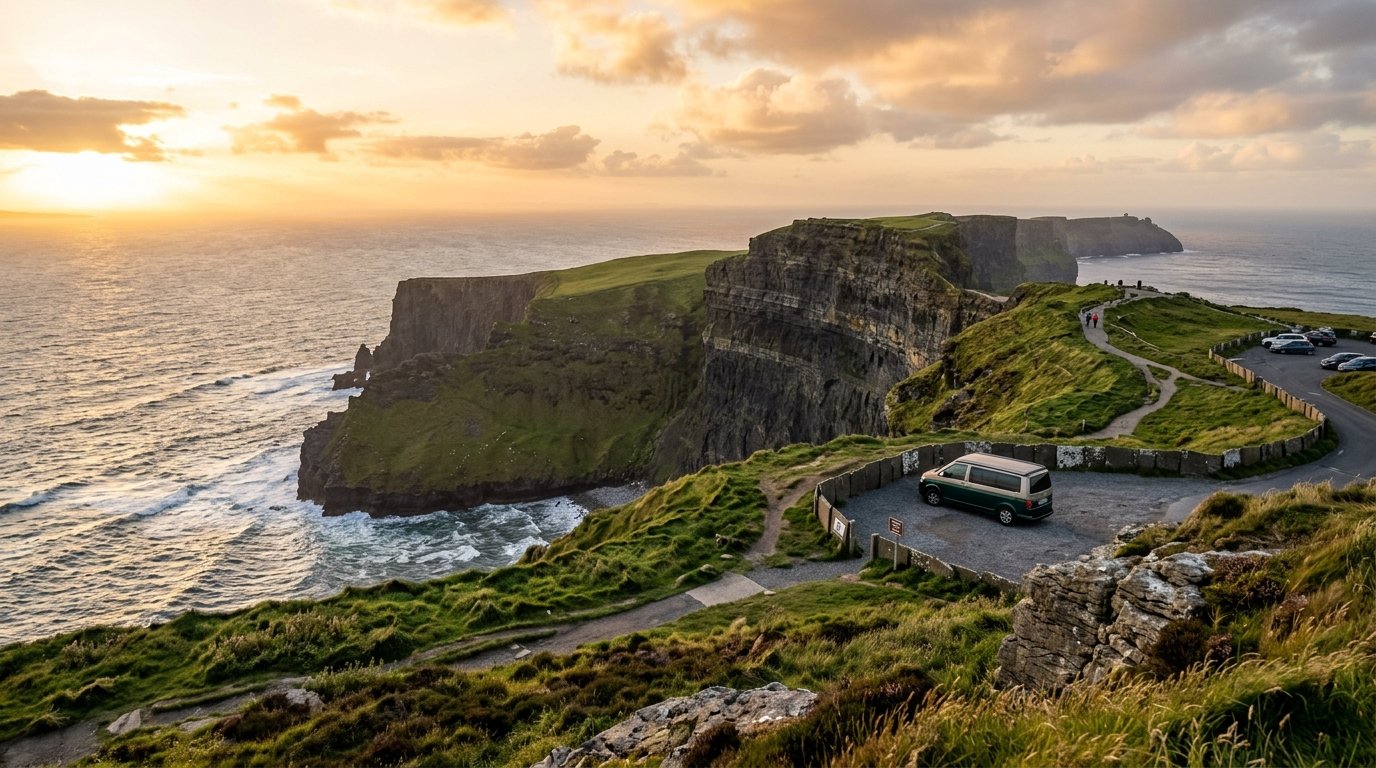
- Parking vs. Camping: Authorities strongly distinguish between daytime parking and overnight camping. Setting up chairs, rolling out awnings, or sleeping in a van in a daytime-only lot crosses the line into camping and will often result in a knock on the window.
- Where to Stay: Tourists should rely on official campsites, designated motorhome stopovers (sometimes called “aires”), or “pub stopovers” where publicans allow you to park for free in exchange for buying a meal or drinks. Apps like Park4Night are widely used to find tolerated spots, but always read the physical signs in the car park upon arrival.
5. 🔥 Campfires & Practical Restrictions
- Campfires: Open campfires are strictly banned in all Irish National Parks, Coillte forests, and most beaches due to the fragility of sand dunes. Even where not explicitly banned by law, you must have the landowner’s permission to light a fire. During warmer months, strict nationwide fire bans are often issued. Tourists should always use a portable camping stove for cooking instead of an open fire.
- No-Camp Zones: Avoid camping in the Glendalough valley (strictly forbidden), Killarney National Park, active farmland, grazing areas with livestock, coastal sand dunes, and anywhere with “No Overnight Parking” signage.
6. 🔗 Official Sources & Links
To verify up-to-date rules, safety warnings, and park-specific camping codes before your trip, visit these trusted sources:
- National Parks and Wildlife Service (NPWS) – Find specific camping policies, codes of conduct, and fire warnings for each of Ireland’s National Parks.
- Leave No Trace Ireland – The official authority on responsible outdoor recreation, campfire safety, and land access guidelines in Ireland.
Disclaimer: Land-use laws, local bylaws, and environmental regulations in Ireland change frequently. The information provided in this guide is for educational purposes and should be independently verified with local authorities, landowners, or official park visitor centers prior to your trip.

Adrenaline junkie with a passion for exploring off-the-beaten-path destinations and finding unique ways to stay active. Expect stunning scenery, challenging workouts, awesome travel tips and a whole lot of fun. Let’s get sweaty and explore the world together!