
1. 🏕️ The Short Answer
For foreign tourists visiting the Republic of the Congo (often called Congo-Brazzaville), independent wild camping and van life exist in a highly scrutinized, unformalized legal grey area. While not explicitly outlawed on a national level, pulling over to pitch a tent or sleep in a vehicle on public land is practically unfeasible due to strict military/police checkpoints and customary land laws. For a safe and legal trip, tourist camping is effectively restricted to privately owned grounds (with local permission), secure missionary compounds, or officially designated eco-camps within protected national parks.
2. 🌲 Wild & Dispersed Camping Rules
- Legality on Public Land: There is no official legal framework that permits wild or dispersed camping for tourists. Almost all rural land falls under the jurisdiction of the state or local village chiefs. You cannot simply pull off the highway and camp legally without permission.
- Duration and Distance Rules: Because wild camping is not a formally recognized recreational activity, there are no specific distance or duration rules. If an overlander or 4×4 traveler must camp outside a city, it is mandatory to seek out the local village chief (chef de village) to explicitly request permission to park or camp on their community land.
- Enforcement and Reality: Enforcement by local police, the military, and park ecoguards is strict. If you are found camping randomly in the bush or by a roadside, authorities will investigate. You will likely be moved along, subjected to intense questioning, or asked to pay unofficial fines due to regional security concerns.
3. 🏞️ National Park & Protected Area Rules
- Permits and Guided Access: National parks such as Odzala-Kokoua and Nouabalé-Ndoki are strictly managed by organizations like African Parks and the Wildlife Conservation Society (WCS). Independent, unguided camping is strictly prohibited.
- Designated Sites Only: Visitors must stay at officially designated campsites, research stations, or commercial eco-lodges (such as Lango, Mboko, or Ngaga camps). All excursions into the forest, including western lowland gorilla trekking, require advance booking and must be accompanied by an armed park ranger or official tracker.
- Seasonal Closures: While the parks rarely close completely, the Congo Basin experiences severe rainy seasons (typically March to May and September to November). During these months, dirt roads become impassable mud, and certain remote forest clearings (bais) or campsites may become temporarily inaccessible to tourists.
4. 🚐 Van Life & Overnight Vehicle Sleeping
- Roadside Sleeping: Sleeping overnight in a vehicle on public roads, rest stops, or lay-bys is not expressly written into traffic law as an illegal act, but it is treated with deep suspicion by authorities. It is highly advised against due to both security risks and military patrols.
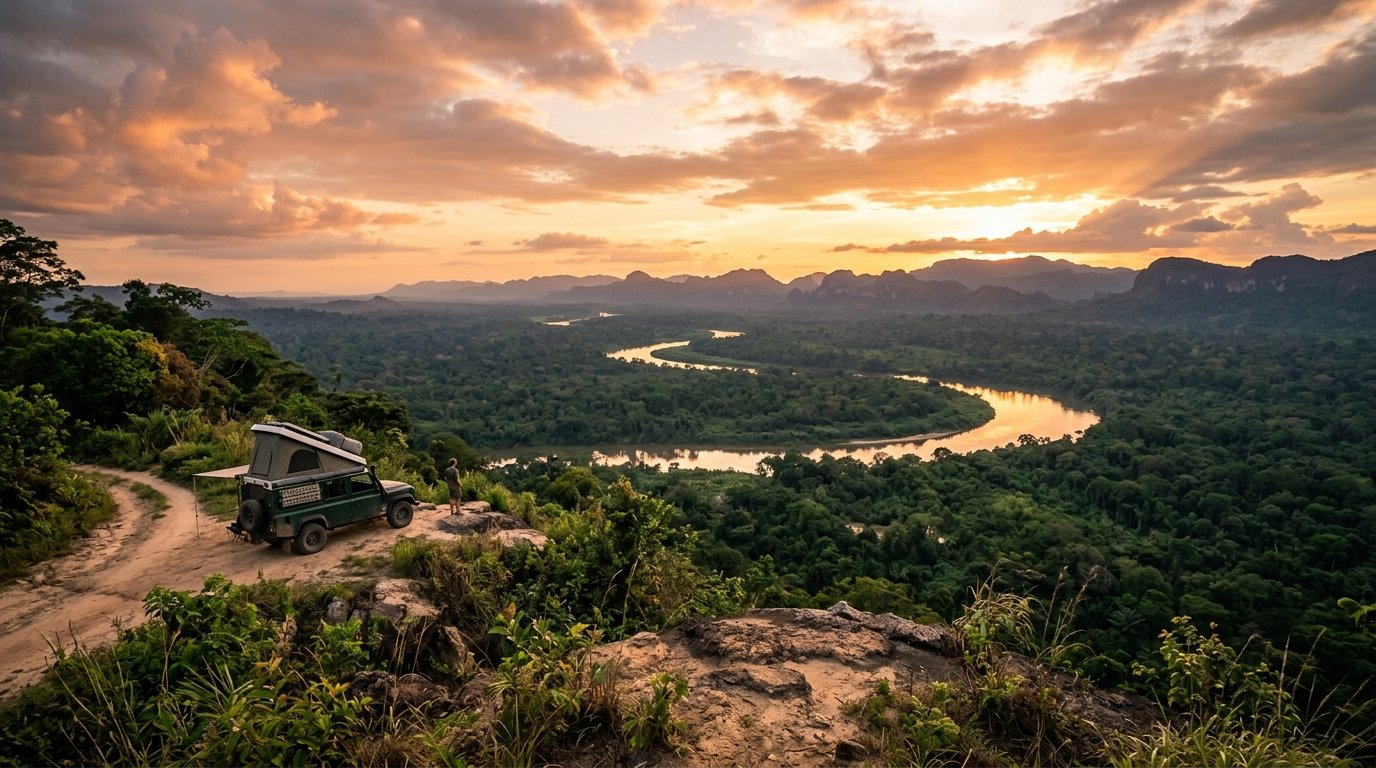
- Parking vs. Camping: The law does not legally differentiate between “parking” and “camping” because Western-style van life does not exist here. However, deploying overland camping gear (like roof-top tents, chairs, or awnings) will instantly draw crowds and official police scrutiny.
- Designated Overnight Areas: There are no official RV parks, campervan aires, or public rest areas in the country. Overland travelers typically negotiate secure overnight parking at Catholic missions, police station compounds, or the guarded parking lots of private hotels and guesthouses.
5. 🔥 Campfires & Practical Restrictions
- Campfire Regulations: In rural villages, open fires are the standard method for cooking and are generally tolerated if you have permission from the landowner to be there. Inside national parks and reserves, however, independent campfires are strictly banned outside of official lodge fire pits to prevent devastating forest fires.
- Strict No-Camp Zones: Tourists must never camp near international borders, particularly the Congo River border with the Democratic Republic of Congo (DRC) and the border with the Angolan exclave of Cabinda. You must also strictly avoid military installations, active logging concessions, mining zones, and the historically volatile Pool Region.
6. 🔗 Official Sources & Links
For the most up-to-date information on park access, permits, and conservation rules, travelers should consult the organizations directly managing the Republic of the Congo’s protected areas:
- African Parks: Odzala-Kokoua National Park – The official management authority providing updates on park rules, conservation efforts, and authorized accommodation.
- Wildlife Conservation Society (WCS) Congo – Manages Nouabalé-Ndoki National Park and offers guidance on conservation zones and visiting rules.
Disclaimer: Land-use laws, visa requirements, and national park regulations in the Republic of the Congo change frequently and without warning. Always consult your home country’s official travel advisories and verify local rules with your tour operator, overland guides, or park authorities before embarking on your trip.

Adrenaline junkie with a passion for exploring off-the-beaten-path destinations and finding unique ways to stay active. Expect stunning scenery, challenging workouts, awesome travel tips and a whole lot of fun. Let’s get sweaty and explore the world together!