
1. 🏕️ The Short Answer
While wild camping is not explicitly banned by a nationwide law, it is effectively impractical and highly discouraged for tourists in El Salvador. High population density, widespread private land ownership (usually heavily fenced), and general security precautions mean that free, dispersed camping is essentially a grey area you should avoid. For a safe and legal experience, foreign tourists should rely on designated national park campsites, private eco-lodges, or established parking areas for van life.
2. 🌲 Wild & Dispersed Camping Rules
- Legality on Public Land: El Salvador does not have vast tracts of open public land (like BLM land in the US or Crown land in Canada) where tourists can freely pitch a tent. Unfenced land is rare, and setting up a large, multi-pole tent on the side of a trail or beach will often attract attention from locals or the police.
- Duration and Distance Rules: Because dispersed camping is not a formalized legal concept here, there are no specific distance-from-road or stay-limit regulations. If you do find a spot, it is almost certainly private property or municipal land. You must obtain explicit, verbal permission from the landowner or local community leader before setting up camp.
- Enforcement: In practice, police or military patrols are more likely to move you along for your own security rather than fine you for land-use violations. Strict enforcement typically only happens if you are trespassing on agricultural land, blocking thoroughfares, or attempting to camp in sensitive ecological zones.
3. 🏞️ National Park & Protected Area Rules
- Permits and Fees: National parks in El Salvador are managed by the Ministry of Environment and Natural Resources (MARN) and often require entry fees and permits. For example, camping at the famous Conchagua Volcano requires a small local conservation fee (typically around $5 USD), while El Imposible National Park requires prior coordination and often a mandatory local guide.
- Designated Sites Only: Camping in protected areas is strictly limited to designated zones. At El Imposible, you must use designated campsites that limit group sizes (often to 6 people). At Conchagua, the setup is more informal near the summit viewpoint, but you must still stay within the tolerated boundaries. Advance booking is highly recommended for major parks, especially if you require a guide.
- Seasonal Closures: The country experiences a severe rainy season from May to October. During this time, trails become muddy, river crossings dangerous, and some park access roads may close entirely due to landslide risks. Conversely, the dry season (November to April) is peak camping time but introduces strict fire bans due to high wildfire risks.
4. 🚐 Van Life & Overnight Vehicle Sleeping
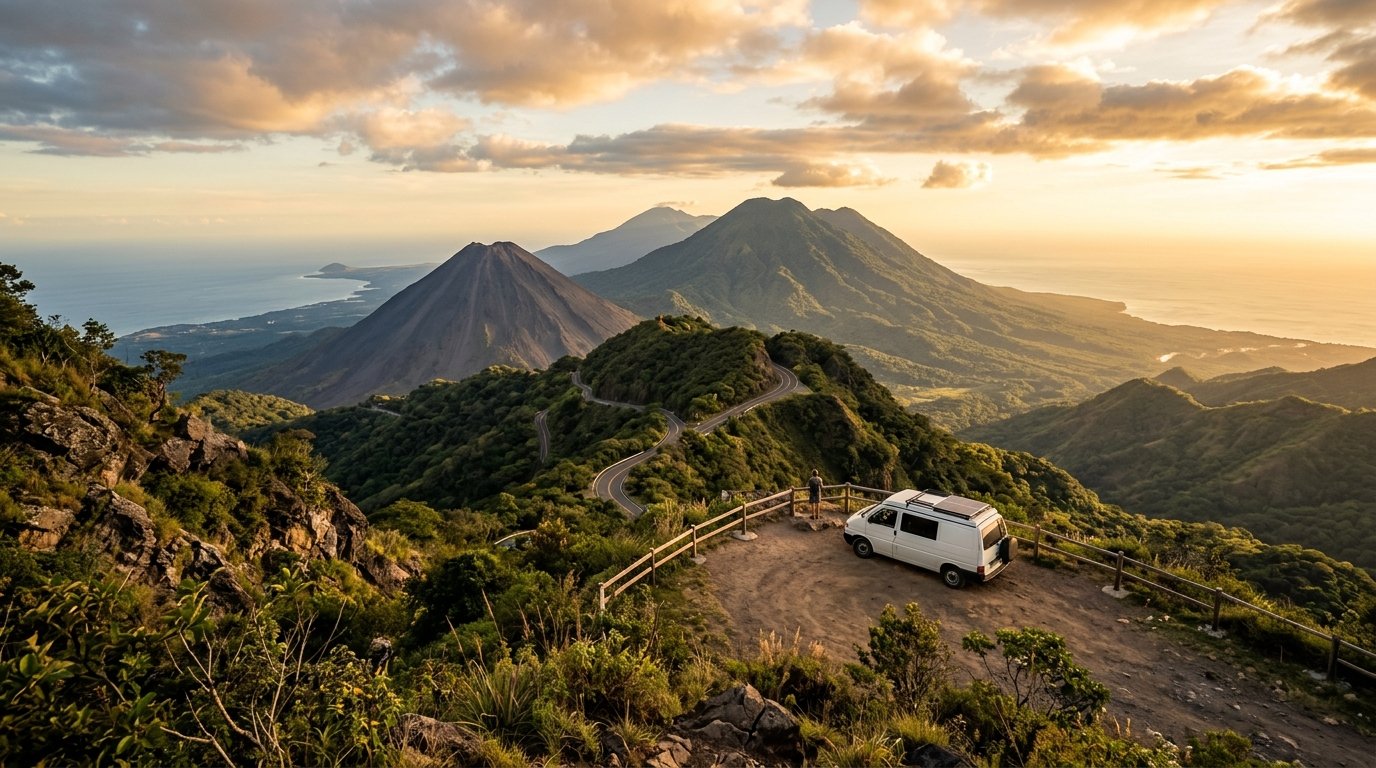
- Overnight Parking Legality: Traffic and parking laws in El Salvador are loosely regulated. It is not generally illegal to sleep in your vehicle, but safety is the primary limiting factor. Sleeping on random roadsides or urban streets is strongly discouraged.
- Parking vs. Camping: While pulling over to rest is perfectly legal, setting up a “camp” (deploying awnings, setting up chairs, or cooking outside) in a public parking lot or beachfront will likely result in police intervention.
- Designated Overnight Areas: El Salvador does not have a European-style “aires” network. Van lifers and overlanders typically rely on paying a small fee to park overnight in secure locations. These include private hostel parking lots (especially around Surf City and El Tunco), 24-hour gas stations, or even local tourist police (POLITUR) stations, where officers will often allow overlanders to park safely in their lots for the night. Certain surf towns, like El Zonte, have specific municipal parking restrictions that strictly prohibit overnight parking in main market or beach-access areas.
5. 🔥 Campfires & Practical Restrictions
- Campfire Regulations: Open fires are heavily restricted. In national parks like El Imposible, campfires are strictly forbidden to protect the fragile ecosystems. In private campsites or beaches, fires are only tolerated in raised, designated fire pits. During the dry season, the wildfire hazard in El Salvador is exceptionally high, and local authorities actively enforce open-air burning bans. Always rely on a portable camping stove for cooking.
- No-Camp Zones: Tourists must entirely avoid camping near military installations, remote border zones with Honduras and Guatemala (unless crossing at an official checkpoint or on a guided hike), and deep rural agricultural lands without clear permission. Additionally, avoid camping near riverbeds, especially in the rainy season, due to sudden and lethal flash floods.
6. 🔗 Official Sources & Links
To verify the latest regulations, check for seasonal park closures, or book official guides, travelers should consult the following resources:
- El Salvador Travel – The official tourism board (CORSATUR) for destination guides and approved tour operators.
- Ministry of Environment and Natural Resources (MARN) – For official updates on national park rules, biodiversity laws, and protected area access.
Disclaimer: Land-use laws, park entry requirements, and the local security situation in Central America can change rapidly. The information provided is for general guidance as of late 2026. Always verify current rules, road conditions, and safety advisories with official local authorities or a licensed Salvadoran guide before embarking on a backcountry or van life trip.

Adrenaline junkie with a passion for exploring off-the-beaten-path destinations and finding unique ways to stay active. Expect stunning scenery, challenging workouts, awesome travel tips and a whole lot of fun. Let’s get sweaty and explore the world together!