
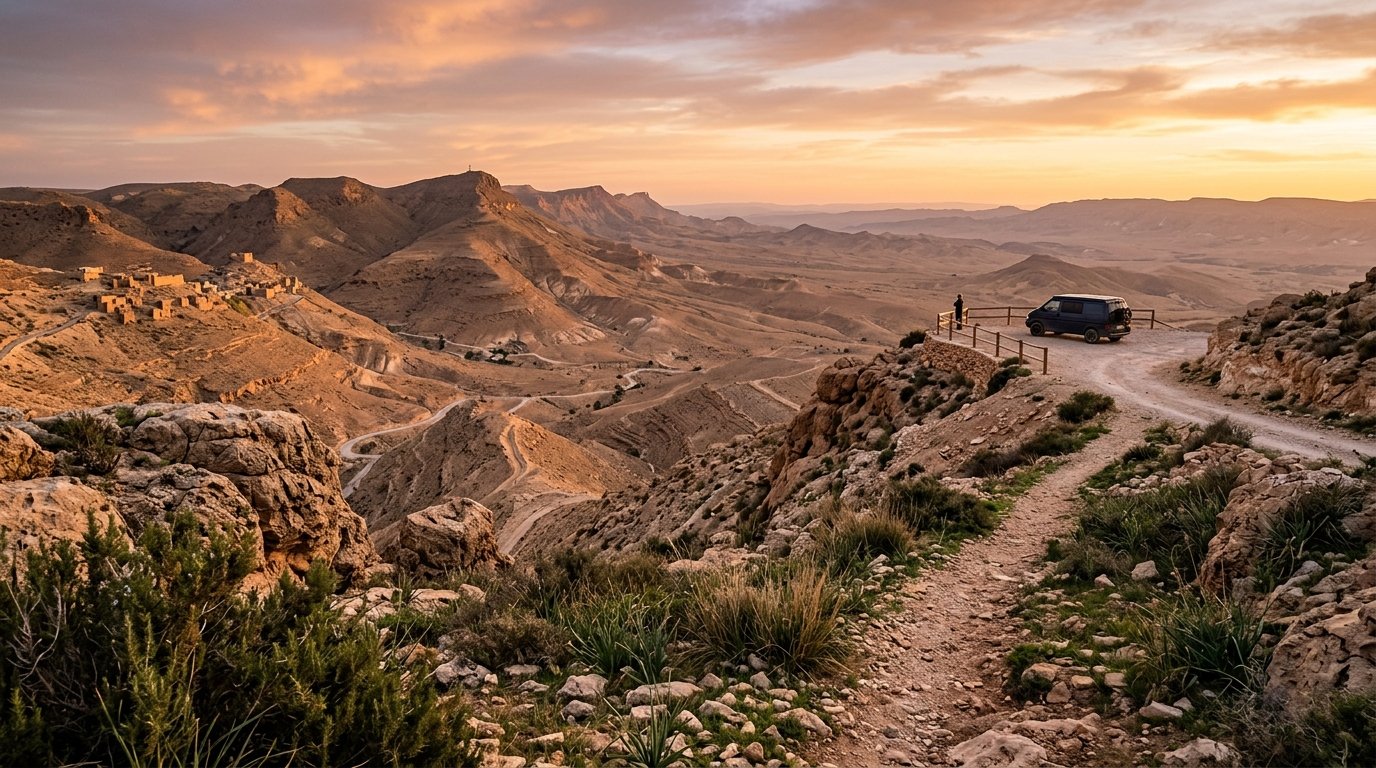
1. 🏕️ The Short Answer
For foreign tourists, wild and dispersed camping in Tunisia operates in a legal grey area; it is widely tolerated in desert and rural regions provided you inform the local National Guard of your whereabouts. However, recent strict regulations in national parks and localized bans in forested areas due to wildfire risks mean that camping requires careful planning, prior permissions in protected zones, and strict adherence to regional security advisories.
2. 🌲 Wild & Dispersed Camping Rules
- Legality on public land: Wild camping is not strictly codified into a single national law, making it a tolerated practice rather than a guaranteed right. In the Sahara and remote southern areas (such as Douz or Ksar Ghilane), wild camping is popular and generally accepted.
- Check-in requirements: The golden rule for tourists is to notify the local National Guard (Garde Nationale) before setting up camp in the wild. They need to know your location for your own safety, will advise if an area is secure, and can tell you if specific forestry permissions are needed.
- Duration and distance limits: There are no formal duration limits on public land, but you should avoid pitching a tent on privately owned agricultural land without asking locals first.
- Enforcement: Enforcement is primarily focused on safety rather than issuing fines. If the National Guard deems an area unsafe, they will move you along. Be aware that regions like Jendouba and Bizerte have previously issued temporary local bans on wild camping due to severe forest fires.
3. 🏞️ National Park & Protected Area Rules
- Permit system: Yes, access is highly restricted. As of late 2025, the Tunisian Ministry of Agriculture introduced strict mandatory procedures for visiting all national parks.
- Advance booking: All visitors must obtain prior authorization to enter. You must submit a request via email to the Regional Agricultural Development Commission (CRDA) of the relevant governorate at least 7 days before your visit. Groups of 5 or more must be organized by a licensed travel agency or legal organization.
- Strict restrictions: Wild camping and open fires are strictly prohibited inside national parks to protect fragile ecosystems from wildfires and poaching. You may only camp in explicitly designated eco-tourism zones, if available, using the proper professional permits.
4. 🚐 Van Life & Overnight Vehicle Sleeping
- Sleeping in vehicles: It is generally legal to sleep in your campervan or 4×4. Many overland travelers tour Tunisia this way without legal issues.
- Parking vs. Camping: While the law doesn’t strictly differentiate the two, setting up a full camp (putting chairs and tables out) in a public space or roadside is frowned upon and may prompt a visit from the police. It is always best to keep a low profile.
- Where to park safely: Dedicated European-style “aires” do not exist. In northern and coastal regions, it is best to use official, gated campsites. In towns and along travel routes, overlanders frequently use guarded parking lots, youth hostel grounds, or 24-hour gas stations—usually by paying a small fee to the night guard or attendant for security.
5. 🔥 Campfires & Practical Restrictions
- Campfire rules: Open campfires are heavily restricted depending on the region. In the forested northern regions, summer fires are strictly banned due to devastating wildfire seasons. In the southern Sahara desert, small campfires (often used to bake traditional sand bread) are widely accepted, but you must bring your own wood and fully extinguish the ashes.
- Military and Border Zones: CRITICAL: Never camp near the Libyan or Algerian borders. The Chaambi Mountain National Park area and the Kasserine region are heavily militarized due to counter-terrorism operations and are strictly off-limits for independent travel and camping.
- Sensitive infrastructure: Avoid camping near military bases and deep-south oil/gas infrastructure. Always follow the National Guard’s routing advice; entering restricted desert areas without permission is highly dangerous.
6. 🔗 Official Sources & Links
To verify the latest regulations, travel warnings, and tourist information, please consult the following official sources:
Disclaimer: Camping regulations, land-use laws, and security zones in Tunisia can change rapidly due to environmental conditions (like fire bans) and national security measures. Always consult official local authorities, the Tunisian National Guard, and your home country’s travel advisories immediately before your trip.
Adrenaline junkie with a passion for exploring off-the-beaten-path destinations and finding unique ways to stay active. Expect stunning scenery, challenging workouts, awesome travel tips and a whole lot of fun. Let’s get sweaty and explore the world together!