
1. 🏕️ The Short Answer
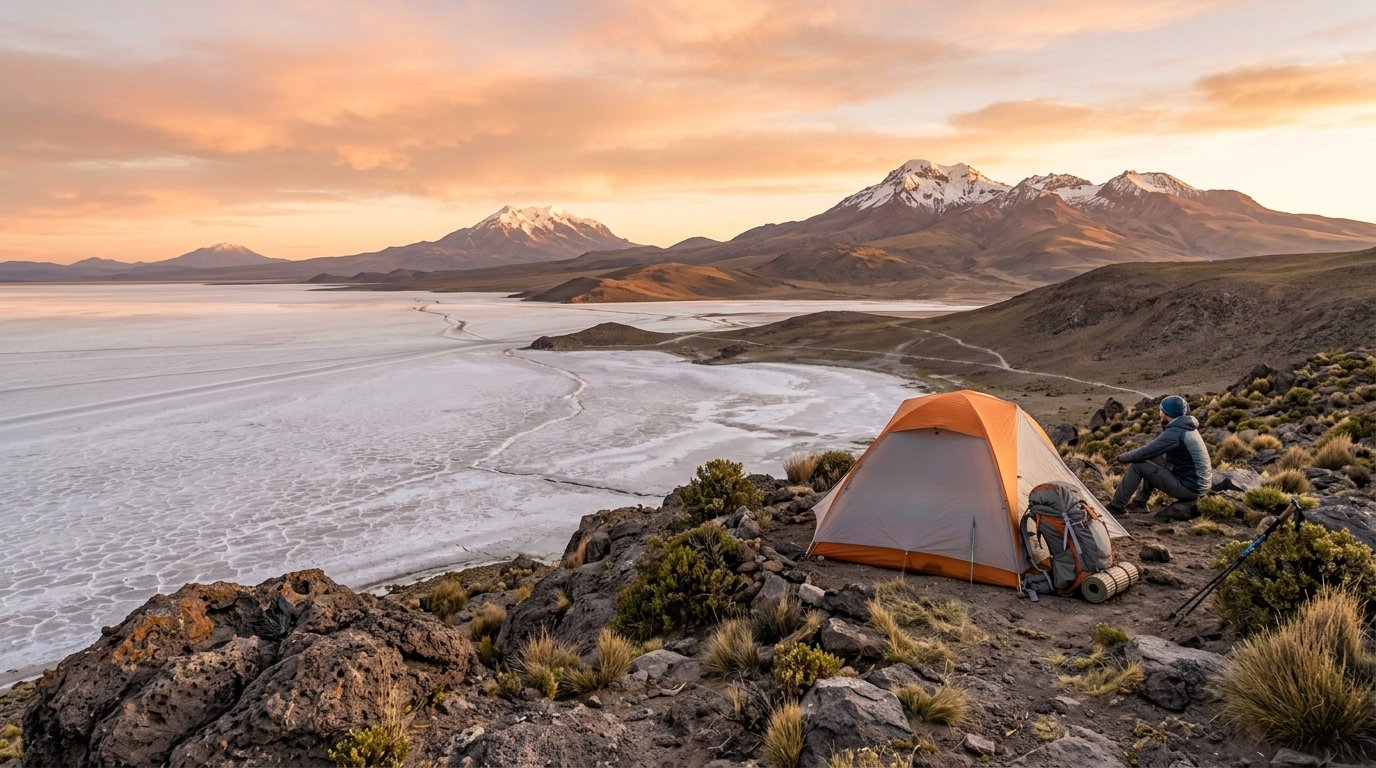
Wild and dispersed camping in Bolivia is widely tolerated, largely unregulated for tourists, and considered a staple of the South American overlanding experience. Because the country is sparsely populated with vast expanses of wilderness, foreign travelers can generally pitch a tent or park a campervan for free in most rural areas. While it is not formally illegal, your ability to camp safely is dictated more by extreme altitudes, severe weather, and regional safety concerns than by strict government regulations.
2. 🌲 Wild & Dispersed Camping Rules
- Legality on Public Land: Wild camping outside of official campsites is completely legal and culturally accepted on public land. Bolivia lacks the strict public land-use laws found in North America or Western Europe.
- Duration and Distance Rules: There are no statutory duration limits (e.g., maximum nights) or legal distance setbacks from water sources or roads. However, out of respect, you should never cross fences into private agricultural property. If you are near an indigenous community or village, it is highly recommended to speak with a local leader to ask for permission to camp—they will almost always say yes.
- Enforcement: In practice, enforcement of camping laws by police is virtually non-existent. As long as you are discreet, do not leave trash, and respect private land, you will not be bothered by authorities for wild camping.
3. 🏞️ National Park & Protected Area Rules
- Permit System: Bolivia’s national parks and reserves are managed by SERNAP (Servicio Nacional de Áreas Protegidas). There is no centralized nationwide camping permit; instead, you must pay an entrance fee (in cash, usually in Bolivianos) at the park gate or ranger station upon arrival.
- Designated Sites vs. Wild Camping: In highly sensitive or dense jungle environments like Madidi National Park, independent camping is generally prohibited, and tourists must go with registered guides to designated eco-lodges or basecamps. In high-altitude reserves like Eduardo Avaroa or Sajama, you are generally free to camp wherever you hike or park, provided you have paid the park fee.
- Seasonal Closures: Bolivia experiences extreme weather. From December to March (the rainy season), many unpaved roads and trails are entirely washed out, rendering areas like the Amazon basin and the Salar de Uyuni inaccessible and highly dangerous for camping.
4. 🚐 Van Life & Overnight Vehicle Sleeping
- Sleeping in Vehicles: It is entirely legal to sleep overnight in a campervan, 4×4, or car. Travelers regularly park for the night at dirt pull-offs, miradors (viewpoints), and rural gas stations.
- Parking vs. Camping: Bolivian law does not make a legal distinction between “parking” and “camping” for tourists. If your vehicle is legally parked, you are allowed to sleep in it.
- Designated Overnight Areas: There is no formal network of RV parks or “aires.” Instead, van lifers rely heavily on apps like iOverlander to find safe wild spots. In cities (like La Paz or Sucre), it is very common for overlanders to pay local hostels or hotels a small fee to park in their secure, walled courtyards in order to sleep in their vans and use the building’s showers and Wi-Fi.
5. 🔥 Campfires & Practical Restrictions
- Campfire Rules: While not strictly banned by a specific tourist law year-round, campfires are heavily discouraged. During the dry season (August to October), Bolivia suffers from massive, devastating wildfires exacerbated by agricultural slash-and-burn (chaqueo) practices. Regional authorities frequently issue strict temporary burn bans. Always prioritize using a portable gas camping stove. If you must have a fire, ensure it is completely extinguished, as high Altiplano winds can spread embers rapidly.
- No-Camp Zones: Do not camp in the Chapare Region (around Villa Tunari) or along remote smuggling routes near the borders of Brazil, Peru, and Chile due to high risks of drug trafficking and civil unrest. Furthermore, never wild camp directly on the Salar de Uyuni salt flats during the wet season, as unpredictable flooding can trap your vehicle and ruin its undercarriage. Finally, avoid camping near military checkpoints or active political road blockades, which are common in Bolivia.
6. 🔗 Official Sources & Links
For up-to-date park rules and safety guidelines, travelers should consult:
- SERNAP (Servicio Nacional de Áreas Protegidas) – The official government body for Bolivia’s national parks.
- U.S. Department of State: Bolivia Travel Advisory – Critical for checking current road blockades, regional safety, and no-travel zones before planning your route.
Disclaimer: Land-use laws, park entry requirements, and regional security situations in Bolivia can change frequently and without warning. Always verify current local regulations with SERNAP rangers or local authorities upon arrival, and check your government’s travel advisories before your trip.

Adrenaline junkie with a passion for exploring off-the-beaten-path destinations and finding unique ways to stay active. Expect stunning scenery, challenging workouts, awesome travel tips and a whole lot of fun. Let’s get sweaty and explore the world together!