
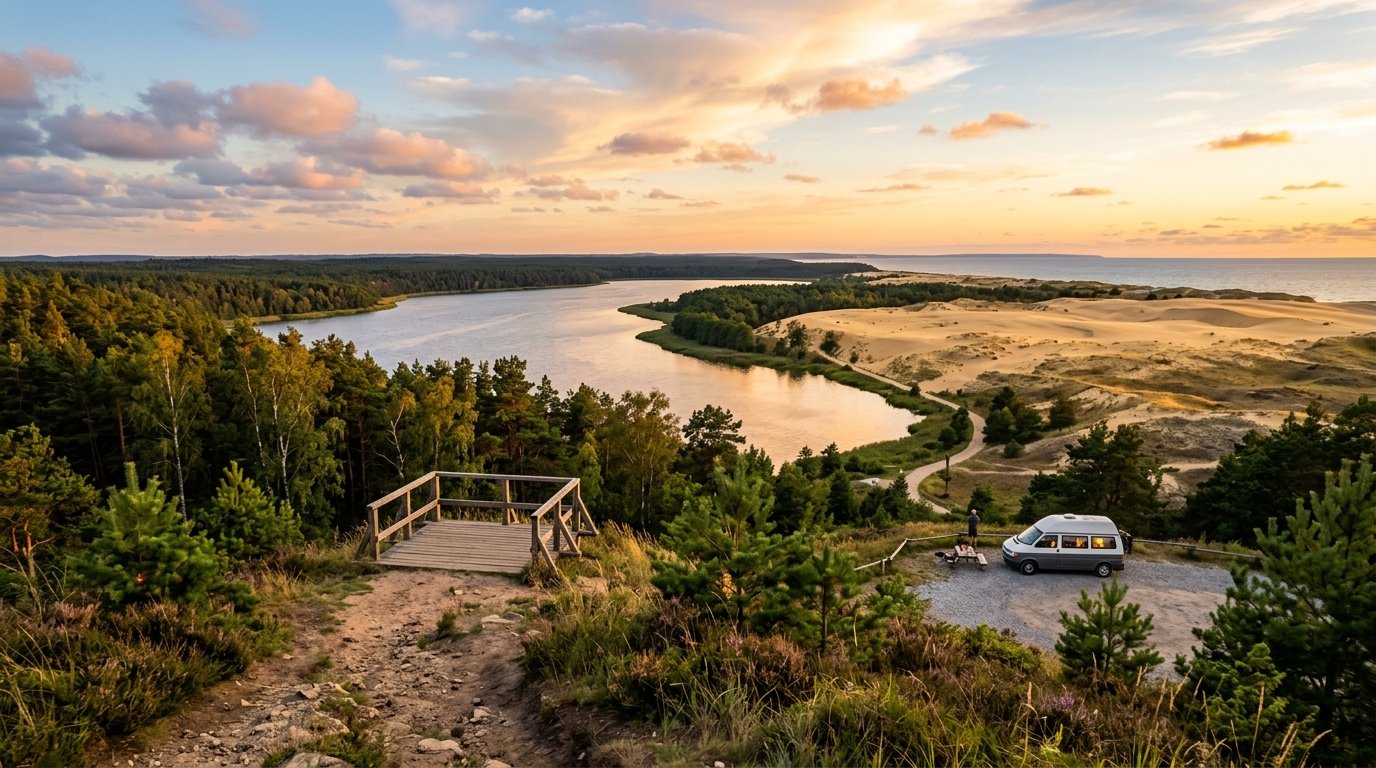
1. 🏕️ The Short Answer
While Lithuania is incredibly nature-friendly, “true” wild camping (pitching a tent or parking a campervan randomly in the wild) is technically restricted for tourists and is only legal in designated areas. However, the state provides a massive, nationwide network of over 1,000 free, basic nature campsites, meaning you can easily enjoy a “wild” camping experience perfectly legally without spending a dime.
2. 🌲 Wild & Dispersed Camping Rules
- Designated Sites Only: By law, setting up a tent or staying overnight in the forest is only permitted at officially established nature campsites (stovyklavietė) and rest areas. You cannot legally pitch a tent in random, unmarked tracts of state or private forests.
- Private Land: Camping on private property is legal only with the explicit permission of the landowner.
- Urban & Restricted Zones: Camping in towns, urban areas, or near residential houses is strictly prohibited.
- Enforcement: Because the government provides extensive free alternatives, illegal wild camping is actively discouraged. Environmental protection officers and forest rangers can and do issue fines up to several hundred euros for unauthorized camping, damaging the forest floor, or illegal off-road parking.
3. 🏞️ National Park & Protected Area Rules
- No Advance Permit Required: There is no overarching, separate national park camping permit system. You simply use the designated sites on a first-come, first-served basis (or book private campgrounds).
- Strict Designated Zones: In national parks (such as Aukštaitija or Žemaitija) and nature reserves, staying overnight is strictly restricted to designated campsites only.
- Coastal Restrictions: In highly protected areas like the Curonian Spit National Park and the Seaside Regional Park, camping on the beaches, fragile dunes, or anywhere outside of official campgrounds is strictly forbidden.
- Seasonal Closures: During severe summer droughts, authorities may declare high fire-risk periods. This can lead to total fire bans and, in extreme cases, temporary restrictions on entering forests altogether.
4. 🚐 Van Life & Overnight Vehicle Sleeping
- Parking vs. Camping: Lithuania generally tolerates sleeping inside a legally parked vehicle at a standard rest stop or parking lot to rest. However, this remains strictly “parking.” The moment you put down leveling blocks, open an awning, or set up chairs outside, it becomes “camping,” which is illegal outside of designated areas.
- Off-Road Driving is Banned: Driving motorized vehicles off forest roads or parking on the natural grass and forest floor is illegal and heavily fined to protect local ecosystems.
- Overnight Stays: To legally “camp” in your van, you must use authorized campsites, nature parkings, or designated motorhome areas (aires). Fortunately, the country has a growing network of campervan sites and rural rest stops that accommodate vans.
5. 🔥 Campfires & Practical Restrictions
- Strict Fire Pit Rules: Open campfires are allowed only in officially installed and marked fire pits. Creating a new fire ring in the wild is entirely illegal.
- Wood and Foraging: You may forage for dry twigs and fallen branches around the campsite, but you cannot chop down trees. Always fully extinguish fires with water or soil before leaving.
- Fire Bans: During dry summer months, all fires—even in official fire pits—can be completely banned. Always check local fire danger warnings before lighting a fire.
- No-Go Zones: Tourists must strictly avoid camping in military zones, nature reserves, and sensitive border regions (especially the borders with Belarus and Russia’s Kaliningrad region), which are highly monitored and can require special permits just to transit.
6. 🔗 Official Sources & Links
For the most accurate and up-to-date maps of free nature campsites, fire restrictions, and legal guidelines, check these official sources:
Disclaimer: Travel laws, environmental regulations, and land-use policies change frequently. This guide is for informational purposes and reflects rules as of 2026. Always verify current restrictions, especially fire bans and border zone rules, with official local authorities or tourist information centers before your trip.

Adrenaline junkie with a passion for exploring off-the-beaten-path destinations and finding unique ways to stay active. Expect stunning scenery, challenging workouts, awesome travel tips and a whole lot of fun. Let’s get sweaty and explore the world together!