
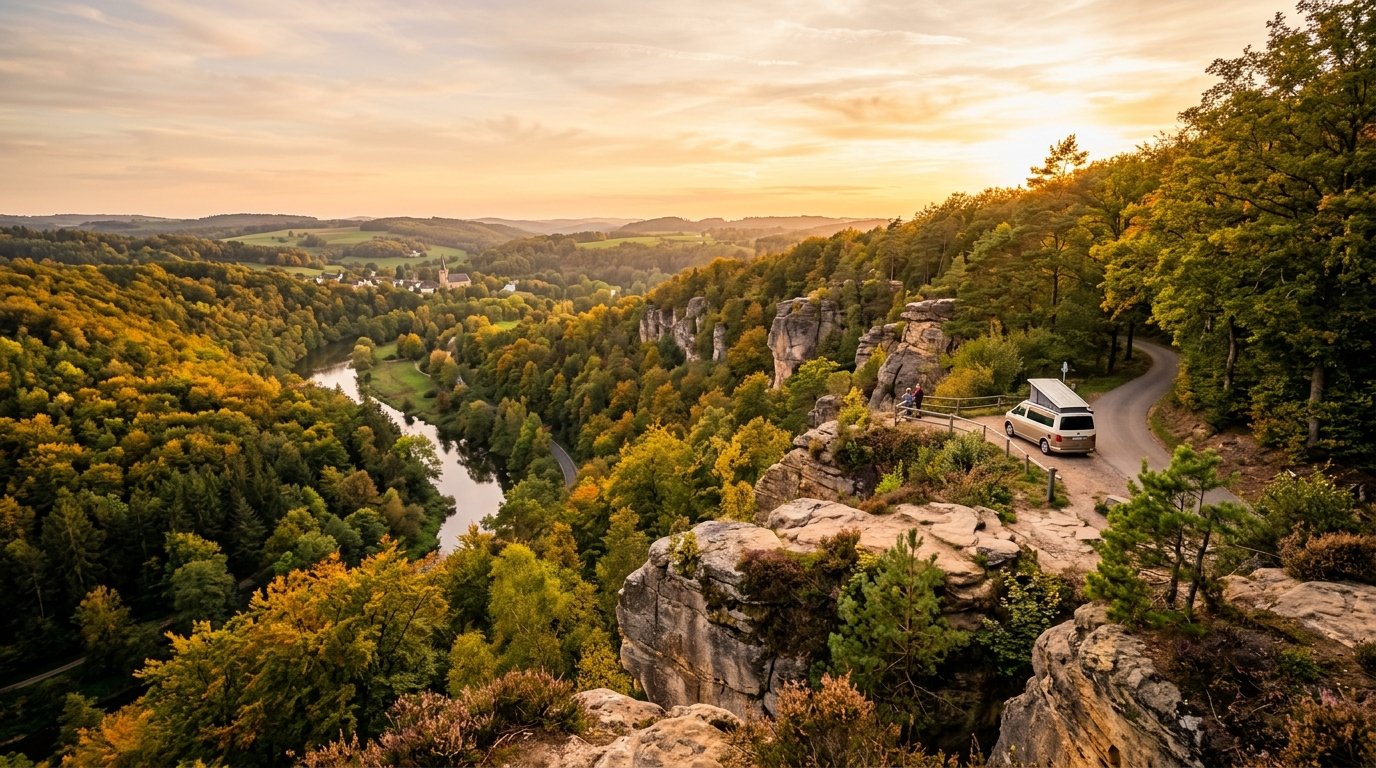
1. 🏕️ The Short Answer
For tourists visiting Luxembourg, wild or dispersed camping on public land is effectively illegal. The country is small, densely populated, and heavily regulated, meaning travelers must plan to stay at official campsites or designated motorhome parking areas. While sleeping in a vehicle for a single night solely to rest is permitted under road safety laws, traditional wild camping with a tent in nature is strictly prohibited nationwide.
2. 🌲 Wild & Dispersed Camping Rules
- Legality on Public Land: Pitching a tent outside of an established, official campsite is entirely prohibited on all public land in Luxembourg.
- Private Land Exception: The only legal way to camp outside of a commercial campground is on private property. You must have explicit, advance permission from the landowner, and this is legally capped at a maximum of two tents.
- Bivouacking: While setting up a full tent is illegal, laying out a simple bivouac (a sleeping bag or tarp without a tent structure) from dusk until dawn is sometimes quietly tolerated in remote forests. However, this remains in a legal grey area and is officially discouraged.
- Enforcement: Because Luxembourg is so compact, enforcement is relatively strict. Police and forest rangers actively patrol, and fines can be issued for violating land-use laws.
3. 🏞️ National Park & Protected Area Rules
- No Backcountry Permits: Luxembourg’s protected areas (such as the Mullerthal region and the Nature Park Our) do not operate North American-style backcountry camping permit systems. You are strictly restricted to using designated, privately or municipally run campsites within these regions.
- Advance Booking: Advance booking is highly recommended during the summer high season, as official nature park campsites fill up rapidly.
- Strict Closures at Upper Sûre Lake: The area surrounding the Upper Sûre Lake (Stauséi) is highly sensitive due to its status as a drinking water reservoir. Bivouacking, wild camping, and unauthorized overnight parking are explicitly and strictly forbidden here at all times. Authorities utilize private security to enforce these rules.
4. 🚐 Van Life & Overnight Vehicle Sleeping
- Restoring Driving Fitness: You are legally permitted to sleep in your vehicle for one night in a standard public parking space or highway rest stop only if it is to restore your ability to drive safely.
- Parking vs. Camping: Luxembourg law makes a sharp distinction between parking and camping. If you sleep in a standard parking spot, you must not exhibit “camping behavior.” This means you cannot deploy awnings, set up camp chairs, extend slide-outs, or use leveling chocks.
- Designated Aires (Stellplätze): Tourists traveling in campervans or motorhomes should utilize the country’s network of “Stellplätze” (motorhome aires). These are designated overnight parking zones that often provide electricity, fresh water, and waste disposal for a small fee, or sometimes for free. Applications like Park4Night or Campercontact are widely used to locate these legal zones.
5. 🔥 Campfires & Practical Restrictions
- Open Campfires are Banned: Open fires in forests and wild areas are strictly prohibited nationwide. You may only build fires in officially designated public barbecue areas or in permitted fire pits at paid campsites.
- Seasonal Fire Bans: During hot, dry summer months, local authorities frequently issue total fire bans. These emergency regulations forbid all open flames, including the use of gas camping stoves, thermal weeders, and even previously designated BBQ pits in forested regions and near lakes.
- Key No-Camp Zones: Travelers must completely avoid attempting to camp or sleep in vehicles near the Upper Sûre Lake, inside local nature reserves, and immediately adjacent to private farmland or residential villages to avoid police intervention.
6. 🔗 Official Sources & Links
To verify the most up-to-date rules, check the following official resources before your trip:
Disclaimer: Land-use laws, fire bans, and camping regulations can change frequently due to environmental conditions, drought emergencies, and new local ordinances. Always verify the current rules with official local sources and park authorities immediately before your trip.

Adrenaline junkie with a passion for exploring off-the-beaten-path destinations and finding unique ways to stay active. Expect stunning scenery, challenging workouts, awesome travel tips and a whole lot of fun. Let’s get sweaty and explore the world together!