
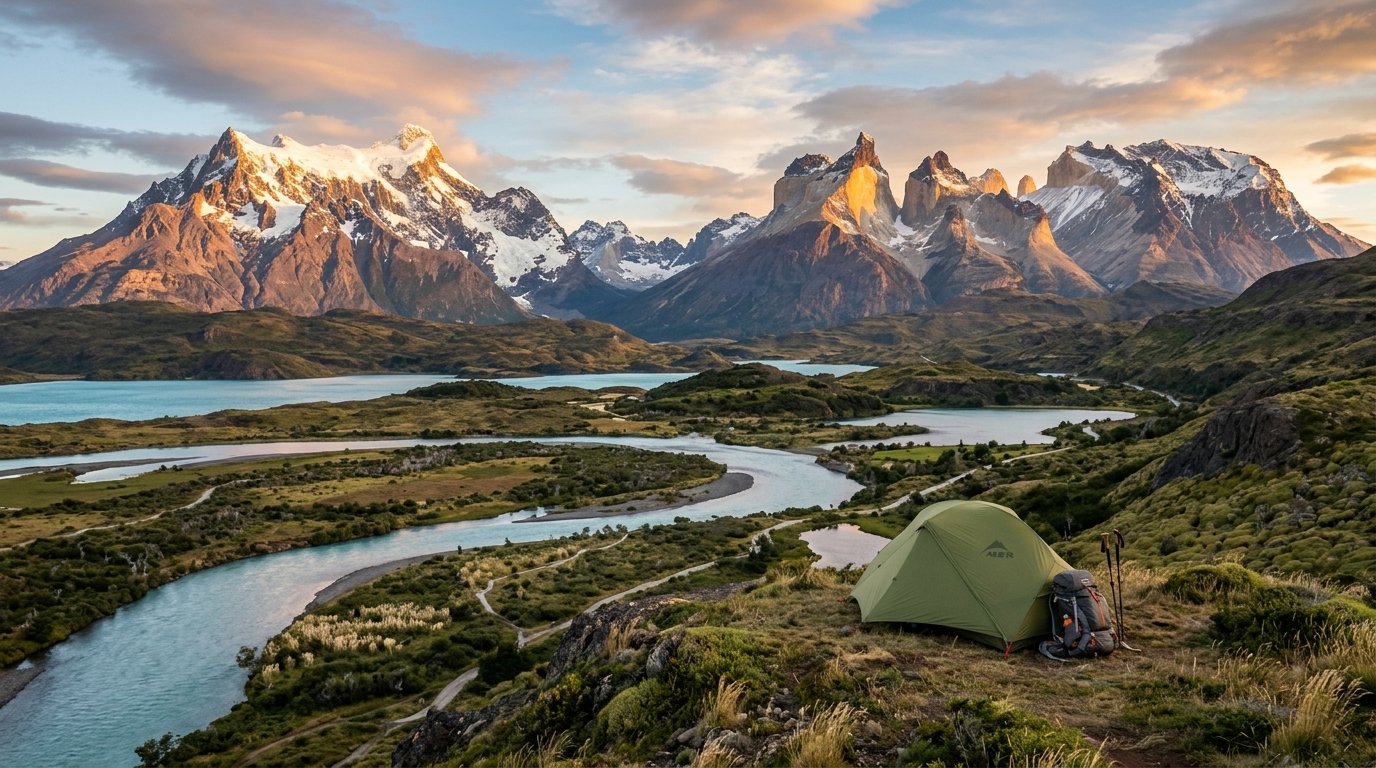
1. 🏕️ The Short Answer
Wild and dispersed camping is generally legal, well-tolerated, and highly popular on public lands throughout Chile, making it a world-class destination for van life and backcountry exploration. However, inside National Parks and protected nature reserves, wild camping is strictly illegal, and tourists are confined to designated, pre-booked campsites with severe penalties for non-compliance.
2. 🌲 Wild & Dispersed Camping Rules
- Legality on Public Land: Outside of national parks and private property, “acampada libre” (wild camping) is legal and widely accepted on public beaches, remote roadside pull-offs (like along the famous Carretera Austral), and throughout the vast Atacama Desert.
- Distance and Duration Limits: There are no strict national laws dictating exact distances from roads or water sources, nor hard limits on how many days you can stay. However, the general rule of thumb is to practice “Leave No Trace” principles, stay no longer than 1 to 2 nights in the same spot, and ensure you are not blocking access roads or gates.
- Enforcement: In rural public areas, local police (Carabineros) rarely enforce camping restrictions unless you are trespassing on private land without permission or causing a disturbance. However, local municipalities in highly developed tourist towns may enforce city ordinances prohibiting tents on urban beaches or public plazas.
3. 🏞️ National Park & Protected Area Rules
- Strictly Designated Sites Only: Inside areas managed by CONAF (Chile’s National Forestry Corporation), wild camping is absolutely prohibited. You must camp in officially designated campsites. If caught wild camping or sleeping in your car in a random park pull-off, you face immediate expulsion from the park and cancellation of your entry permits.
- Advance Booking: A separate camping permit and park pass system applies. For highly popular destinations like the Torres del Paine “W” or “O” treks, you must book campsites months in advance through the official park ticket system and private concessionaires. You will likely be turned away if you arrive without a reservation.
- Seasonal Closures: Parks frequently close specific trails or entire sectors due to extreme weather (such as heavy snow in Patagonia during winter) or severe wildfire risks during the peak of summer (December to March).
4. 🚐 Van Life & Overnight Vehicle Sleeping
- Sleeping in Vehicles: It is completely legal to sleep in your campervan or motorhome in public parking lots, rest stops, and along road shoulders in Chile. Apps like iOverlander are heavily relied upon by the tourist van life community to find safe spots.
- Parking vs. Camping: Chile generally tolerates overnight parking. However, if you are in a town, municipal parking lot, or public beach, you should treat it as “parking.” Do not set up an awning, take out camping chairs, or cook outside your vehicle, as local police may ask you to move along.
- Designated Areas: Major gas station chains, particularly “Copec,” are famous among van lifers in Chile. Many Copec stations act as unofficial rest areas offering safe, well-lit overnight parking, free Wi-Fi, and hot showers for a small fee. Inside National Parks, you can only park overnight in specifically designated campervan areas, usually near ranger stations or visitor centers.
5. 🔥 Campfires & Practical Restrictions
- Zero-Tolerance Fire Bans: Campfires are strictly and universally prohibited in all Chilean National Parks and protected areas under Law 20.653. Cooking is only allowed on approved camping stoves in designated cooking shelters. Ignorance is not an excuse: foreign tourists who light fires or misuse stoves in parks are routinely arrested, handed massive fines, and immediately deported.
- Summer Wildfire Threat: Outside of parks, open fires are highly discouraged and frequently banned at the regional level due to Chile’s devastating history of summer wildfires. Always assume a fire ban is in effect during the dry season, and heed alerts from the U.S. Embassy and local disaster agencies (SENAPRED).
- No-Camp Zones: Avoid camping near military installations and strictly follow signage near the northern borders with Peru and Bolivia, as some highly remote border sectors still contain legacy landmines. Additionally, do not camp in dry riverbeds in the desert north due to the sudden risk of flash flooding.
6. 🔗 Official Sources & Links
For the most up-to-date information on park passes, trail closures, and official rules, travelers should consult:
- CONAF (Corporación Nacional Forestal) – The official government body managing Chile’s National Parks, protected areas, and fire regulations.
- Chile Travel – The official tourism board of Chile, providing safety updates and travel guidelines for foreign visitors.
Disclaimer: Camping regulations, land-use policies, and fire bans in Chile can change rapidly due to environmental conditions, wildfire risks, and local ordinances. Always verify current rules with official local sources, park rangers, or tourist information centers immediately prior to your trip.
Adrenaline junkie with a passion for exploring off-the-beaten-path destinations and finding unique ways to stay active. Expect stunning scenery, challenging workouts, awesome travel tips and a whole lot of fun. Let’s get sweaty and explore the world together!