
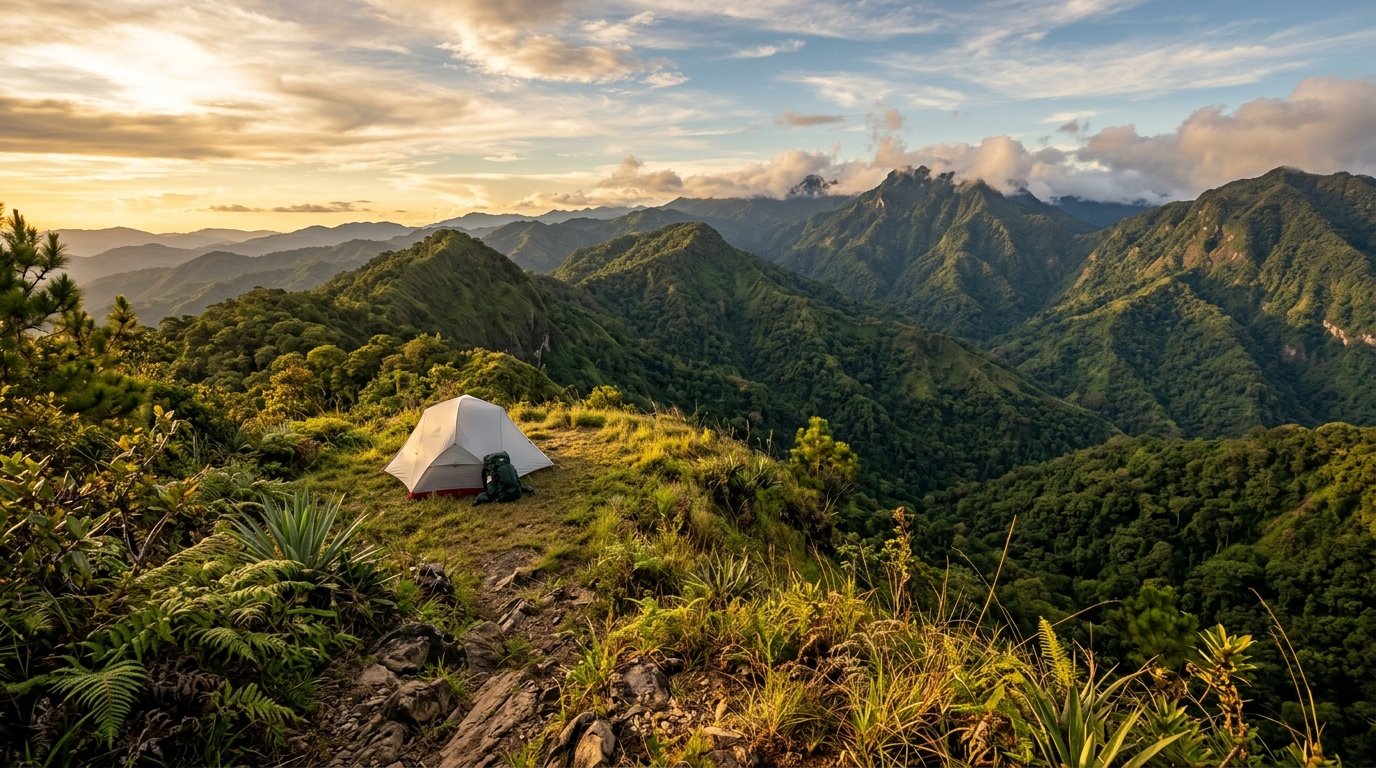
1. 🏕️ The Short Answer
While wild camping in Honduras exists in a legal grey area and is not explicitly outlawed nationwide, it is highly discouraged and effectively unfeasible for tourists due to severe security risks and a lack of open public land. All overnight stays should be treated as strictly “permission-based,” meaning travelers should only camp in designated national park sites, fenced eco-lodges, or private land with the explicit, prior consent of the owner.
2. 🌲 Wild & Dispersed Camping Rules
- Is camping outside official campsites legal? There is no sweeping national law strictly forbidding wild camping on public land, but spontaneous dispersed camping is simply not a recognized practice. Most natural land in Honduras is either tightly controlled private property (often fenced), indigenous community land, or protected government reserves requiring manager authorization.
- Are there duration limits or distance rules? Because wild camping is not integrated into a legal recreation framework, there are no statutory setback distances (like 100 meters from water or roads) or specific duration limits. If you obtain permission from a private landowner or local community, the duration and rules are entirely at their discretion.
- Is this actively enforced? You are unlikely to be formally ticketed by police for pitching a tent, but local military and police patrols may ask you to move for your own safety. The primary deterrent is not legal enforcement, but the incredibly high risk of armed robbery, trespassing disputes, and general insecurity in remote, unmanaged areas.
3. 🏞️ National Park & Protected Area Rules
- Do national parks have a separate camping permit system? Honduras’s protected areas are managed by the Instituto Nacional de Conservación Forestal (ICF). There is no centralized online booking system for permits. Instead, visitors pay an entry fee plus a small camping fee (typically 100 to 200 Lempiras) in person at the park gate or visitor center.
- Is camping restricted to designated sites? Yes. To protect delicate ecosystems and ensure visitor safety, camping is strictly limited to designated clearings. These are usually located immediately next to visitor centers, ranger stations, or established trailheads (such as in Celaque National Park or La Tigra). Advance booking is rarely required, but you must register with rangers upon arrival.
- Are there seasonal closures? Yes. Honduras experiences a severe dry season from February to May. During these months, the ICF frequently limits backcountry access and enforces strict monitoring to prevent devastating forest fires. Conversely, extreme rainy seasons (hurricane season) can lead to temporary trail closures due to flash floods and landslides.
4. 🚐 Van Life & Overnight Vehicle Sleeping
- Is it legal to sleep overnight in a vehicle? There is no specific traffic law making it illegal to sleep inside a legally parked vehicle. However, sleeping on public roadsides, at remote rest stops, or in municipal car parks is highly dangerous and strongly advised against due to the severe risk of carjacking and theft.
- Parking vs. Camping: As in many countries, standard traffic laws apply when you are merely parked. If you set up awnings, place chairs outside, or cook on the pavement, you cross the legal line into “camping”. For both security and legal reasons, stealth camping on city streets is never recommended in Honduras.
- Are there designated overnight areas? There is no public network of motorhome rest areas or “aires” in Honduras. Overlanders and van lifers universally rely on private, secured locations. Safe overnight spots typically include 24-hour gas stations (with the manager’s permission), guarded police station parking lots, and the fenced grounds of private hostels or eco-resorts.
5. 🔥 Campfires & Practical Restrictions
- Are open campfires generally allowed? Open campfires are heavily restricted and strictly banned in national parks and biological reserves. The ICF runs aggressive forest fire prevention campaigns, especially during the dry season, and lighting a fire in a protected zone is a serious offense. Tourists should always use a portable gas stove for cooking and only light fires in designated, concrete fire rings on private campsites if explicitly permitted by the host.
- Key no-camp zones: Tourists should strictly avoid camping near border regions (especially the porous borders with Nicaragua and Guatemala), isolated beaches, rural roadsides, and urban centers. Military zones, sensitive infrastructure, and un-fenced private agricultural lands must also be entirely avoided.
6. 🔗 Official Sources & Links
For the most accurate and up-to-date information regarding national parks, conservation laws, and tourism safety, travelers should consult the following official sources:
- Instituto Nacional de Conservación Forestal (ICF) – The official government authority on national parks, protected areas, and forestry laws in Honduras.
- Instituto Hondureño de Turismo (IHT) – The official Honduras tourism board.
Disclaimer: Land-use laws, national park regulations, and security situations change frequently in Central America. The information provided in this guide is for educational purposes and should not be construed as formal legal advice. Always verify current rules and local safety conditions with official local authorities or trusted local guides prior to your trip.

Adrenaline junkie with a passion for exploring off-the-beaten-path destinations and finding unique ways to stay active. Expect stunning scenery, challenging workouts, awesome travel tips and a whole lot of fun. Let’s get sweaty and explore the world together!