
1. 🏕️ The Short Answer
Wild camping with a full tent setup is officially illegal in the Czech Republic, but the country operates in a highly tolerant grey area when it comes to “bivouacking”. This means tourists can legally sleep under the stars, in a hammock, or with a simple tarp for a single night from dusk until dawn, provided they do not pitch a formal tent, light a fire, or try to sleep in strictly protected national parks.
2. 🌲 Wild & Dispersed Camping Rules
- Legality on Public Land: According to the Czech Forestry Act and Nature Protection Act, traditional “camping” (pitching a tent, setting up a camp, staying multiple nights) is strictly prohibited outside designated campsites. However, “bivouacking” (sleeping for one night with minimal or no shelter, like a sleeping bag) is legally permitted in most unprotected forests.
- Duration and Distance Rules: You may only bivouac for a single night in one spot, arriving at dusk and leaving at dawn. You must leave absolutely no trace. While there are no hard distance rules from roads for bivouacking, you must avoid private agricultural land, farms, and residential properties unless you have the landowner’s explicit permission.
- Enforcement: In unprotected rural forests, police and rangers are generally tolerant of respectful bivouacking. However, if you set up a large tent, leave trash, or act loud, you will be heavily fined. Enforcement against illegal wild camping with tents is actively pursued.
3. 🏞️ National Park & Protected Area Rules
- Strict Bans: In National Parks (such as Krkonoše, Šumava, Podyjí, and Bohemian Switzerland) and Protected Landscape Areas, wild camping is strictly forbidden. In certain highly sensitive parks like Bohemian Switzerland, even basic bivouacking is completely banned.
- Designated Emergency Sites: There is no wild camping permit system. However, in certain parks like Šumava, authorities provide designated “emergency overnight sites” (Nouzová nocoviště). These are basic clearings where hikers can legally sleep for one night without a reservation, but you must bring your own gear and leave by morning.
- Seasonal Restrictions: Access to certain trails or zones within national parks is routinely restricted during wildlife breeding seasons (typically spring) or during extreme summer droughts when the risk of forest fires is high.
4. 🚐 Van Life & Overnight Vehicle Sleeping
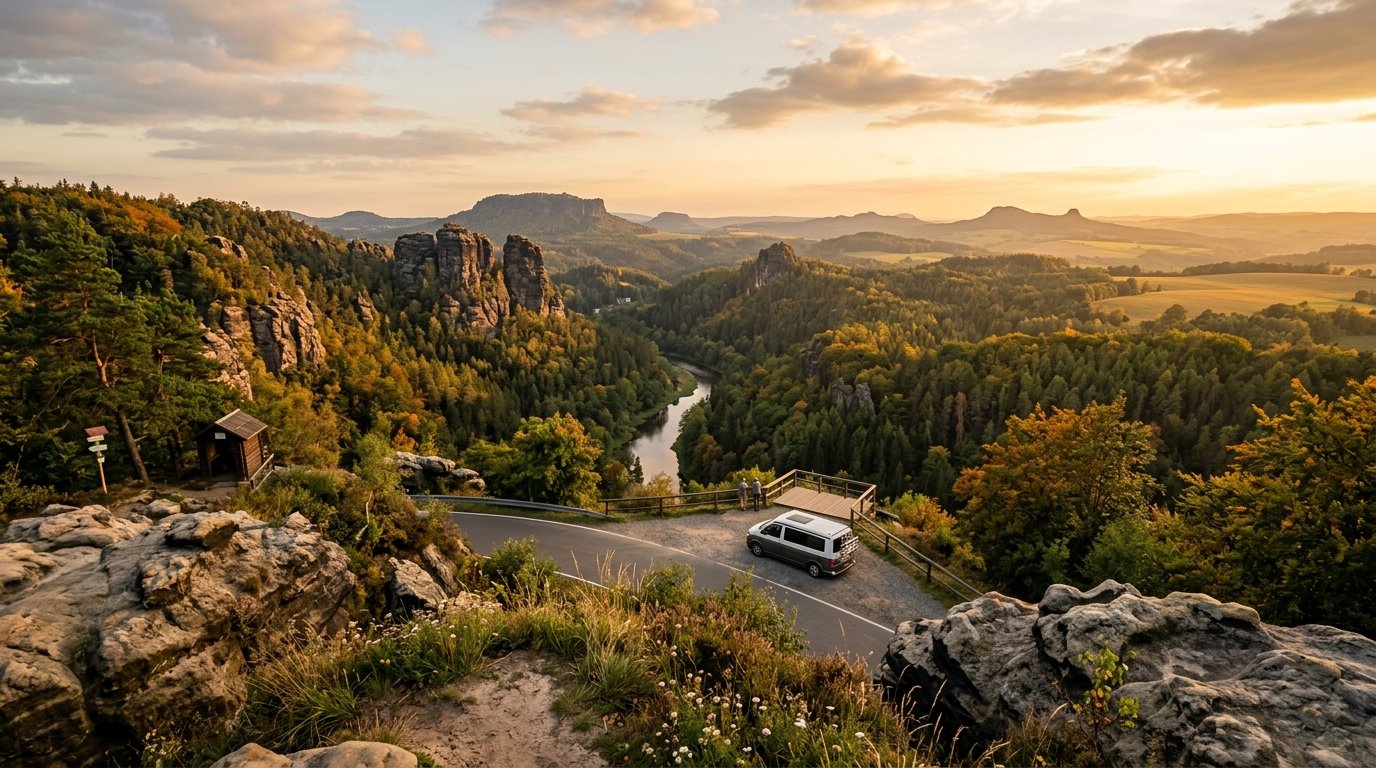
- Sleeping in Vehicles: You are legally allowed to sleep in a parked vehicle (car, camper, or van) in public car parks and rest stops for a single night under the premise of “restoring your driving ability”.
- Parking vs. Camping: Czech law strictly distinguishes between parking and camping. As long as all your activities remain inside the vehicle, it is considered legal parking. The moment you roll out an awning, place camping chairs outside, or cook outside the van, you are legally “camping” and risk a heavy fine.
- Designated Areas: Tourists should utilize designated motorhome stops (Stellplätze or Karavanová stání), which offer legal overnight parking, often with basic waste and water services for a small fee. Free boondocking deep in nature reserves or driving your van onto unpaved forest roads is strictly illegal.
5. 🔥 Campfires & Practical Restrictions
- Campfire Laws: Open campfires are strictly prohibited everywhere in forests and within 50 meters of any forest edge. In national parks, fires are completely banned unless you are using an officially designated and maintained public fire pit.
- Seasonal Fire Bans: During the dry summer months, local municipalities and the national weather service frequently issue total fire bans. During this time, lighting a fire, using a camping stove, or even smoking in a forest can result in massive fines.
- No-Camp Zones: Never attempt to camp or bivouac in military training areas (such as Boletice or Libavá), active logging zones, or National Nature Reserves (Národní přírodní rezervace), which are highly sensitive ecological zones.
6. 🔗 Official Sources & Links
To verify the most up-to-date camping regulations, trail closures, and fire bans, travelers should consult the following official resources:
- Visit Czechia (Official Tourism Board) – For general tourist guidelines and authorized campsite directories.
- Ministry of the Environment of the Czech Republic – For official laws regarding nature protection, national park rules, and active fire bans.
Disclaimer: Land-use laws, environmental regulations, and local enforcement policies change frequently. Always verify the current legal status, weather warnings, and local restrictions with official Czech authorities or local tourist information centers before embarking on your trip.
Adrenaline junkie with a passion for exploring off-the-beaten-path destinations and finding unique ways to stay active. Expect stunning scenery, challenging workouts, awesome travel tips and a whole lot of fun. Let’s get sweaty and explore the world together!