
1. 🏕️ The Short Answer
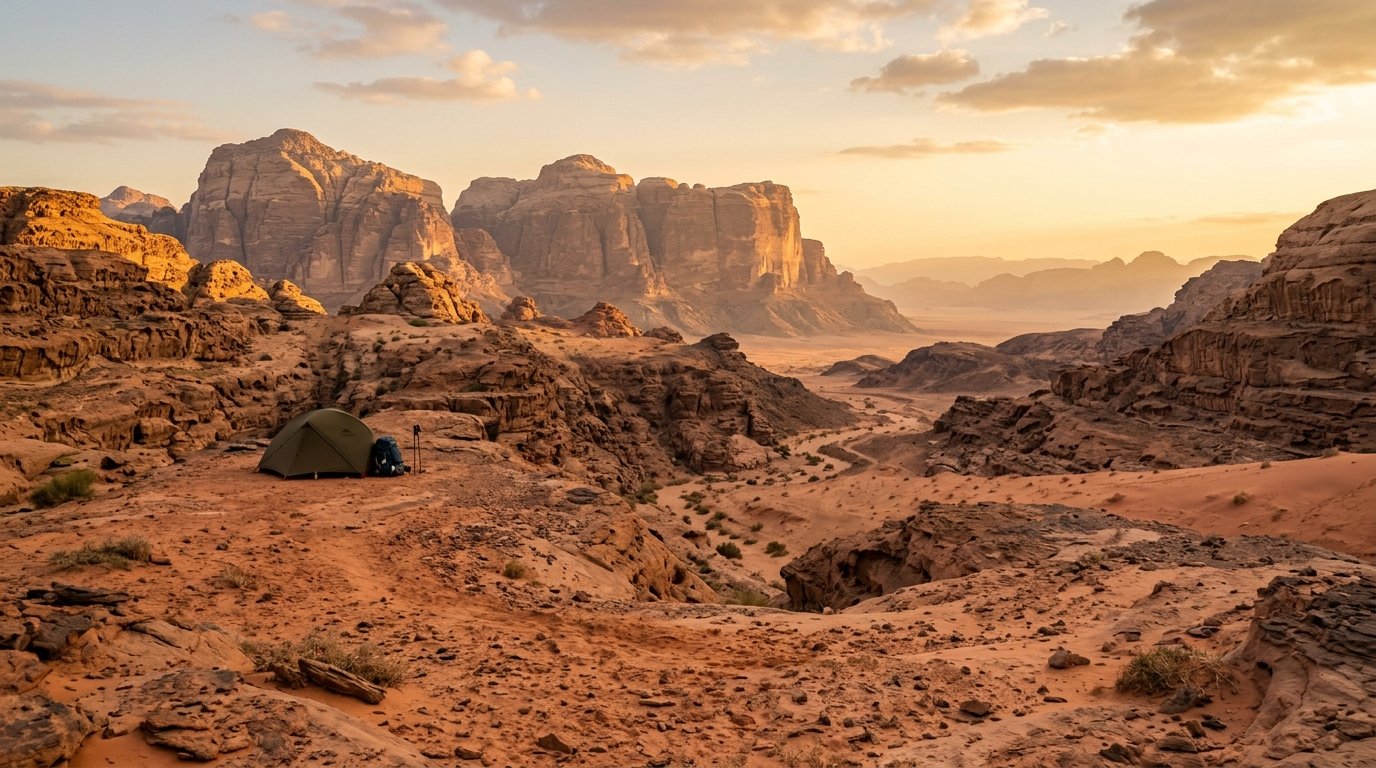
Yes, wild and dispersed camping is completely legal, highly tolerated, and deeply rooted in the local culture for tourists visiting Jordan. With the exception of strict nature reserves, urban areas, and sensitive border zones, pitching a tent or parking a campervan on public desert land is a widely accepted practice.
2. 🌲 Wild & Dispersed Camping Rules
- Public Land Camping: Camping outside of official campsites is perfectly legal on public lands, which make up the vast majority of Jordan’s desert landscapes. It is a highly popular activity for 4×4 renters, overlanders, and trekkers.
- Duration and Distance Rules: There are no codified laws limiting how long you can stay in one spot or dictating exact distances from roads. However, travelers should use common sense: avoid pitching your tent on active agricultural land, near private homes, or immediately next to busy highways.
- Enforcement: Because wild camping is a cultural norm rooted in Bedouin traditions, you will not be harassed by rangers or police for camping on standard public land. If local police or military patrols do approach you, it is usually just to check your passports, welcome you to the country, and ensure you are safe.
3. 🏞️ National Park & Protected Area Rules
- Permit Systems: Jordan’s protected areas are primarily managed by the Royal Society for the Conservation of Nature (RSCN) and, in the case of Wadi Rum, by the Aqaba Special Economic Zone Authority. You cannot freely wild camp inside RSCN reserves (such as Dana Biosphere Reserve, Wadi Mujib, or Ajloun Forest) without arranging it through their official eco-tourism channels.
- Designated Sites: In RSCN reserves, you are restricted to designated eco-camps, lodges, and chalets, which require advance booking. In the Wadi Rum Protected Area, tourists are legally allowed to wild camp (bivouac) independently, but you must register at the Visitor Center, pay the entrance fee (which is waived if you hold the Jordan Pass), and pay a vehicle fee if driving your own 4×4 into the reserve.
- Seasonal Closures: Flash flooding is a severe, life-threatening risk in Jordan. Canyons (wadis) like Wadi Mujib and Wadi Hasa are strictly closed to hikers and campers during the winter and early spring rain seasons. Regardless of the season, you should never set up your camp in the bottom of a dry riverbed.
4. 🚐 Van Life & Overnight Vehicle Sleeping
- Vehicle Sleeping: Sleeping overnight in a rented campervan, or a 4×4 equipped with a rooftop tent, is entirely legal and one of the most popular ways for tourists to explore Jordan.
- Parking vs. Camping: Unlike many European countries, Jordanian law does not strictly distinguish between “parking” and “camping.” If you pull off into the desert to sleep in your vehicle, you are simply camping, and authorities will not issue you a fine for setting up camping chairs or an awning on public land.
- Designated Areas: You will not find European-style motorhome “aires” or designated rest stops with electrical hookups. Van lifers rely almost exclusively on free wild camping in nature. If you need facilities, you can usually pay a small fee to park at a private Bedouin tourist camp. It is highly advised to avoid sleeping in your vehicle in crowded city centers (like Amman or Aqaba) and head outside the city limits instead.
5. 🔥 Campfires & Practical Restrictions
- Campfires: Open campfires are generally allowed and are a massive part of Jordanian outdoor culture. You may collect dead brush and wood, but it is strictly forbidden to cut down or damage living trees, which are incredibly scarce and vital to the desert ecosystem.
- No-Camp Zones: You must avoid all military installations and international border regions. It is absolutely illegal and highly dangerous to wild camp near the borders of Syria, Iraq, Saudi Arabia, and particularly the Jordan River Valley (the border with Israel and the Palestinian Territories), as these areas are heavily militarized and some historical zones may still contain unexploded ordnance.
6. 🔗 Official Sources & Links
For the most accurate and current information on booking campsites within protected nature reserves, visit the official Royal Society for the Conservation of Nature (RSCN) website.
For general tourist information, route planning, and purchasing the Jordan Pass, check the official Visit Jordan Tourism Board.
Disclaimer: Land-use laws, protected area boundaries, and entry fees change frequently. Flash flood risks and geopolitical border sensitivities can also alter the safety of wild camping overnight. Always verify current regulations and weather conditions with official local authorities or visitor centers before your trip.

Adrenaline junkie with a passion for exploring off-the-beaten-path destinations and finding unique ways to stay active. Expect stunning scenery, challenging workouts, awesome travel tips and a whole lot of fun. Let’s get sweaty and explore the world together!