
1. 🏕️ The Short Answer
For tourists visiting the Dominican Republic, true wild or dispersed camping on public land is strictly regulated and effectively illegal without obtaining specific permits. While enforcement can be inconsistent in the most remote areas, foreign travelers are strongly advised against unauthorized wild camping or roadside vehicle sleeping due to serious security risks, a lack of designated infrastructure, and strict environmental protections.
2. 🌲 Wild & Dispersed Camping Rules
- Legality on Public Land: Wild camping outside of official campsites or privately-owned land is highly restricted for tourists. It requires explicit permission and permits from the Ministry of Environment (Ministerio de Medio Ambiente y Recursos Naturales).
- Rules and Limits: There are no formal duration limits or distance rules because the practice itself is not legally recognized as a free right for travelers. If you wish to camp in a remote area, you must obtain direct permission from the private landowner or the government.
- Enforcement: Camping is regulated by the environmental police (Policía de Medio Ambiente). Setting up a tent on random public land or beaches often draws unwanted attention from authorities who will ask you to leave, or poses severe safety and crime risks to unguided foreign travelers.
3. 🏞️ National Park & Protected Area Rules
- Permit Systems: National parks have a strict, separate camping permit system. You must obtain permission and pay a park fee at a local park office or the national office in Santo Domingo before setting up camp.
- Designated Sites: Camping in protected areas is restricted entirely to designated zones. Advance permit acquisition is mandatory. Popular ecological zones, such as Bahía de las Águilas in Jaragua National Park, have reportedly banned beach wild camping entirely, directing visitors to use private eco-lodges and glamping sites nearby instead.
- Seasonal Closures: Parks may close specific trails or camping zones during extreme weather (such as heavy rain and hurricane season) or during times of high wildfire risk in the alpine regions. Checking the forecast and current park status is essential.
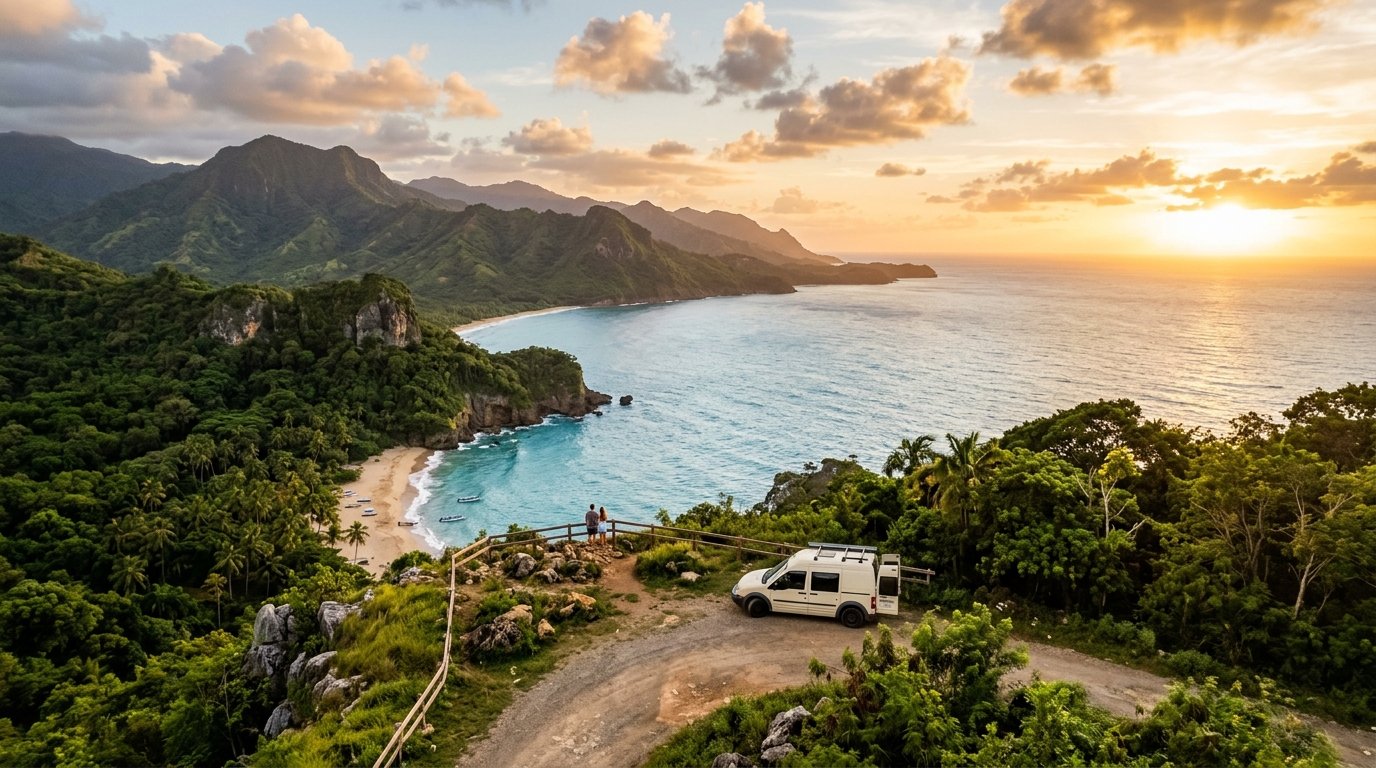
4. 🚐 Van Life & Overnight Vehicle Sleeping
- Roadside Sleeping: While traffic laws do not specifically outlaw overnight vehicle sleeping, doing so on public roadsides, public car parks, or rest stops is highly discouraged for tourists due to severe security concerns.
- Parking vs. Camping: The law does not make a clear distinction between parking and camping. However, local police and military patrols routinely investigate unknown vehicles parked overnight in public spaces.
- Designated Areas: There are no European-style public rest areas for van lifers. Tourists traveling in campervans or motorcycles should strictly use guarded eco-campsites, gated private properties (with landowner permission), or established glamping grounds.
5. 🔥 Campfires & Practical Restrictions
- Campfire Rules: Open campfires are heavily restricted. In national parks, they are generally banned or strictly limited to officially designated fire pits to prevent devastating forest fires, particularly in the dry pine forests of the central mountain ranges.
- No-Camp Zones: Tourists must strictly avoid camping anywhere near the Haiti-Dominican Republic border region due to military patrols, border security operations, and high political tension. Additionally, avoid military installations, urban public beaches at night, and remote, unlit areas where there is a high risk of crime.
6. 🔗 Official Sources & Links
To verify up-to-date camping regulations and secure necessary national park permits, travelers should consult the official Ministry of Environment and Natural Resources (Ministerio de Medio Ambiente) or check for travel advisories from their home country’s embassy.
Disclaimer: Camping, land-use laws, and environmental policies in the Dominican Republic can change frequently. Local enforcement may vary drastically between regions. Always verify current regulations, weather conditions, and security advisories with official local sources before planning your trip.

Adrenaline junkie with a passion for exploring off-the-beaten-path destinations and finding unique ways to stay active. Expect stunning scenery, challenging workouts, awesome travel tips and a whole lot of fun. Let’s get sweaty and explore the world together!