
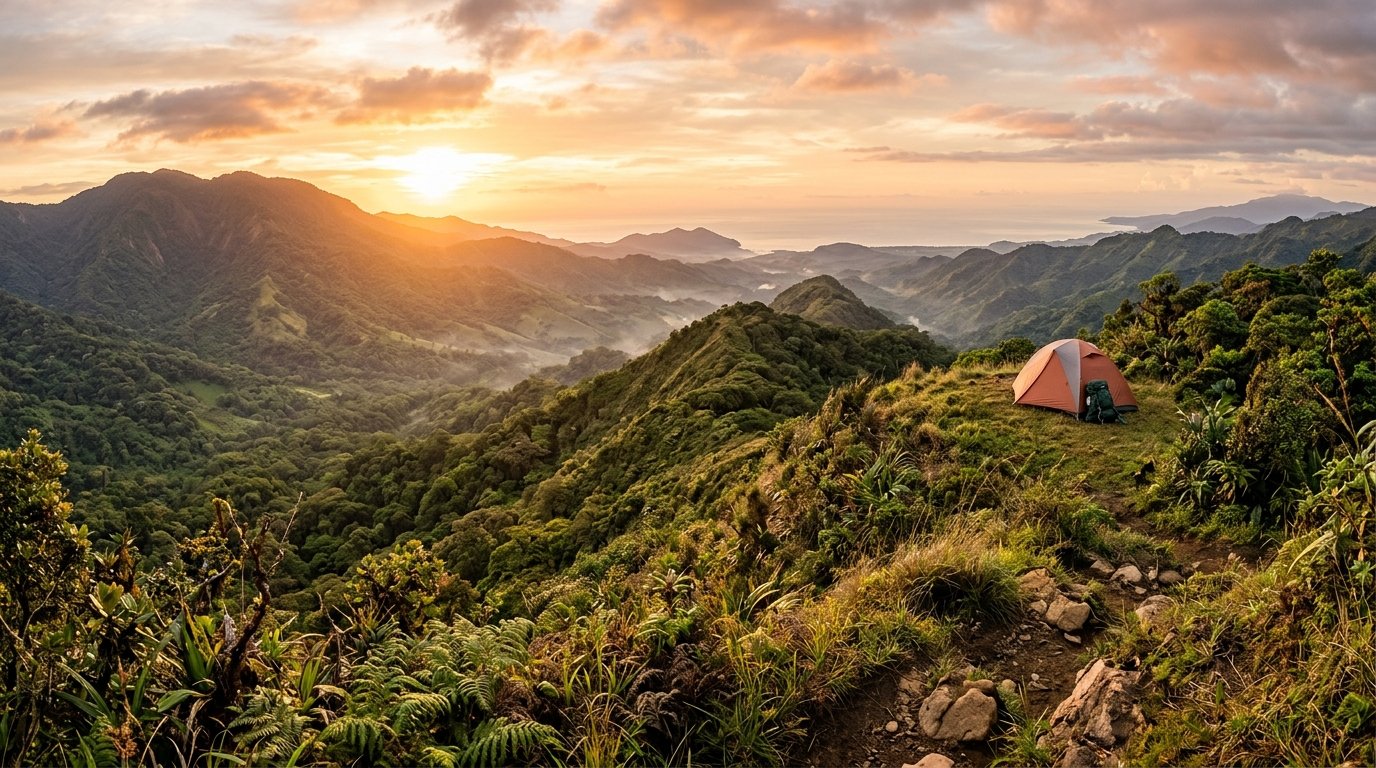
1. 🏕️ The Short Answer
Wild and dispersed camping is generally legal and widely tolerated for tourists in Costa Rica, making it an incredible destination for van life and beach camping. However, wild camping is strictly prohibited inside national parks, where travelers must stick to specific designated zones and use an official permit system.
2. 🌲 Wild & Dispersed Camping Rules
- Is it legal? Yes, free wild camping is legal on most public land, which notably includes beaches. Costa Rican law mandates that the first 50 meters of land inland from the high tide line is public property, making beach camping a staple for foreign travelers.
- Duration & Distance Rules: There are no strict national time limits for wild camping, but you must stay off private land. Crucially, vehicles and tents must be set up behind the tree line (usually palm trees) and are strictly prohibited from driving or parking directly on the sand in order to protect marine life and prevent coastal erosion.
- Enforcement: In practice, enforcement is highly relaxed. Local police are generally friendly toward tourists and may simply do a routine safety check or wave as they pass, provided you are not ignoring explicit “No Camping” municipal signs.
3. 🏞️ National Park & Protected Area Rules
- Permit System: Costa Rica’s national parks are managed by SINAC (Sistema Nacional de Áreas de Conservación). Wild camping inside any park boundaries is strictly illegal.
- Designated Sites & Booking: Camping is only allowed in a small handful of specific national parks (such as Corcovado and Rincón de la Vieja) in designated ranger station zones. These sites require advance tickets and reservations booked directly through the official SINAC online platform; you cannot simply show up and pitch a tent.
- Seasonal Closures: Access to park campsites can be heavily restricted or closed entirely during the severe rainy season (May through November) due to washed-out access roads, or during the dry season (December through April) due to extreme wildfire risks.
4. 🚐 Van Life & Overnight Vehicle Sleeping
- Overnight Parking Legality: Sleeping in your campervan, 4×4, or car is legal in public spaces, pull-offs, and most roadsides unless specifically marked otherwise.
- Parking vs. Camping: Costa Rican law does not rigidly distinguish between “parking” and “camping” on public roads, so van lifers rarely face the complex legal hurdles seen in Europe or North America.
- Designated Areas: Highly developed, commercial campgrounds with modern facilities are surprisingly rare in Costa Rica. Because of this, tourists heavily rely on apps like iOverlander to find safe, community-vetted beach lots and dispersed spots. In many beach towns, you can safely park overnight in lots by paying a small, informal fee to a local security guard (known as a guachimán).
5. 🔥 Campfires & Practical Restrictions
- Campfire Regulations: Because over 98% of wildfires in Costa Rica are human-caused, campfires are completely banned inside all national parks and protected wilderness areas. While beach bonfires are common among tourists, they are technically discouraged and sometimes locally penalized, as they can destroy the habitats and pathways of nesting sea turtles and other coastal wildlife.
- No-Camp Zones: Tourists must strictly avoid camping on turtle nesting beaches during breeding season, inside unmarked private farmland, and near river mouths, where flash floods and crocodiles present genuine safety threats. Always stay clear of the immediate shoreline where the tide can unexpectedly rise.
6. 🔗 Official Sources & Links
For official rules, national park reservations, and conservation regulations, visit the Sistema Nacional de Áreas de Conservación (SINAC). You can also consult the Visit Costa Rica Official Tourism Board for broader travel advisories and safety updates.
Disclaimer: Land-use laws, national park regulations, and local municipal ordinances in Costa Rica change frequently. Travelers should always verify current camping rules, seasonal fire bans, and safety conditions with official local authorities or park rangers before their trip.

Adrenaline junkie with a passion for exploring off-the-beaten-path destinations and finding unique ways to stay active. Expect stunning scenery, challenging workouts, awesome travel tips and a whole lot of fun. Let’s get sweaty and explore the world together!