
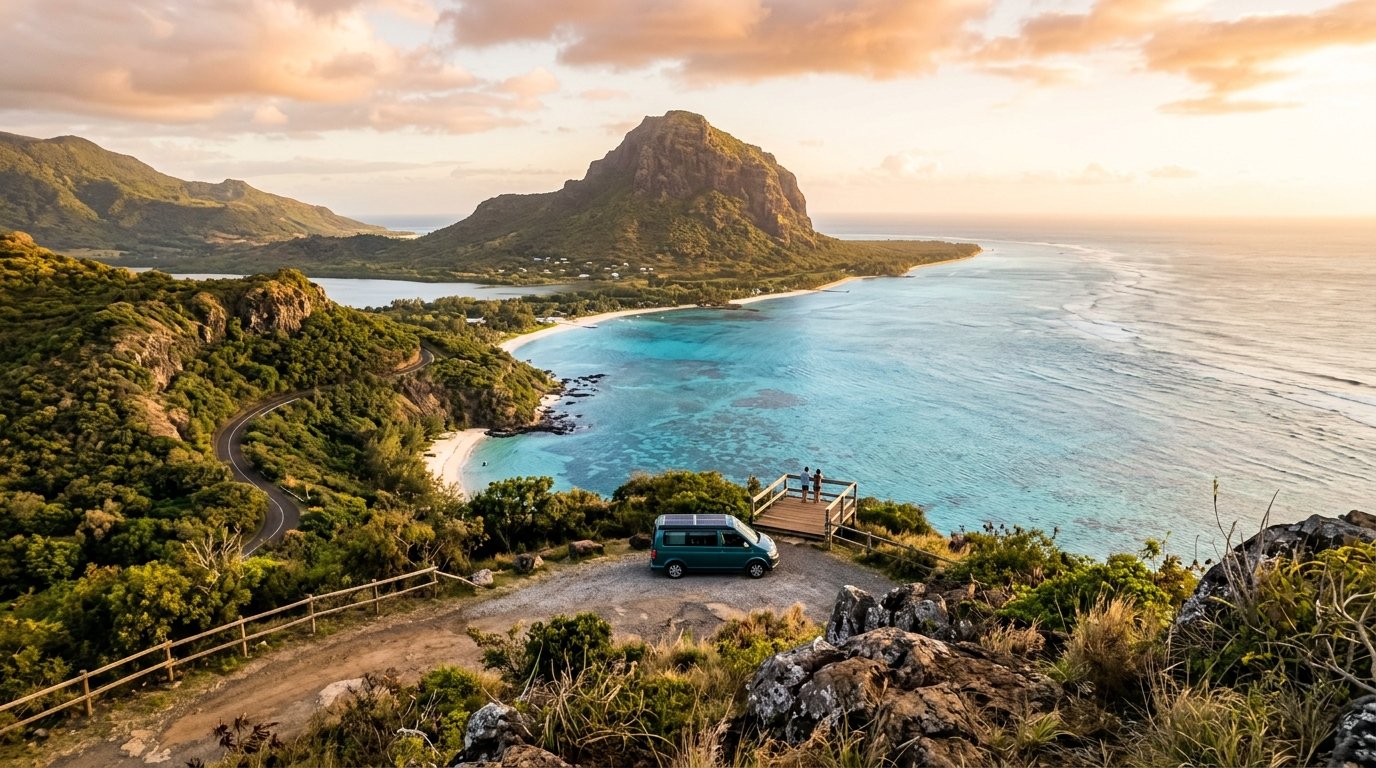
1. 🏕️ The Short Answer
In short: informal wild camping and spontaneous van life are effectively illegal and highly restricted for foreign tourists in Mauritius. Because it is a small, densely populated island with strict environmental laws and widespread private land ownership, there is no blanket right to camp; all overnight stays on public beaches or in national parks require bureaucratic advance permits.
2. 🌲 Wild & Dispersed Camping Rules
- Public Land & Beaches: While the coastline is public up to the high-water mark, setting up a tent overnight is not freely allowed. To camp on public beaches, tourists must obtain an official “Authorisation to use Public Beach” permit from the Mauritius Beach Authority.
- Private Property: Much of the coastal land beyond the immediate sand, as well as inland agricultural areas, is leased or privately owned. Camping here requires explicit, prior landowner permission.
- Enforcement & Penalties: Although some locals might occasionally camp without a permit, foreign tourists are strongly advised not to risk it. Being caught camping illegally by forest rangers or local police can result in substantial fines (up to Rs 50,000, roughly $1,000 USD) and potential legal trouble.
- Duration & Distance: Because spontaneous wild camping is not allowed, there are no standard dispersed camping rules (like a 14-day limit). If you manage to secure a permit, your exact duration and boundaries will be strictly dictated by the issuing government authority.
3. 🏞️ National Park & Protected Area Rules
- Permits are Mandatory: Camping inside protected zones—such as the famous Black River Gorges National Park—is prohibited without advance, written authorization from the National Parks and Conservation Service or the Forestry Service.
- Strict Curfews: Many nature reserves and mountain reserves legally restrict all public access between 6:00 PM and 6:00 AM to protect vulnerable wildlife and prevent poaching.
- Designated Sites & Booking: Mauritius does not possess a North American or European-style network of drop-in national park campsites. Getting a permit is a bureaucratic process generally requiring a direct application to the Ministry of Agro-Industry and Food Security well in advance of your trip.
- Seasonal Closures: Parks and trails are frequently closed during cyclone season (roughly November to May) or during heavy rainfall events due to the severe risk of flash flooding and landslides.
4. 🚐 Van Life & Overnight Vehicle Sleeping
- Is Van Life a Thing? “Van life” culture is virtually non-existent in Mauritius. There are extremely few, if any, commercial campervan rental companies on the island, and the infrastructure is built entirely around hotels, guesthouses, and self-catering villas.
- Overnight Parking: While there is no specific law outlawing the basic act of sleeping inside a legally parked vehicle, overnight parking at public beach car parks, viewpoints, or roadside pull-offs is heavily policed for loitering, security, and anti-social behavior.
- Designated Aires: There are no designated overnight motorhome rest areas (aires) or RV hookup sites on the island. Tourists should plan to use standard, legal accommodations.
5. 🔥 Campfires & Practical Restrictions
- Campfires are Strictly Banned: Lighting an open fire outside of explicitly designated Beach Authority barbecue zones is a serious criminal offense. Unauthorized fires in forests, on beaches, or in national parks carry massive fines (up to Rs 50,000) and even potential imprisonment due to the extreme risk to the island’s fragile ecosystem.
- Strictly Prohibited No-Camp Zones: Do not attempt to camp on any of the offshore Islet Nature Reserves (such as Ile Ronde, Ile aux Serpents, Coin de Mire, or Ilot Marianne). Access to these islands is entirely restricted to scientific researchers in order to protect critically endangered endemic species.
- Strict Customs Laws: When packing your camping gear, be aware that Mauritius has incredibly strict customs rules. Items like spearfishing gear, camouflage clothing, and even seemingly harmless items like empty cigarette rolling papers or e-cigarettes are strictly banned and will result in heavy fines at the border.
6. 🔗 Official Sources & Links
For the most accurate and up-to-date information, or to attempt to apply for permits, please consult the following official Mauritian authorities:
- Beach Authority: For public beach usage and camping permits, visit The Mauritius Beach Authority.
- Forestry Service: For nature reserves and inland regulations, visit the Ministry of Agro-Industry and Food Security (Forestry Service).
Disclaimer: Land-use laws, environmental regulations, and tourist restrictions in Mauritius are strict and can change frequently. Always verify the latest rules with official local government sources or your travel operator before your trip.

Adrenaline junkie with a passion for exploring off-the-beaten-path destinations and finding unique ways to stay active. Expect stunning scenery, challenging workouts, awesome travel tips and a whole lot of fun. Let’s get sweaty and explore the world together!