
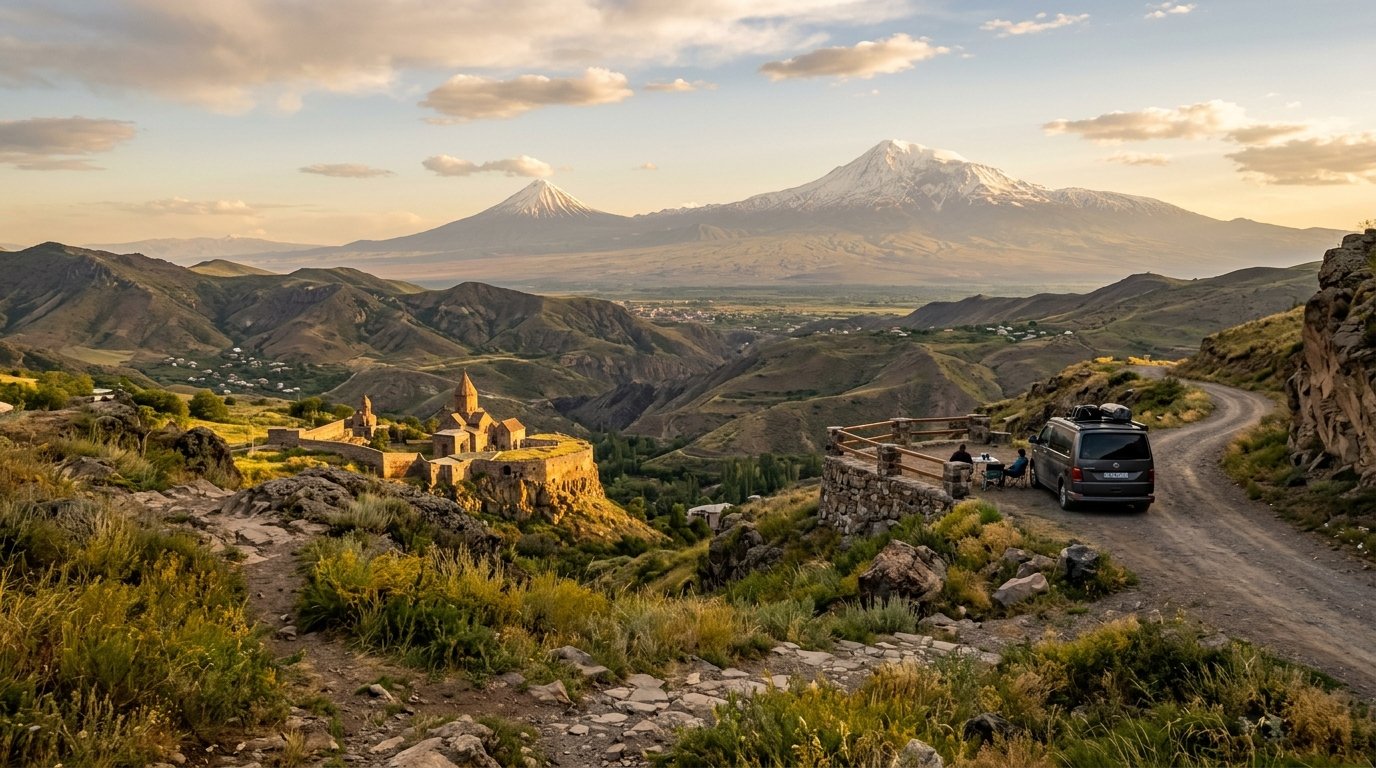
1. 🏕️ The Short Answer
Wild and dispersed camping is highly legal, warmly tolerated, and widely enjoyed by foreign tourists in Armenia. Outside of strictly protected national parks and sensitive border zones, you are legally permitted to pitch a tent or park a campervan on almost any public land, making it one of the most accessible destinations for outdoor recreation in the Caucasus.
2. 🌲 Wild & Dispersed Camping Rules
- Legal Status: Wild camping on public land is entirely legal for tourists. In fact, Armenia is renowned for its local hospitality; it is highly common for rural locals to approach campers not to ask them to leave, but to offer fresh fruit, coffee, or an invitation to their home.
- Duration and Distance Rules: There are no codified national duration limits (e.g., maximum nights in one spot) or strict distance rules from roads and water sources for standard public lands. However, out of respect, you should avoid pitching a tent on clearly fenced private farmland or grazing land without asking the owner first.
- Enforcement: Because wild camping is legal, there is practically zero enforcement or harassment by police or rangers in general wilderness areas. The main hazards to prepare for are sudden mountain weather changes, stray rural dogs (often guarding sheep), and ensuring your food is stored away from local wildlife like brown bears and wolves.
3. 🏞️ National Park & Protected Area Rules
- Permits and Zones: In protected areas like Dilijan National Park, Sevan National Park, and the Caucasus Wildlife Refuge, general wild camping rules do not apply. You do not necessarily need a complex advance permit, but you are required to camp only in official, designated camping zones managed by the Ministry of Environment or the specific park authority.
- Booking: Advance booking is usually only required if you are staying at a privately managed eco-camp or glamping site within the park boundaries. Standard designated clearings for tents are often available on a first-come, first-served basis.
- Seasonal Closures: While there are few formal seasonal closures, winter camping (November through March) in the high mountains is effectively closed to casual tourists due to extreme cold, heavy snow, and impassable mountain roads.
4. 🚐 Van Life & Overnight Vehicle Sleeping
- Vehicle Sleeping: Sleeping in your campervan, 4×4, or car is perfectly legal and widely practiced by overlanders. You can park overnight at roadside pull-offs, trailheads, and rural viewpoints without issue.
- Parking vs. Camping: Armenian law does not aggressively differentiate between “parking” and “camping” in rural areas. If your vehicle is legally parked and not obstructing traffic, you can sleep in it.
- City Parking (Yerevan): In the capital, Yerevan, street parking inside red-dotted lines requires payment during the day, but overnight parking is generally free from midnight to 9:00 AM. To avoid drawing attention or frustrating locals, van-lifers should avoid parking in the same residential city neighborhood for multiple days in a row.
5. 🔥 Campfires & Practical Restrictions
- Campfire Rules: Open campfires are generally allowed on public land, provided you use existing fire rings or stones to prevent the fire from spreading. However, temporary fire bans are often enacted during the dry summer months due to high wildfire risks. Fires are heavily restricted or forbidden in protected forests and National Parks. Always bury your ashes and ensure the fire is completely extinguished.
- Key No-Camp Zones:
- The Azerbaijan Border: This is a highly sensitive, heavily militarized zone with ongoing geopolitical tensions. Never hike, wild camp, or park near the eastern or southern borders with Azerbaijan.
- Military Installations: Keep a wide distance from any fenced military bases or checkpoints.
- Monasteries & Archaeological Sites: Out of respect, do not camp directly against the walls of historical churches, monasteries, or active archaeological sites. Pitch your tent a respectful distance away.
6. 🔗 Official Sources & Links
For the most reliable trail maps, camping tips, and localized updates, we recommend checking the following trusted resources:
- HIKEArmenia – An outstanding NGO and app providing detailed trail maps, local guides, and wilderness advice for tourists.
- Armenia.Travel – The official tourism board of Armenia for general travel advisories and regional guides.
Disclaimer: Land-use laws, national park regulations, and border security situations can change frequently. The information in this guide is provided for educational purposes. Always verify current camping regulations, fire bans, and regional safety advisories with official Armenian local sources or your embassy before your trip.

Adrenaline junkie with a passion for exploring off-the-beaten-path destinations and finding unique ways to stay active. Expect stunning scenery, challenging workouts, awesome travel tips and a whole lot of fun. Let’s get sweaty and explore the world together!