
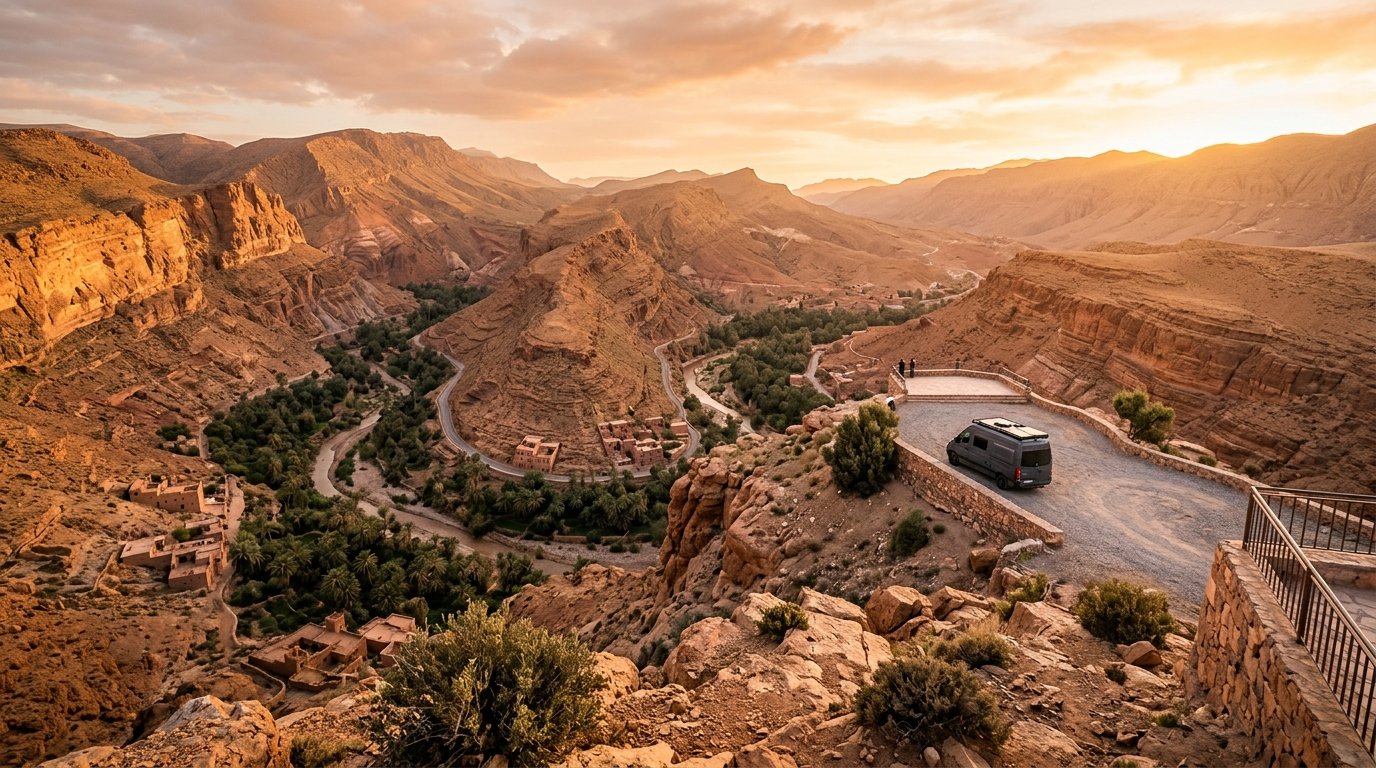
1. 🏕️ The Short Answer
For foreign tourists, wild and dispersed camping in Morocco exists in a legal grey area: it is technically not officially permitted by law, but it is widely tolerated in practice across rural, mountain, and desert regions. While you will rarely face fines for pitching a tent or parking a campervan in the wild, local police or the Royal Gendarmerie may occasionally ask you to move to a designated campsite or closer to a town, strictly for your own safety and security.
2. 🌲 Wild & Dispersed Camping Rules
- Legality on Public Land: There is no specific nationwide law explicitly permitting wild camping for tourists. In fact, national urban planning codes prohibit unauthorized camping along the coast and near historic monuments. However, in remote desert and mountain areas, authorities are generally very relaxed and tolerate respectful wild camping.
- Duration and Distance Rules: Because it is an informal practice, there are no strict legal limits on duration or distance from water sources. Campers are expected to follow “Leave No Trace” principles, stay out of sight of main roads, and avoid setting up directly outside private dwellings or blocking agricultural land. If you are near a village, it is highly recommended to ask the local landowner or village elder for permission.
- Enforcement: Enforcement is rarely punitive. You are highly unlikely to be fined for wild camping. Instead, if police spot you, they may knock on your door or tent and politely require you to move to a formal campsite or a police compound. This is a protective measure, not a punishment.
3. 🏞️ National Park & Protected Area Rules
- Permit Systems and Guides: Following a tragic incident in 2018, Moroccan law now dictates that tourists trekking and camping in Toubkal National Park (the most popular mountain region) must be accompanied by a certified local guide. Independent wild camping in this specific park is no longer permitted.
- Designated Sites: In heavily protected areas like Ifrane National Park (home to endangered Barbary macaques) and Souss-Massa National Park, wild camping is strictly forbidden to protect fragile biodiversity. You must use official campsites, mountain refuges, or authorized desert bivouacs.
- Advance Booking: If you plan to stay in mountain refuges (like the Toubkal or Tazaghart refuges) or luxury desert camps in the Sahara, advance booking is highly recommended, especially during the peak spring and autumn trekking seasons.
4. 🚐 Van Life & Overnight Vehicle Sleeping
- Overnight Parking vs. Camping: Morocco is a massive winter destination for European van lifers. Sleeping in your vehicle is widely tolerated in public car parks and roadsides. However, authorities draw a line between “parking” and “camping.” If you deploy awnings, set up camping chairs, or leave trash outside your van in a public lot, you will likely be told to move.
- The “Gardien” System: In almost every town, beach, or public lot, you will encounter informal parking guards (gardiens) wearing high-visibility vests. For a small fee (typically 10 to 30 MAD), they will direct you where to park and watch over your vehicle overnight. Utilizing this system is highly encouraged for van lifers.
- Designated Areas: Morocco boasts a vast network of municipal and private campsites that cater specifically to motorhomes, often costing as little as 50 to 100 MAD per night. These provide safe havens with access to fresh water, electricity, and waste disposal, making them a stress-free alternative to wild camping.
5. 🔥 Campfires & Practical Restrictions
- Campfires: Open fires are a traditional part of Moroccan nomadic culture and are generally tolerated in the desert and rugged backcountry. However, you should strictly avoid fires in forested areas (like the Rif or Middle Atlas mountains) during the hot, dry summer months to prevent devastating wildfires. Always extinguish fires completely with sand or water.
- Strict No-Camp Zones: Tourists must absolutely avoid camping near military bases, critical infrastructure (like dams and power stations), and international border zones. The closed border with Algeria and the sensitive regions of the Western Sahara are heavily monitored by the military; camping anywhere near these borders is strictly prohibited and highly dangerous.
- Coastal Restrictions: Wild camping on popular beaches is increasingly restricted and actively cleared by local police to promote formal tourism and protect the coastline.
6. 🔗 Official Sources & Links
For the most accurate and up-to-date travel information, itineraries, and official accommodation directories, visit the Moroccan National Tourist Office:
For real-time security alerts and regional travel advisories, always consult your home country’s foreign affairs department, such as the UK FCDO Travel Advice for Morocco.
Disclaimer: Land-use rules, local enforcement policies, and safety protocols in Morocco can change rapidly. The information provided in this guide is for educational purposes. Always verify current conditions with official local authorities, hire certified guides in mandated areas, and exercise common sense when traveling off the grid.
Adrenaline junkie with a passion for exploring off-the-beaten-path destinations and finding unique ways to stay active. Expect stunning scenery, challenging workouts, awesome travel tips and a whole lot of fun. Let’s get sweaty and explore the world together!