
1. 🏕️ The Short Answer
Wild and dispersed camping is effectively illegal and culturally inappropriate for tourists in the Solomon Islands. Because roughly 80% to 85% of the land is owned by local tribes and families under customary law, traditional “public land” does not exist. To camp anywhere, you must always negotiate permission and pay a “kastom” (customary) fee to the local chief or landowner.
2. 🌲 Wild & Dispersed Camping Rules
- Is camping outside official campsites legal for tourists on public land? There is virtually no public land in the Solomon Islands. All beaches, jungles, and uninhabited islands belong to customary landowners. Pitching a tent without seeking out the local chief to ask for permission is considered trespassing and is deeply disrespectful.
- Are there duration limits (e.g. max 1-2 nights in the same spot) or distance rules from roads, water sources, or private property? There are no government regulations for this because rules are dictated entirely by the local landowners. Your camping location, duration, and the associated fees are entirely up to the discretion of the village chief or landowner who grants you access.
- Is this actively enforced by rangers/police, or is enforcement rare in practice? It is strictly enforced by the communities themselves rather than police. If you are caught camping without permission, you will be evicted and likely ordered to pay a compensation fee to the tribe for violating their customary land rights.
3. 🏞️ National Park & Protected Area Rules
- Do national parks or protected areas have a separate camping permit system? Yes. Conservation areas and national park-style reserves, such as Kolombangara Island or the Arnavon Islands, operate through community-managed conservation groups.
- Is camping restricted to designated sites only, and does it require advance booking? Yes, you cannot simply show up. You must arrange access in advance, pay conservation and landowner fees, and usually hire a mandatory local guide. Facilities are basic, tropical bush camps.
- Are there seasonal closures (fire season, wildlife breeding season, weather-related)? While not legally closed, the wet season (November to April) brings heavy rains and cyclones. This makes many mountain trails, jungle campsites, and boat access routes highly dangerous or completely impassable, acting as a natural weather-related closure.
4. 🚐 Van Life & Overnight Vehicle Sleeping
- Is it legal to sleep overnight in a vehicle in public car parks, rest stops, or roadsides? It is highly discouraged and culturally inappropriate. Pulling over to the side of a road or beach means you are parking on someone’s customary land. Doing so without asking permission will likely result in locals demanding compensation.
- Does local law distinguish between “parking” and “camping” (many countries permit the former but ban the latter)? There is no relevant legal distinction for tourists. Customary land rights trump municipal parking laws, and vehicle sleeping in urban areas like Honiara is considered a significant security risk.
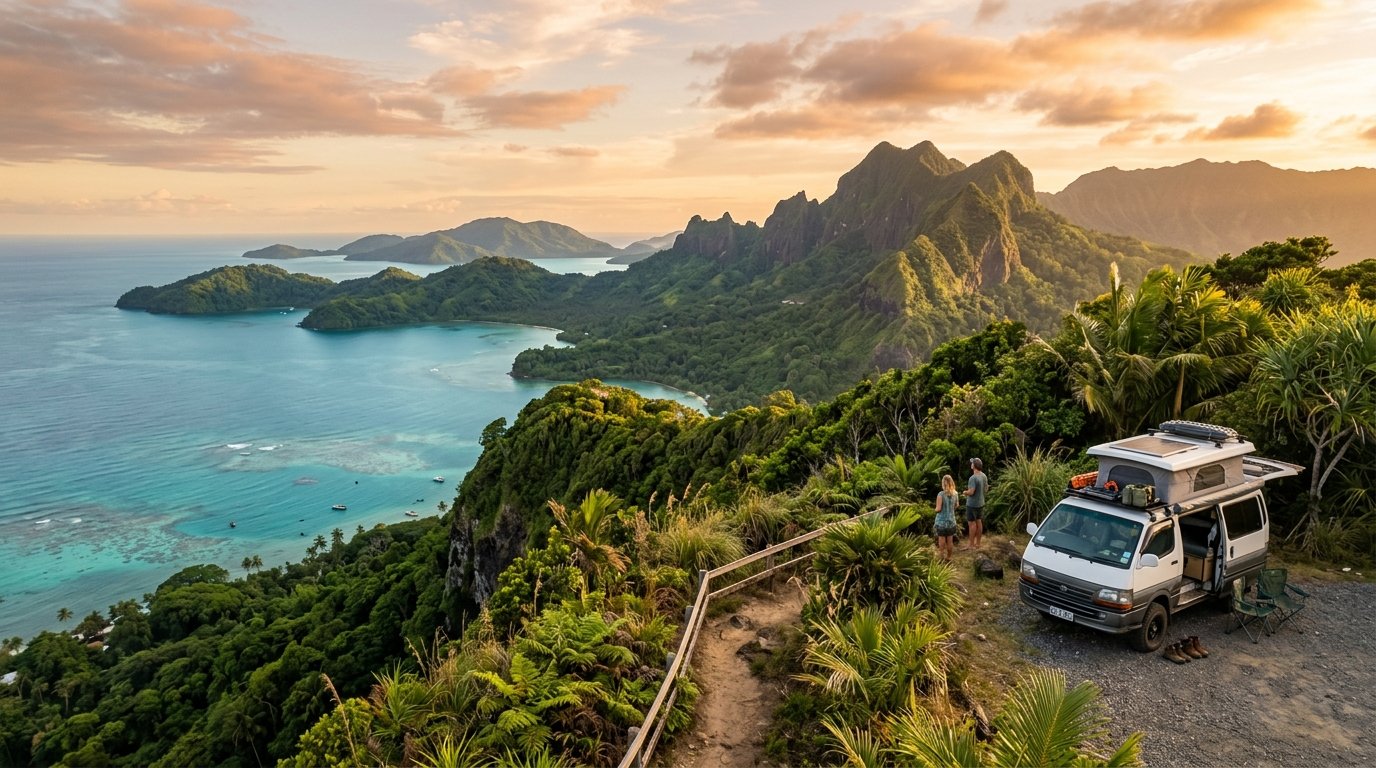
- Are there designated overnight areas (e.g. aires, rest areas) tourists should know about? No. Van life is virtually non-existent in the Solomon Islands. The road infrastructure is extremely limited, there is no RV rental market, and there are zero designated rest stops or “aires” for tourists.
5. 🔥 Campfires & Practical Restrictions
- Are open campfires generally allowed, restricted to permit zones, or seasonally banned? Locals rely heavily on fires for cooking, but tourists should never light a campfire without the explicit permission of their local guide or host, as you are burning resources on private tribal land.
- List any key no-camp zones (military areas, border regions, sensitive infrastructure) tourists should avoid. You must avoid WWII battlefields and historical sites unless you are with a certified guide, as these areas often contain highly dangerous unexploded ordnance (UXO). Additionally, strictly avoid logging concessions, mining areas, and any village or beach where you have not undergone a formal welcome and received permission from the local chief.
6. 🔗 Official Sources & Links
For more information, visit the official tourism board: Tourism Solomons.
Disclaimer: Camping and land-use laws, especially customary land agreements, can change frequently. The information provided in this guide is for educational purposes. Always verify current rules, kastom fees, and safety conditions with local authorities or official guides before your trip.

Adrenaline junkie with a passion for exploring off-the-beaten-path destinations and finding unique ways to stay active. Expect stunning scenery, challenging workouts, awesome travel tips and a whole lot of fun. Let’s get sweaty and explore the world together!