
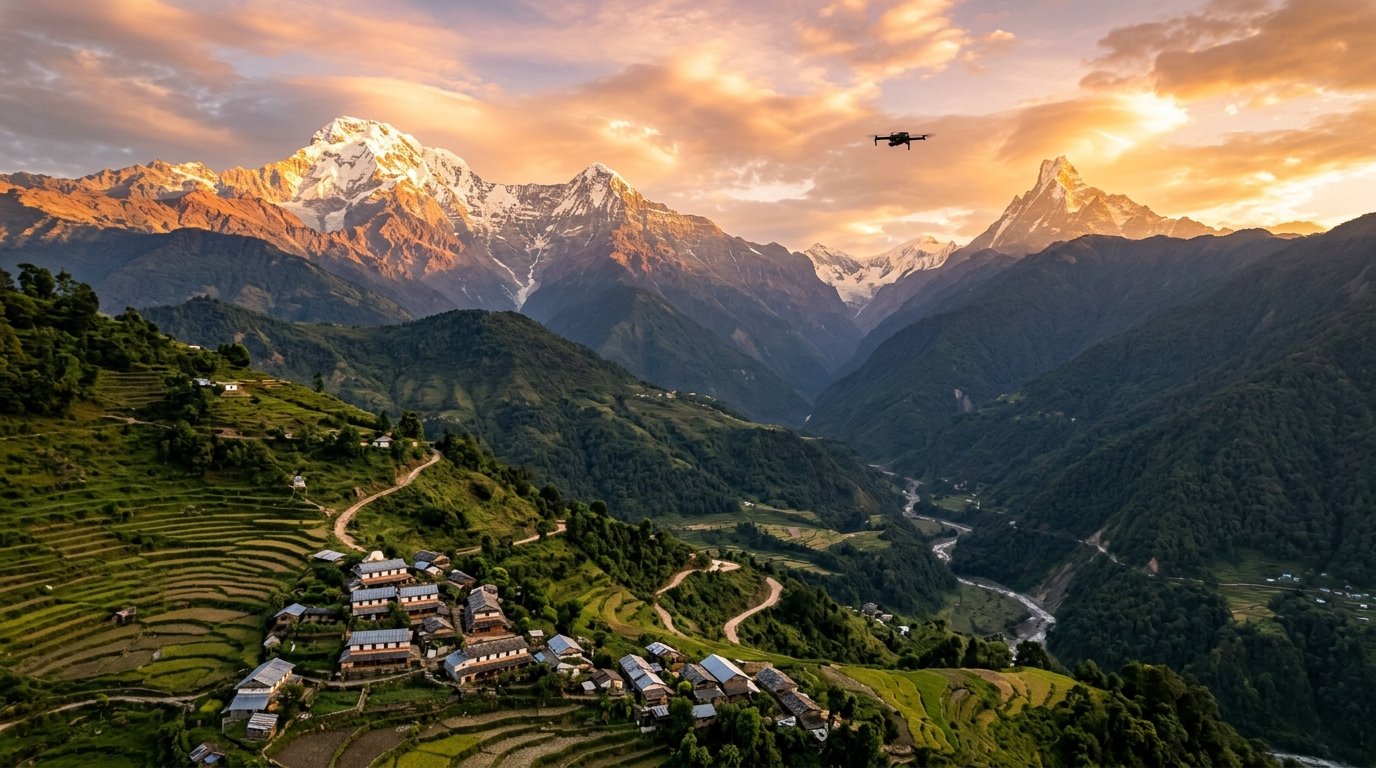
1. 🚦 The Short Answer
Recreational drones are legally allowed in Nepal, but they are subject to extremely strict and highly bureaucratic registration and permit requirements. There is no simple “fly and go” for foreign tourists; practically all drone flights require advanced planning, formal registration, and multi-agency flight permits.
2. 🛃 Customs & Importation Rules
- Bringing a drone: Tourists can legally bring a recreational drone into Nepal through Tribhuvan International Airport.
- Customs Declarations: You must explicitly declare your drone at airport customs upon arrival to obtain a customs clearance document.
- Confiscation Risks: If you fail to declare your drone or lack the proper customs clearance paperwork, border officials may confiscate or hold your drone at the airport until you acquire the necessary legal permits.
3. 📝 Registration & Permit Process for Tourists
- Pre-Arrival Planning: Because the permit process is lengthy (often taking 2 to 4 weeks), foreign tourists should begin the application process well before arriving. Many travelers utilize a local Nepalese trekking or travel agency to help navigate the bureaucracy.
- The Process:
1. Register the drone with the Civil Aviation Authority of Nepal (CAAN) to obtain a Unique Identification Number (UIN).
2. Obtain a clearance letter from the Department of Tourism.
3. Secure flight authorization from the Ministry of Home Affairs.
4. If flying in trekking areas (like the Everest or Annapurna regions), you must also acquire a specific permit from the local National Park or Conservation Area authority. - Fees & Timeline: Permit costs vary based on the drone’s size and the areas you plan to fly, with CAAN registration fees starting around $50 USD. Processing routinely takes several weeks, so do not expect same-day approvals.
4. 🚫 Key Flight Rules & Restrictions
- Operational Rules: You must maintain unaided Visual Line of Sight (VLOS) at all times. The maximum permitted altitude is 120 meters (approx. 394 feet), and the maximum horizontal distance is 500 meters. Do not fly over crowds or populated areas.
- Weight Classes: Drones under 250g (like the DJI Mini series) have slightly fewer operational restrictions but still require CAAN registration and local park permits to fly in tourist areas. Drones weighing over 2kg face the strictest regulations and require extensive government vetting.
- No-Fly Zones: Flying is strictly prohibited within 5km of airports (including high-altitude airstrips like Lukla), military installations, government buildings, royal palaces, and sacred heritage sites like Pashupatinath Temple. National parks are entirely No-Fly Zones unless you hold a specific location permit.
5. 🔗 Official Sources & Links
For the most accurate and up-to-date forms, you can verify regulations directly with the Civil Aviation Authority of Nepal (CAAN).
Disclaimer: Aviation laws and tourist regulations change frequently. Always double-check with official local authorities or your tour operator shortly before your trip to ensure full compliance.
Adrenaline junkie with a passion for exploring off-the-beaten-path destinations and finding unique ways to stay active. Expect stunning scenery, challenging workouts, awesome travel tips and a whole lot of fun. Let’s get sweaty and explore the world together!