
1. 🚦 The Short Answer
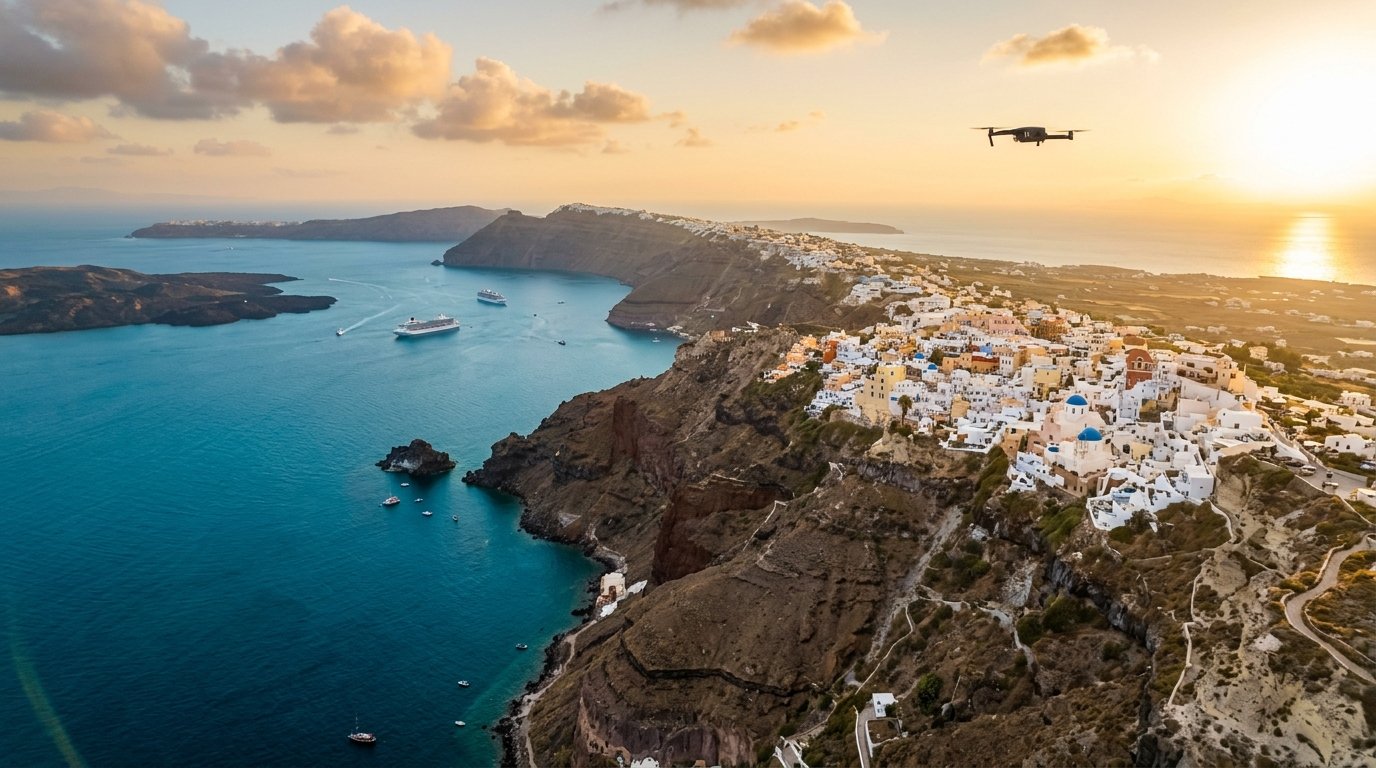
Recreational drones are allowed with strict registration and adherence to European Union (EASA) and local Hellenic Civil Aviation Authority (HCAA) rules. While you can fly freely in many beautiful areas under the “Open Category,” all tourists must register their camera-equipped drones, and Greek airspace is heavily regulated around historical monuments.
2. 🛃 Customs & Importation Rules
- Yes, tourists can legally bring drones into Greece for personal use without special import permits.
- No specific drone customs declarations are required upon arrival at the airport, but you should keep your purchase receipt handy to prove it is a personal travel item.
- Your drone will not be confiscated at the border for lack of aviation paperwork, but all LiPo drone batteries must be carried in your cabin baggage to comply with international airline fire safety regulations.
3. 📝 Registration & Permit Process for Tourists
- Yes, registration is mandatory BEFORE you fly. Because Greece is an EU member, you must possess a European Drone Operator ID. If you have not already registered your drone in another EU country, you must do so in Greece.
- The Process: You must register online as an operator via the Hellenic Civil Aviation Authority (HCAA). Once approved, you will receive an Operator ID, which must be printed or written on a sticker and attached to your drone.
- Flight Permits: For flights in restricted (Yellow or Magenta) zones, you must submit a flight request through the official DAGR (Drone Aware Greece) digital platform. Standard registration is free and fast, but special flight plan approvals via DAGR can take 5 to 10 working days.
4. 🚫 Key Flight Rules & Restrictions
- Standard Rules: Keep your drone within Visual Line of Sight (VLOS) at all times, fly only during daylight hours, and never exceed a maximum altitude of 120 meters (400 feet).
- Weight Classes: Sub-250g drones (like the DJI Mini series) fall into the EASA “A1 Open” category and offer the most freedom, though operator registration is still required because they contain cameras. If your drone weighs more than 250g, the pilot must also hold an EASA A1/A3 theoretical competency certificate.
- No-Fly Zones: Flying over or near archaeological sites (such as the Acropolis, Delphi, and Knossos) is strictly prohibited and actively enforced with massive fines. You must also stay well away from airports, military installations, hospitals, and densely populated urban centers.
5. 🔗 Official Sources & Links
You can verify current drone regulations, register as an operator, and check local airspace maps through these official resources:
- Hellenic Civil Aviation Authority (HCAA) – Drone Portal
- DAGR (Drone Aware Greece) – Official Airspace Map
Disclaimer: Aviation laws and no-fly zones change frequently. Always consult official EASA and HCAA sources right before your trip to ensure full compliance.

Adrenaline junkie with a passion for exploring off-the-beaten-path destinations and finding unique ways to stay active. Expect stunning scenery, challenging workouts, awesome travel tips and a whole lot of fun. Let’s get sweaty and explore the world together!