
1. 🏕️ The Short Answer
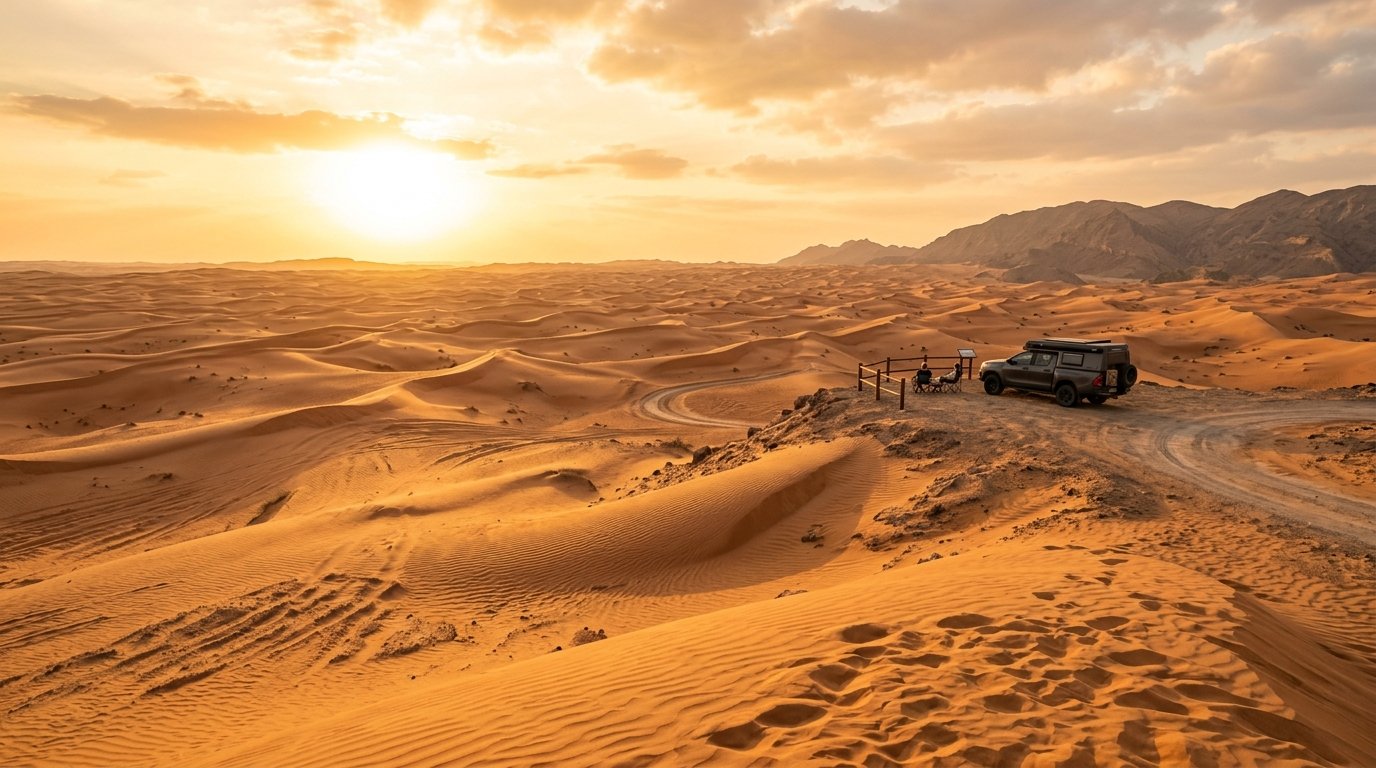
Wild and dispersed camping is generally legal and widely enjoyed by tourists for short-term stays in the UAE’s open deserts, provided you stay outside of protected nature reserves and urban boundaries. However, it is a highly regulated activity; you must adhere to designated zones, follow strict “leave no trace” rules, and absolutely avoid flood-prone wadis or environmentally sensitive areas to escape massive fines.
2. 🌲 Wild & Dispersed Camping Rules
- Legality on Public Land: Tourists can legally wild camp for short durations (typically 1 to 2 nights over a weekend) in many open desert areas and public beaches without needing a permit. Long-term camping (staying weeks or months in one spot), however, requires a paid seasonal permit from local municipalities.
- Distance and Location Rules: You must not camp on private property, near military installations, or close to royal palaces. Rules vary by emirate; for example, Sharjah and Fujairah actively issue fines of up to AED 2,000 for pitching tents in unauthorized areas.
- Enforcement: Environmental laws are heavily enforced by police and municipal rangers, especially during the peak winter season. Federal Law No. 12 of 2018 imposes severe fines—up to AED 30,000—for littering, dumping, or burning waste. Chopping local wood for fires or harming wildlife can even lead to jail time.
3. 🏞️ National Park & Protected Area Rules
- Permits and Restrictions: Protected nature reserves (such as the Dubai Desert Conservation Reserve, Al Marmoom, or Sir Bani Yas) strictly forbid unpermitted wild camping. Entering or camping in a protected area without authorization can result in fines upwards of AED 5,000.
- Designated Sites: If you wish to camp in a national park or reserve, you must usually do so via an authorized tour operator, an organized glamping site, or by booking a designated eco-campsite in advance.
- Seasonal Closures: The official UAE camping season runs from late October through April. While summer camping isn’t outright illegal, it is highly discouraged due to life-threatening heat. Furthermore, camping in wadis (dry riverbeds) is strictly prohibited during winter rain forecasts due to the deadly risk of flash floods.
4. 🚐 Van Life & Overnight Vehicle Sleeping
- Vehicle Sleeping: Sleeping in your vehicle is a legal grey area in the UAE. While tourists can sleep in campervans in designated off-road camping areas, beaches, and open desert spots, sleeping overnight in urban public car parks, mall lots, or residential roadsides is generally prohibited and will likely attract police attention.
- Parking vs. Camping: The UAE strictly distinguishes between parking and camping. You cannot simply park a campervan on a city street and treat it as a campsite; setting up chairs, awnings, or sleeping in non-designated urban zones is not allowed.
- Designated Areas: The UAE does not have a sprawling network of European-style “aires” or free motorhome rest stops. Travelers using RVs or campervans should head to dedicated facilities (like Hatta Wadi Hub) or venture into permitted open desert areas that accommodate off-grid vehicles.
5. 🔥 Campfires & Practical Restrictions
- Campfire Regulations: Lighting a fire directly on the sand or ground is strictly illegal across the UAE and damages the ecosystem. Fires are allowed in wild camping areas only if they are contained in a raised metal fire pit, barbecue grill, or fire bowl. Coals must be fully extinguished and taken with you or disposed of in designated municipal bins. Additionally, heat sources must be kept at least 50 cm away from tents.
- No-Camp Zones: Tourists must strictly avoid camping in wadis and low-lying valleys (due to flash floods), military zones, border regions (especially near the Oman or Saudi borders unless on an official road), and fenced-off environmental enclosures.
6. 🔗 Official Sources & Links
To verify the latest camping regulations, check with the official UAE government and tourism portals:
- The Official Portal of the UAE Government – Tourism Information
- Dubai Municipality (for local permits and winter camping guidelines)
Disclaimer: Camping and land-use laws in the United Arab Emirates are subject to frequent updates, particularly concerning environmental protection and seasonal weather hazards. Always verify current regulations, weather warnings, and local emirate-specific rules with official government sources before embarking on your trip.

Adrenaline junkie with a passion for exploring off-the-beaten-path destinations and finding unique ways to stay active. Expect stunning scenery, challenging workouts, awesome travel tips and a whole lot of fun. Let’s get sweaty and explore the world together!