
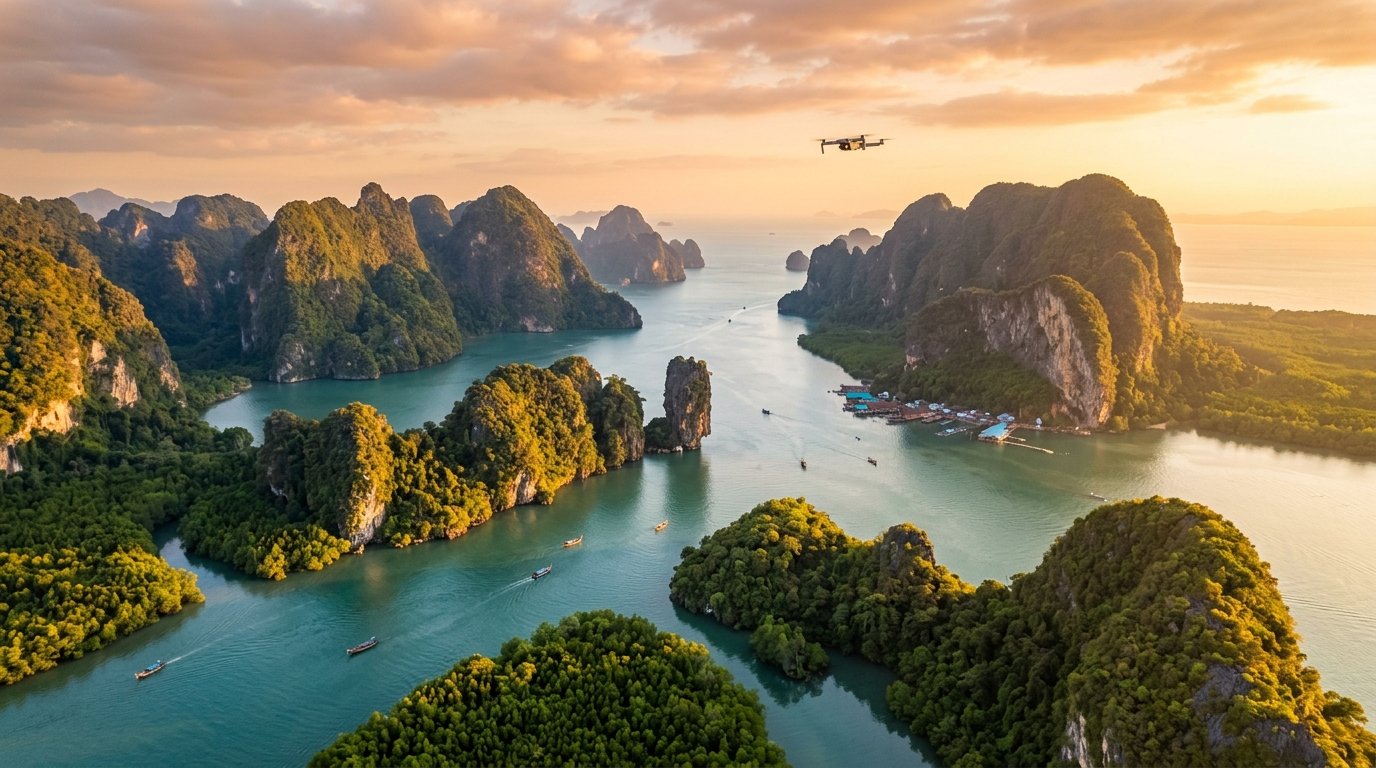
1. 🚦 The Short Answer
Recreational drones are legally allowed in Thailand, but they are subject to strict, mandatory registration that can only be finalized once you are physically in the country. You cannot fly your drone immediately upon arrival without risking heavy fines or imprisonment.
2. 🛃 Customs & Importation Rules
- Airport Customs: Foreign tourists can legally bring a recreational drone into Thailand in their luggage. Lithium batteries must be kept in your carry-on baggage according to standard airline rules.
- Declarations: You do not need to make a special customs declaration for a standard recreational drone upon arrival.
- Border Confiscation: Your drone will not be confiscated at the border for lacking registration. The authorities know you must enter the country first to obtain the required entry stamp to process your paperwork. However, flying it before paperwork is approved is strictly illegal.
3. 📝 Registration & Permit Process for Tourists
- Pre-Arrival Requirements: You cannot complete the registration before arriving in Thailand. The portals require a physical passport entry stamp and a local Thai phone number (SIM card). However, you should purchase compliant drone insurance (minimum 1,000,000 THB third-party liability) before you travel.
- Step 1 (NBTC): Register the drone’s radio frequency with the National Broadcasting and Telecommunications Commission (NBTC) via their online portal.
- Step 2 (CAAT): Register as a pilot with the Civil Aviation Authority of Thailand (CAAT) via the UAS Portal. As of 2025, tourists must pass a timed 40-question online safety test (75% required to pass).
- Fees & Timeline: Portal registration fees are minimal (around 200-300 THB), though insurance costs extra. NBTC approval is relatively quick, but CAAT approval can take up to 14 days. Tourists are advised to apply the exact day they arrive.
4. 🚫 Key Flight Rules & Restrictions
- Weight Classes & Cameras: Do not assume small drones are exempt. In Thailand, any drone equipped with a camera (even sub-250g drones like the DJI Mini) MUST be fully registered. Drones over 2kg face additional strict regulations.
- Standard Operational Rules: You must maintain Visual Line of Sight (VLOS) at all times. The maximum permitted altitude is 90 meters (295 feet). Do not fly over crowds, cities, or populated villages.
- No-Fly Zones: It is strictly forbidden to fly within 9 km (5 miles) of any airport. You must also avoid military bases, royal palaces, government facilities, and National Parks (unless you receive prior, specific permission from the park rangers).
5. 🔗 Official Sources & Links
Verify up-to-date regulations and access the official registration portals here:
Disclaimer: Aviation laws and drone registration requirements change frequently. Travelers should always double-check with official Thai government sources or consult a reputable local drone agency before their trip to ensure full compliance.
Adrenaline junkie with a passion for exploring off-the-beaten-path destinations and finding unique ways to stay active. Expect stunning scenery, challenging workouts, awesome travel tips and a whole lot of fun. Let’s get sweaty and explore the world together!