
1. 🚦 The Short Answer
Recreational drones are generally allowed in San Marino, but with strict geographical limitations and a mandatory pre-flight notification requirement. Because the country is a densely populated microstate with protected heritage sites, flying without first contacting the local aviation authority is not permitted.
2. 🛃 Customs & Importation Rules
- Arrival via Italy: San Marino does not have an international commercial airport. You will clear customs in Italy (such as at Rimini or Bologna) and drive across the open border. Therefore, standard EU/Italian customs rules apply, and bringing a recreational drone for personal use is entirely legal.
- Declarations: No specific drone declarations are required when driving across the land border into San Marino.
- Confiscation Risk: Your drone will not be confiscated at the border. However, flying it inside San Marino’s restricted areas without following local regulations can lead to fines by local authorities.
3. 📝 Registration & Permit Process for Tourists
- Mandatory Notification: Under San Marino’s CAR OPS 4 regulations, all drone pilots must notify the Civil Aviation Maritime Navigation and Homologation Authority (CAA-MNA) BEFORE flying in their airspace.
- The Process: Tourists must go to the official CAA-MNA website and complete the RPAS (Remotely Piloted Aircraft System) contact module. You will need to provide your personal details, flight intentions, and it is highly recommended to have valid drone liability insurance compliant with EU 785/2004 standards.
- Fees & Timeframe: Basic recreational notification is typically free, but tourists should submit their forms or email the authority at info@caa-mna.sm at least a week or two prior to their trip to ensure proper guidance.
4. 🚫 Key Flight Rules & Restrictions
- Standard Rules: Flights must remain within Visual Line of Sight (VLOS) and only take place during daylight hours in good weather.
- Altitude Limits: The maximum allowed altitude is 120 meters (400 feet), though this is often restricted to 70 meters or less near specific topographical areas.
- Weight Classes: Drones weighing under 25kg fall under the Open Category. While sub-250g drones (like the DJI Mini series) are safest to use, they are still subject to the CAA notification requirement.
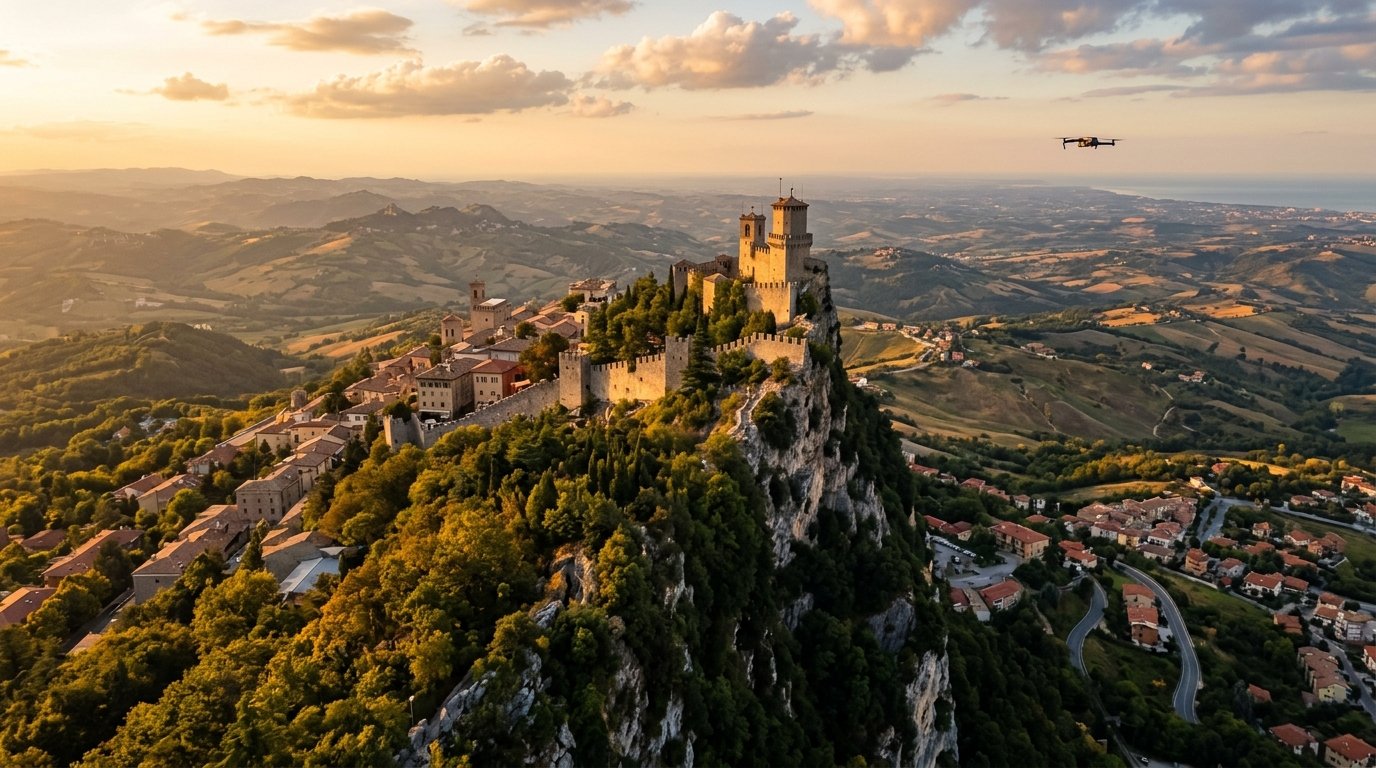
- Strict No-Fly Zones: You are strictly prohibited from flying over the Historic Centre, the Three Towers (Mount Titano), government facilities, military areas, or over crowds. Because San Marino is only 61 square kilometers, most of its main tourist hotspots are heavily restricted.
5. 🔗 Official Sources & Links
You can find the official regulations, the CAR OPS 4 document, and the mandatory contact form directly on the local aviation authority’s website:
Disclaimer: Drone regulations and local aviation laws change frequently. Travelers should always double-check official government sources directly before their trip to ensure full legal compliance.
Adrenaline junkie with a passion for exploring off-the-beaten-path destinations and finding unique ways to stay active. Expect stunning scenery, challenging workouts, awesome travel tips and a whole lot of fun. Let’s get sweaty and explore the world together!