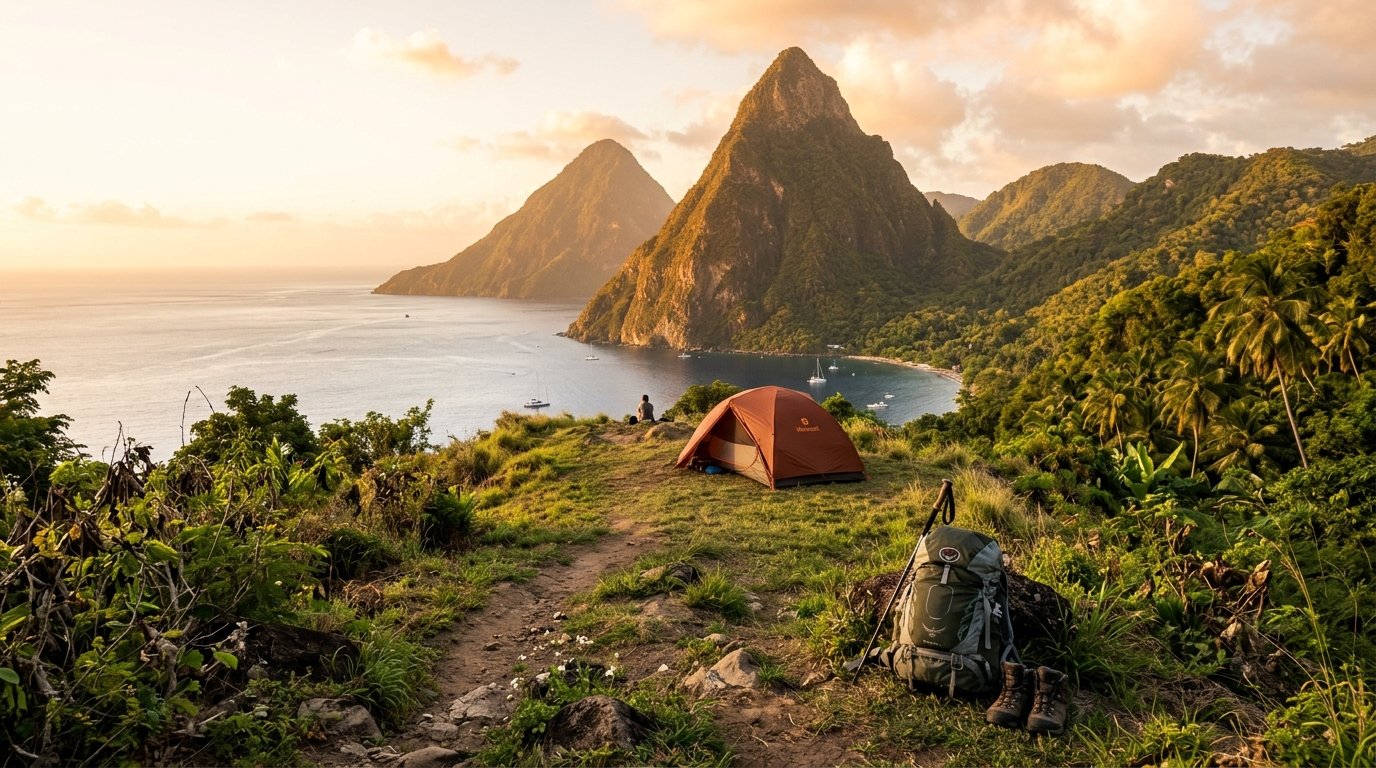
1. 🏕️ The Short Answer
Wild and dispersed camping is effectively illegal and highly discouraged for tourists in Saint Lucia due to strict land-use laws, environmental protections, and significant safety concerns. There are no official public campgrounds on the island, meaning tourists looking for an outdoor experience must rely on seeking explicit permission from private landowners or staying at designated eco-lodges.
2. 🌲 Wild & Dispersed Camping Rules
- Is camping outside official campsites legal for tourists on public land? No. Wild camping on public lands, including beaches and forested areas, is not officially permitted for tourists. Beaches in Saint Lucia are technically public up to the high-water mark, but local authorities do not allow them to be used for overnight accommodation. Customs officials may also require proof of your booked accommodation at a registered hotel or guesthouse upon entry to the country.
- Are there duration limits or distance rules? Because wild camping is generally prohibited, there are no established duration or distance rules for dispersed camping. Your only option is to camp on private property (like a local eco-estate or farm) with the direct, advance permission of the landowner, in which case the landowner sets the rules.
- Is this actively enforced? Yes, the police and local authorities actively discourage tourists from sleeping on beaches or in the jungle. Even if enforcement is occasionally lax, the primary deterrent is safety. Muggings, theft, and harassment of tourists in isolated areas at night are known issues, making wild camping highly unsafe.
3. 🏞️ National Park & Protected Area Rules
- Do national parks or protected areas have a separate camping permit system? No. Saint Lucia’s protected areas, such as the Edmund Forest Reserve and the Pitons Management Area, are managed by the Forestry Department and do not offer public camping permits or designated campsites for tourists.
- Is camping restricted to designated sites only? There are zero official public campsites in the country’s nature reserves. The primary focus of these reserves is environmental conservation, soil and water protection, and safeguarding native wildlife like the Saint Lucia parrot.
- Are there seasonal closures? While you cannot camp there at all, the hiking trails themselves are subject to closures during extreme weather events, particularly during the Caribbean hurricane season (June through November).
4. 🚐 Van Life & Overnight Vehicle Sleeping
- Is it legal to sleep overnight in a vehicle in public car parks, rest stops, or roadsides? Sleeping in your rental vehicle by the roadside or in public car parks is not permitted and is considered highly unsafe.
- Does local law distinguish between “parking” and “camping”? Because the island lacks a vehicle-dwelling culture, the laws do not officially distinguish between the two for tourists. However, any tourist found sleeping in a vehicle overnight by local police will likely be questioned and told to move to a registered accommodation.
- Are there designated overnight areas? There is absolutely no van life infrastructure in Saint Lucia. There are no motorhome parks, RV dump stations, or designated overnight rest stops. Most tourists rent small 4×4 vehicles (like Suzuki Jimnys) simply to navigate the steep, winding, and often potholed mountain roads, which are not suitable for large campervans.
5. 🔥 Campfires & Practical Restrictions
- Are open campfires generally allowed? No. Open campfires are strictly regulated under the Forest, Soil and Water Conservation Act to prevent bushfires. Lighting unauthorized fires in or near forested areas is a serious offense punishable by steep fines or imprisonment. Beach bonfires are sometimes organized by resorts, but tourists cannot independently build fires on public beaches without a permit from the local fire department.
- Key no-camp zones tourists should avoid: You should avoid setting up any sort of temporary shelter on all public beaches (especially isolated ones), within the forested interior (which is strictly protected), and around the immediate vicinity of the Pitons unless on an authorized guided day tour.
6. 🔗 Official Sources & Links
To verify the latest regulations and find legal, nature-based accommodations, consult the following official resources:
- Saint Lucia Tourism Authority
- Ministry of Agriculture, Fisheries, Food Security and Sustainable Development – Forestry Division
Disclaimer: Camping regulations, land-use rules, and safety advisories in the Caribbean change frequently. The information provided in this guide is for general planning purposes only. Travelers should always verify current laws with official local authorities or the Saint Lucia Tourism Authority immediately prior to their trip.

Adrenaline junkie with a passion for exploring off-the-beaten-path destinations and finding unique ways to stay active. Expect stunning scenery, challenging workouts, awesome travel tips and a whole lot of fun. Let’s get sweaty and explore the world together!