
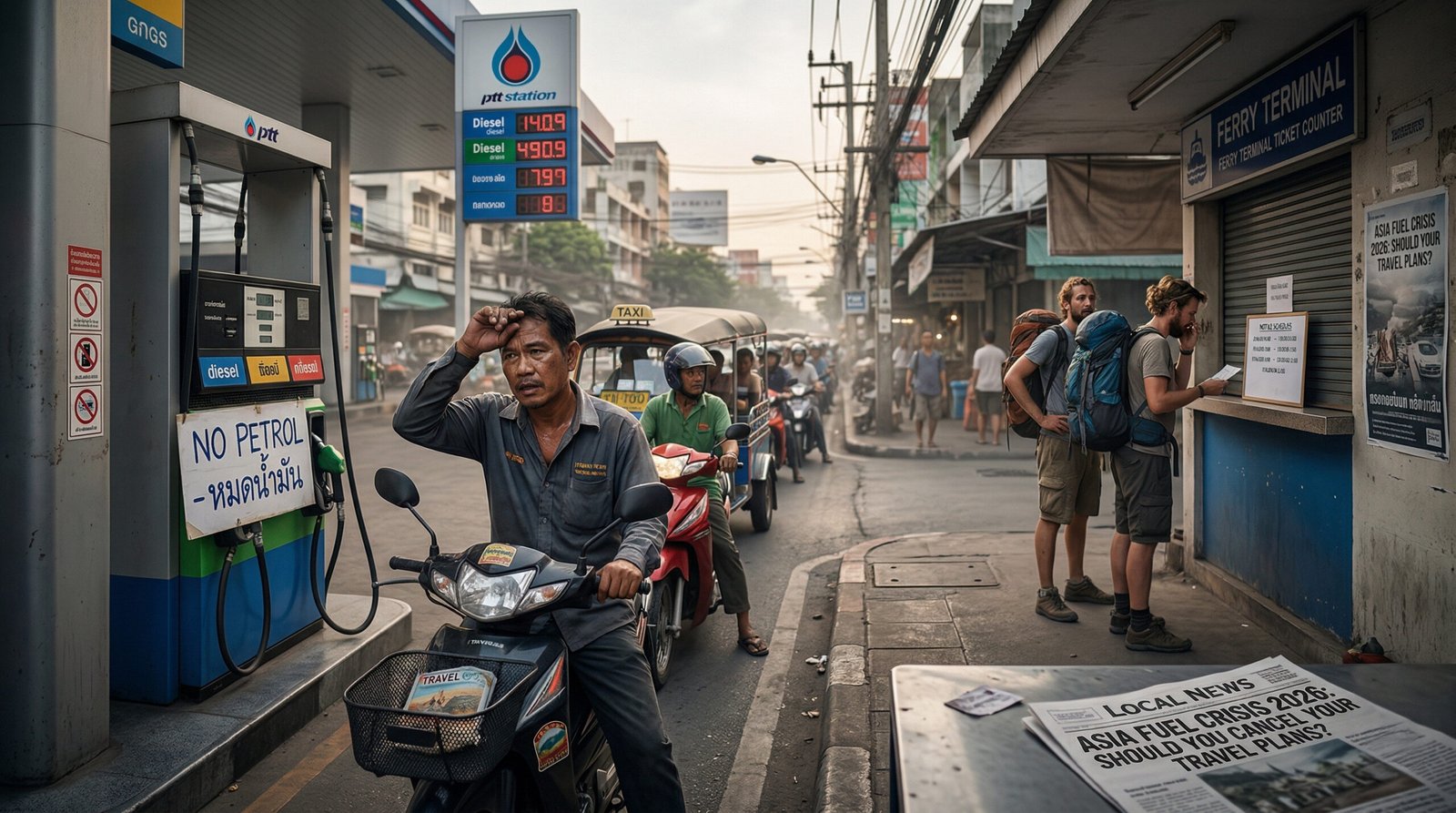
If you have a trip booked to Southeast Asia right now, you might be feeling nervous. The news is full of stories about gas stations running dry and flight prices shooting up. I have been getting a ton of questions from readers asking if they should go ahead with their holidays or just stay home.
Here is a simple guide to what is happening with the 2026 fuel crisis, how it impacts your travel plans, and what your options are if you already booked your trip.
What is Actually Happening?
Right now, the conflict in the Middle East has blocked a major shipping route for oil. Many Asian countries buy most of their oil from this area. Because the ships cannot get through, these countries are suddenly running very low on fuel.
Because gas is so hard to get, the price has skyrocketed. This is causing big headaches for airlines and local transportation everywhere in the region.
How This Affects Your Flights
Airlines run on jet fuel. When jet fuel gets this expensive, airlines pass that cost right to you.
Higher prices: Ticket prices are jumping by 10% to over 30%. Even budget airlines are adding steep fees.
Canceled routes: Some airlines are simply canceling flights because they cannot get enough fuel to make the trip.
Longer travel times: Flights between Europe and Asia are taking much longer because planes have to fly around the conflict zones.
What to Expect on the Ground in Asia
Not every country is dealing with this the same way. Some planned ahead, while others are really struggling.
The Smooth Spots (Japan, South Korea, China)
These countries have massive storage tanks full of emergency oil. If you are traveling here, your day-to-day trip will look pretty normal. Trains are running, and hotels have power. You will just pay more for your flight to get there.
The Bumpy Spots (Thailand, Philippines, Malaysia)
These places are feeling the pinch. Governments are taking steps to save energy, which will change your vacation experience.
Fewer Taxis: In Thailand, the number of taxis at the main Bangkok airport dropped by more than half. Drivers do not want to take long trips because they might run out of gas.
Hotter Buildings: To save power, places like Thailand have capped air conditioning in buildings at 26 degrees Celsius (about 79 degrees Fahrenheit).
Less Ferry Travel: In the Philippines, ferry schedules are cut back. This makes it much harder to jump from island to island.
The Danger Zones (Vietnam, Laos, Cambodia, Sri Lanka, Pakistan)
These countries are running on empty. Many gas stations have closed entirely. There are huge lines for fuel, and some places are experiencing power cuts. It is highly advised not to travel to these areas for a vacation right now. You could easily get stranded.
A Big Warning About Travel Insurance
You might think your travel insurance has you covered if things go wrong. Think again.
Almost all standard travel insurance policies refuse to pay for problems caused by war or military conflict. Because this fuel shortage is a direct result of the situation in the Middle East, your regular policy will likely cover nothing if your flight is canceled or your trip is ruined.
The only way to get your money back is if you bought a special upgrade called “Cancel For Any Reason” coverage right after you booked your trip. This add-on is expensive, but it is the only safety net right now.
Your Options: What Should You Do?
If you are trying to figure out your next steps, here is a breakdown of your best options.
Option 1: When to Cancel or Postpone
You should probably cancel your trip if you are heading to a highly affected area like Vietnam or Sri Lanka. You should also cancel if your plan involves a lot of moving around, like taking multiple local flights, ferries, or long car rides in places like the Philippines. If you cannot afford to lose your money and you do not have special insurance, it is better to play it safe and stay home.
Option 2: When to Change Your Plans
If you are going to a place like Thailand, you can still go, but you need to change how you travel.
Stay in one place: Pick one nice resort and stay there. Avoid planning complicated trips that rely on local buses or boats.
Book rides early: Do not rely on finding a taxi on the street. Pay for your airport transfers in advance.
Try a walking or biking tour: Group tours focused on hiking or cycling are a great idea right now. Once you arrive, you do not need to worry about gas prices at all.
Option 3: When to Go Ahead
If your trip is to Japan or South Korea, you are good to go. Just be ready for expensive flights. Another great option is a staycation. Many people are choosing to stay closer to home and book a nice local hotel instead of dealing with international airport stress.
Traveling right now requires extra patience and a flexible budget. Look closely at your destination, check your insurance, and make the choice that feels right for you.

Adrenaline junkie with a passion for exploring off-the-beaten-path destinations and finding unique ways to stay active. Expect stunning scenery, challenging workouts, awesome travel tips and a whole lot of fun. Let’s get sweaty and explore the world together!