
1. 🚦 The Short Answer
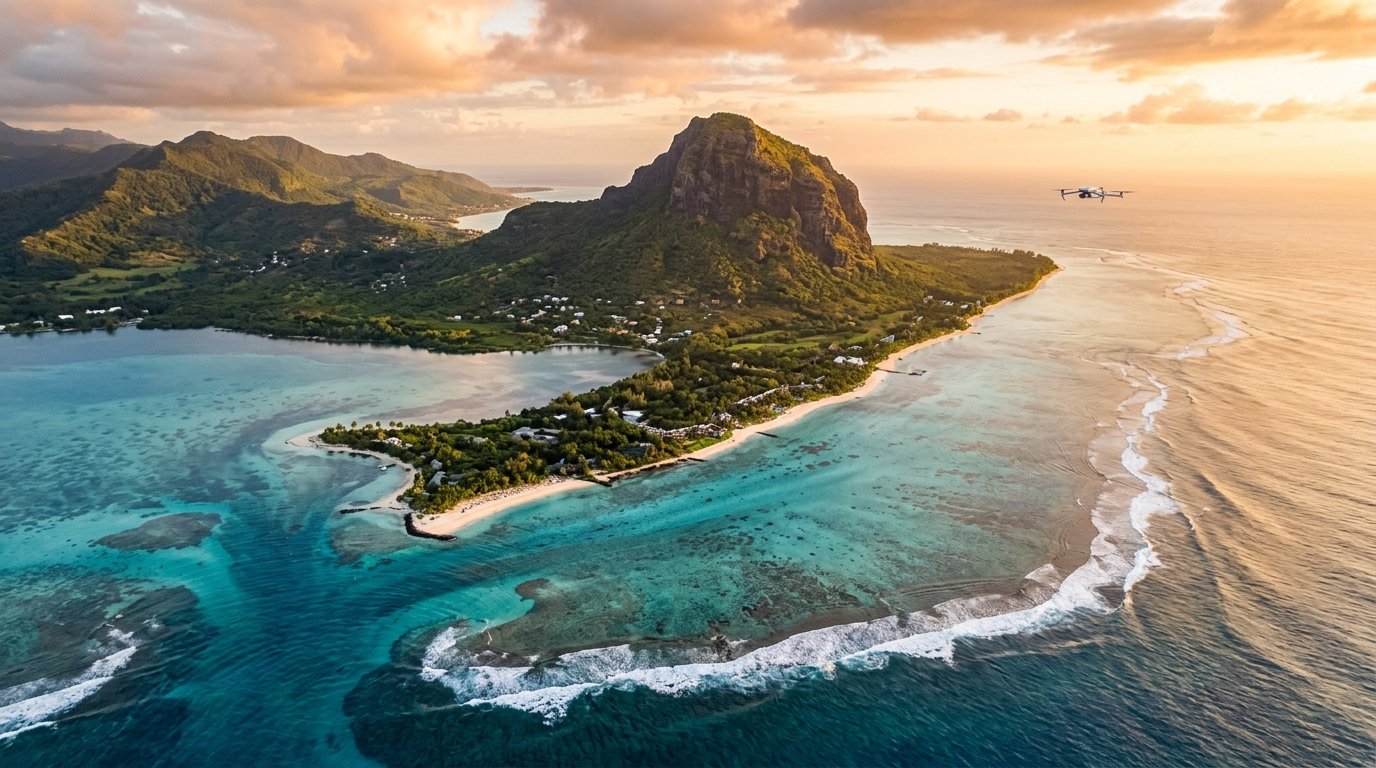
Recreational drone flying is legally allowed for tourists in Mauritius under strict guidelines. As long as your drone weighs under 7kg, you do not need to pre-register it, but you are highly restricted regarding where you can fly—most notably, flying over public beaches is prohibited without a special permit.
2. 🛃 Customs & Importation Rules
- Airport Customs: Tourists can legally bring recreational drones into Mauritius. Always pack your drone and its lithium batteries in your carry-on luggage, as lithium batteries are globally banned from checked baggage due to fire hazards.
- Declaration: You should declare your drone to customs officers upon arrival. This keeps your equipment transparently listed as a personal item for your trip.
- Confiscation Risks: Drones under 7kg will generally not be confiscated if declared properly for personal, recreational use. However, if your drone is exceptionally heavy (over 7kg) or appears to be for commercial use without prior clearance, it may be held at customs or subject to high import taxes.
3. 📝 Registration & Permit Process for Tourists
- No Prior Registration Needed: Under the latest Civil Aviation (Unmanned Aircraft System) Regulations, foreign tourists flying drones under 7kg purely for leisure do not need to register the drone or obtain a permit before arriving.
- The Process: Since no pre-arrival paperwork is needed for basic recreational use, you simply declare the drone at the border. If you wish to fly outside of the standard tourist limits (such as over a public beach or for commercial work), you must contact the Department of Civil Aviation (DCA) well in advance to apply for an official authorization.
- Fees and Time: There is no fee for standard tourist recreational flights since no permit is required. Obtaining a special authorization or commercial permit involves regulatory fees and can take several weeks to process.
4. 🚫 Key Flight Rules & Restrictions
- Altitude and VLOS: The maximum allowed flying altitude is 120 meters (400 feet). You must maintain a Visual Line of Sight (VLOS) with your drone at all times and only fly during daylight hours in good weather.
- Private Property Only: Tourists are legally restricted to flying over private property (such as your resort) and must secure the landowner’s explicit permission before taking off.
- No-Fly Zones: Flying your drone over public beaches, national parks, densely populated areas, or within 8km (5 miles) of an airport is strictly forbidden.
- Proximity Limits: Even on private property, you must keep your drone at least 150 meters away from crowds or open-air assemblies, and 50 meters away from people, vessels, and vehicles not under your control.
5. 🔗 Official Sources & Links
For the most current regulatory updates or to apply for special flight authorizations, you can verify the rules directly with the Mauritius Department of Civil Aviation (DCA).
Disclaimer: Aviation laws and customs regulations change frequently. Always double-check with official local government sources or your airline shortly before your trip to ensure full, up-to-date compliance.
Adrenaline junkie with a passion for exploring off-the-beaten-path destinations and finding unique ways to stay active. Expect stunning scenery, challenging workouts, awesome travel tips and a whole lot of fun. Let’s get sweaty and explore the world together!