
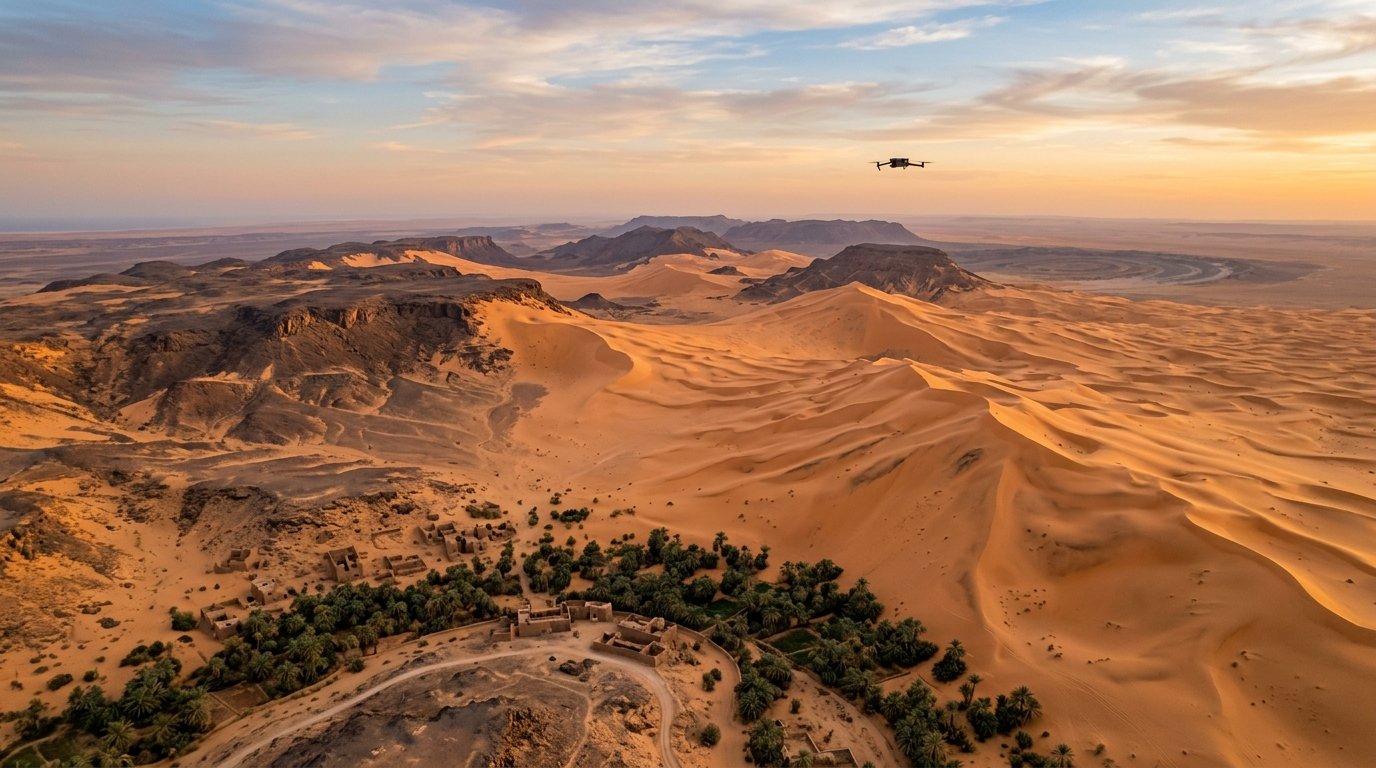
1. 🚦 The Short Answer
Recreational drone use in Mauritania currently falls into a legal gray area, as the country lacks comprehensive drone-specific legislation for tourists. While flying is generally tolerated if you follow basic international safety guidelines, getting your drone through airport customs can be highly unpredictable and relies entirely on the discretion of border officials.
2. 🛃 Customs & Importation Rules
- Airport Customs: Bringing a drone through Nouakchott International Airport is the biggest hurdle for tourists. Because there are no explicit recreational drone import laws, customs officers have the power to either let your drone through or temporarily hold it.
- Declarations: There is no standard recreational customs declaration form. If stopped, be transparent, polite, and explain clearly that the drone is strictly for personal, non-commercial photography.
- Confiscation Risks: If an officer decides not to let the drone into the country, it will typically be confiscated and held at the airport until your departure date. Travelers entering Mauritania via land borders (such as from Morocco or Senegal) generally report an easier time, as luggage screening is less stringent than at the airport.
3. 📝 Registration & Permit Process for Tourists
- Prior Registration: Tourists flying purely for recreational purposes do not need to register their drone or obtain a permit before arriving. This is largely because an official registration framework for hobbyists does not yet exist.
- Commercial Process: If you plan to monetize your footage, you must obtain a formal permit from the Agence Nationale de l’Aviation Civile (ANAC). This is a highly bureaucratic process that often requires a local “fixer” and coordination with the Ministry of Culture.
- Fees & Wait Times: For everyday tourists, there are no official recreational permit fees to pay or wait times to navigate.
4. 🚫 Key Flight Rules & Restrictions
- Standard Operational Rules: In the absence of local laws, ANAC expects operators to follow standard International Civil Aviation Organization (ICAO) rules. You must fly during daylight hours, maintain visual line of sight at all times, and keep your altitude at or below 400 feet (120 meters).
- Weight Classes: Mauritania does not currently have codified weight categories. Sub-250g drones (like the DJI Mini) do not receive special legal exemptions, though their smaller size makes them less likely to attract unwanted attention at customs.
- No-Fly Zones: You must strictly avoid flying near military bases, government buildings, police checkpoints, and airports (maintain at least a 5-mile radius). Do not fly over large crowds and always respect the privacy of locals.
5. 🔗 Official Sources & Links
For the most current information, you can attempt to contact the local aviation authority, though response times may vary:
Disclaimer: Aviation policies and customs enforcement in Mauritania can change rapidly and are often applied inconsistently. Travelers should always double-check with official sources, a local fixer, or their embassy shortly before traveling.
Adrenaline junkie with a passion for exploring off-the-beaten-path destinations and finding unique ways to stay active. Expect stunning scenery, challenging workouts, awesome travel tips and a whole lot of fun. Let’s get sweaty and explore the world together!