
1. 🏕️ The Short Answer
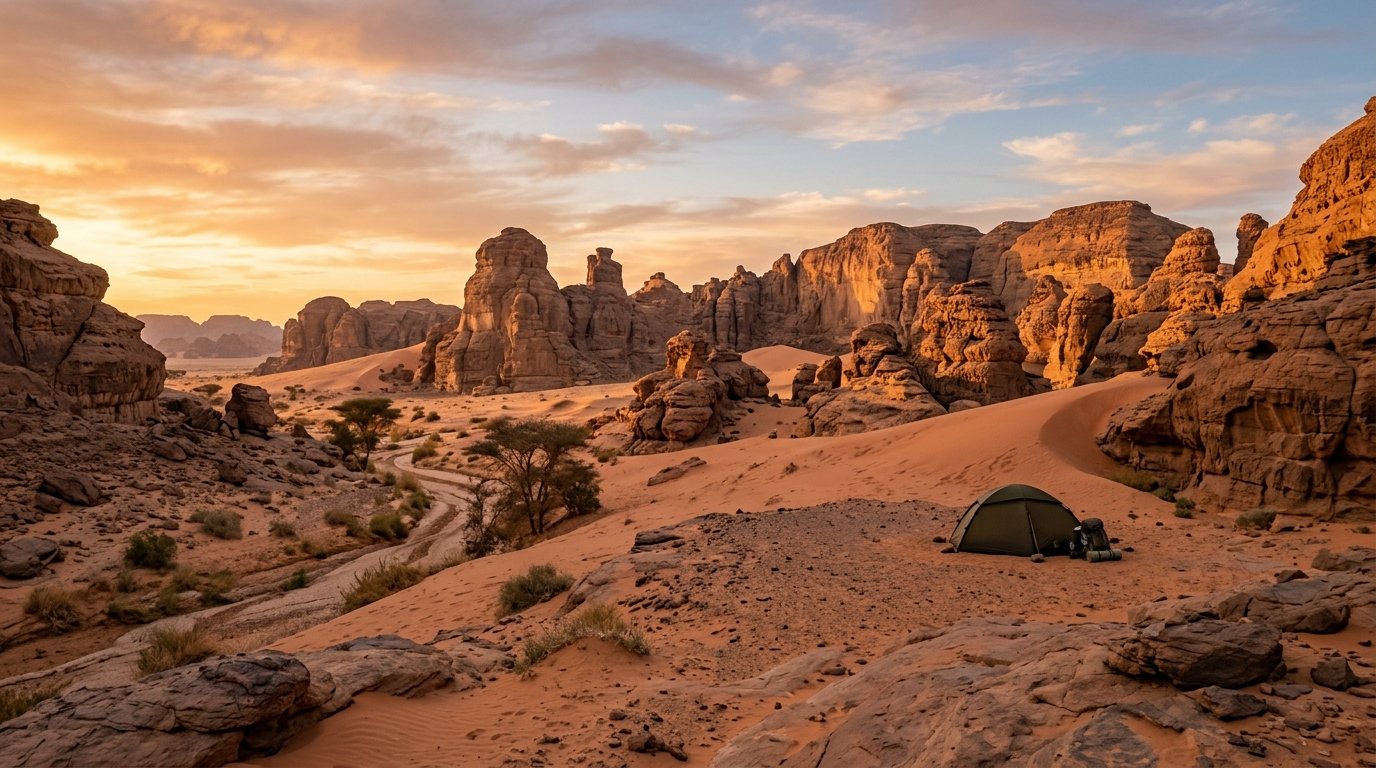
Wild camping and van life are effectively illegal and impossible for independent foreign tourists in Libya. Because Libyan law mandates that all foreign visitors must travel on a pre-approved itinerary with a licensed local guide and a tourist police escort, you cannot independently pitch a tent or sleep in a van; however, guided desert camping expeditions organized by official tour operators are legally permitted and form the core of Libyan tourism.
2. 🌲 Wild & Dispersed Camping Rules
- Is camping outside official campsites legal for tourists on public land? Technically, dispersed camping in the Sahara or along the coast is allowed, but only under the direct supervision of a licensed Libyan tour operator. Independent wild camping is strictly prohibited for foreigners.
- Are there duration limits or distance rules? Because independent travel is banned, there are no specific distance rules tourists need to worry about. Your mandatory local guide and security escort will select safe, legally permitted camping spots based on your pre-approved travel permits.
- Is this actively enforced? Yes, extremely heavily. The country is filled with military and police checkpoints. Attempting to camp or travel independently without a guide, an official Letter of Invitation (LOI), and tourist police will result in immediate detainment, interrogation, and deportation.
3. 🏞️ National Park & Protected Area Rules
- Do national parks or protected areas have a separate camping permit system? Libya has protected zones like Al-Kouf National Park and the Zellaf reserve. Tourists cannot apply for individual camping permits. All park access, regional travel permits, and passport registrations are handled entirely by your tour agency prior to your arrival.
- Is camping restricted to designated sites only? In northern forested and coastal reserves, camping is largely restricted to designated tourist villages and pre-approved zones. In the deep Sahara (like the Acacus Mountains), camping is dispersed but strictly managed by your desert guides.
- Are there seasonal closures? Yes, weather-related closures dictate the season. Desert camping tours are generally suspended between late May and August/September due to extreme, life-threatening summer temperatures. The permitted camping season runs from October to April.
4. 🚐 Van Life & Overnight Vehicle Sleeping
- Is it legal to sleep overnight in a vehicle in public car parks, rest stops, or roadsides? For foreign tourists, independent van life is entirely illegal. You cannot cross the border in a private campervan to roam freely or sleep in public car parks.
- Does local law distinguish between “parking” and “camping”? This distinction (common in Europe or North America) is moot in Libya. Foreigners are not allowed to be unescorted anywhere in the country, making “stealth camping” or roadside overnight parking impossible.
- Are there designated overnight areas tourists should know about? There are no European-style “aires,” RV parks, or public campervan facilities for international tourists. Any overland travel is done in agency-provided 4×4 vehicles, and overnight locations are predetermined.
5. 🔥 Campfires & Practical Restrictions
- Are open campfires generally allowed? Yes, open campfires are heavily integrated into the guided desert camping experience (such as traditional Tuareg tea preparation and sand-baked bread). Your guides will safely manage these fires. In coastal scrublands or forested parks like Al-Kouf, fires are strictly controlled to prevent wildfires.
- Key no-camp zones tourists should avoid: You will be kept away from these by your guide, but strictly prohibited areas include military installations, oil fields, and volatile border regions. Traveling into Eastern Libya often requires a separate, expensive military entry clearance from the Libyan National Army. Furthermore, large swathes of the desert contain unexploded ordnance or are utilized by smugglers, reinforcing the absolute legal requirement to stay with your guide.
6. 🔗 Official Sources & Links
Because Libya does not currently maintain a centralized, active government tourism board website for independent travelers, the most vital resources for understanding the legal restrictions of visiting and camping in Libya are government travel advisories. Always consult these before attempting to book a tour:
Disclaimer: Travel, camping, and land-use laws in Libya are heavily dictated by the current political and security climate, and they change frequently. Most western governments advise against all travel to Libya due to civil unrest and security concerns. You must verify all current visa, permit, and guided-tour regulations with a licensed Libyan travel agency and your country’s foreign office prior to planning a trip.

Adrenaline junkie with a passion for exploring off-the-beaten-path destinations and finding unique ways to stay active. Expect stunning scenery, challenging workouts, awesome travel tips and a whole lot of fun. Let’s get sweaty and explore the world together!