
1. 🏕️ The Short Answer
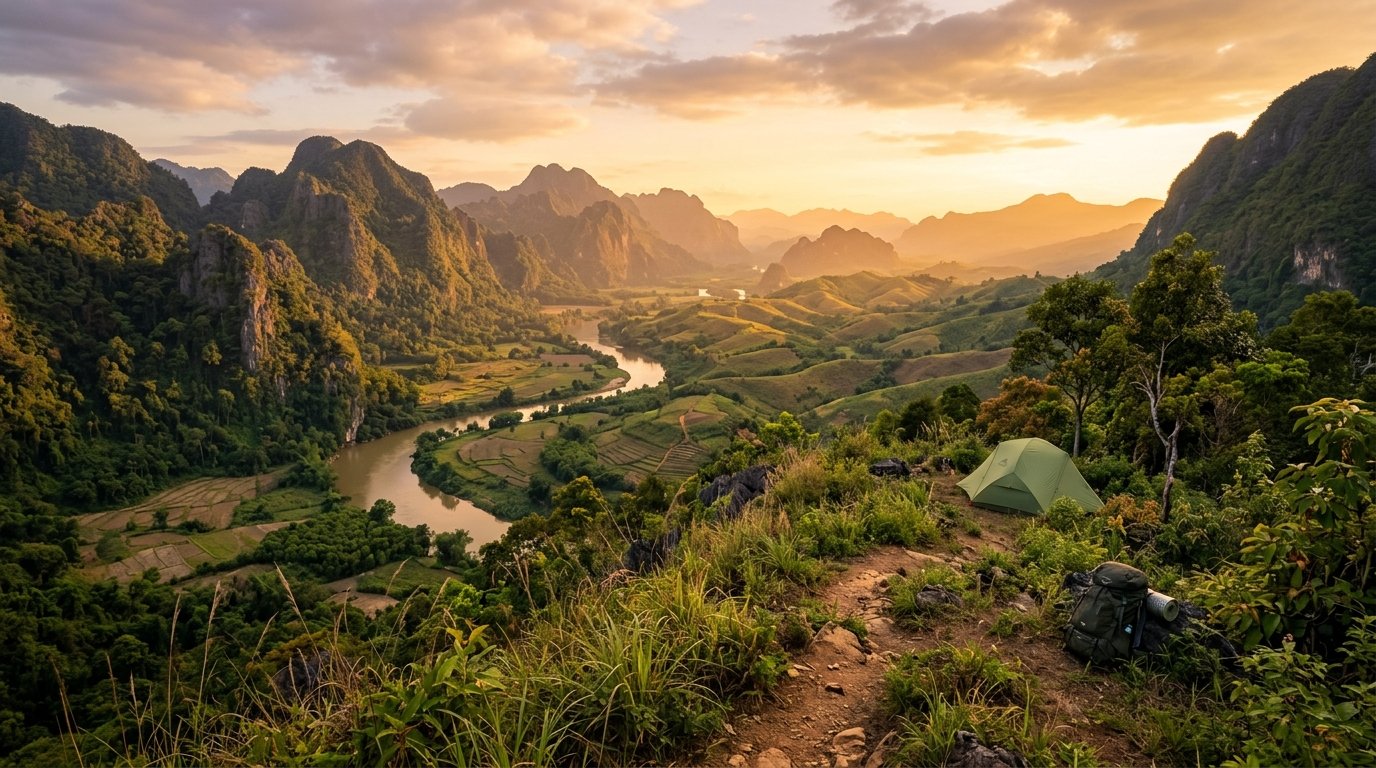
Spontaneous wild and dispersed camping is effectively illegal and highly discouraged for foreign tourists in Laos. There is no legal framework allowing tourists to pitch a tent on public land; travelers are generally expected by law to stay in registered accommodations or designated eco-tourism campsites. Furthermore, the extreme danger of Unexploded Ordnance (UXOs) in rural areas makes wandering off the beaten path to camp a severe safety hazard.
2. 🌲 Wild & Dispersed Camping Rules
- Legality on Public Land: Wild camping outside of official sites is not permitted for tourists. All land in Laos is either state-owned or managed communally by local villages. To camp legally outside a tourist zone, you must obtain explicit permission from the local village chief (Nai Ban).
- Duration and Distance Rules: Because wild camping is not legally recognized, there are no official duration limits or distance rules. However, it is strictly forbidden to camp near religious sites (Wats), active farmland, or military installations.
- Enforcement: Enforcement by local police and village authorities is common. If caught wild camping without permission, you will likely be questioned, asked to present your passport, and ordered to relocate to a licensed guesthouse. Fines are possible, though authorities often focus on simply moving tourists along.
3. 🏞️ National Park & Protected Area Rules
- Permit Systems: Laos manages its wilderness through National Protected Areas (NPAs), such as Nam Ha and Phou Khao Khouay. You cannot independently hike or camp in these areas; you are legally required to obtain a trekking permit, which is usually secured by hiring an officially registered local guide or tour operator.
- Designated Sites & Booking: Camping within NPAs is strictly confined to designated zones, bamboo forest camps, or eco-lodges. Advance booking through a local tourism office or licensed agency is mandatory.
- Seasonal Closures: While parks rarely close entirely, the wet season (May to October) makes many trekking routes and campsites practically inaccessible due to deep mud, flooded river crossings, and heavy leech activity. Tours and camping permits are often suspended during severe weather.
4. 🚐 Van Life & Overnight Vehicle Sleeping
- Sleeping in Vehicles: Laos has no legal framework or infrastructure for “van life.” Sleeping overnight in a vehicle on public streets, roadsides, or in public car parks is generally not permitted. Tourists are expected to use official lodging.
- Parking vs. Camping: Local authorities distinguish between parking a vehicle and using it as accommodation. While you can park a vehicle on the street, sleeping inside will likely draw the attention of local police, who may knock on your windows and force you to get a hotel room.
- Designated Areas: There are absolutely no designated RV parks, “aires,” or official rest areas for overnight camping in Laos. Overlanders typically navigate this by asking private guesthouse owners, restaurants, or temples for permission to park and sleep in their private lots for a small fee.
5. 🔥 Campfires & Practical Restrictions
- Campfires: Open fires are strongly discouraged outside of officially managed NPA campsites. During the dry season (November to April), the risk of forest fires is incredibly high. If you are on an organized camping tour, your local guide will handle all fire-making (usually for boiling water) following local safety protocols.
- No-Camp Zones & Hazards: Tourists must never camp in unmapped forests, border regions, or eastern provinces (such as Xieng Khouang and areas along the Ho Chi Minh Trail) without a guide. Laos is the most heavily bombed country per capita in history, and unexploded ordnance (UXOs) remain a massive, deadly threat just inches off established paths. Military areas and village limits are also strict no-camp zones.
6. 🔗 Official Sources & Links
For the most current information, permits, and approved eco-tourism operators, travelers should consult:
- The Official Tourism Board of Laos (Tourism Laos)
- UK Government Travel Advice for Laos (Crucial for up-to-date safety, local laws, and UXO warnings)
Disclaimer: Land-use laws, national park regulations, and local enforcement practices in Southeast Asia change frequently. The information in this guide is for educational purposes only. Always verify current camping regulations with local Lao authorities, tourism offices, or your embassy before your trip.

Adrenaline junkie with a passion for exploring off-the-beaten-path destinations and finding unique ways to stay active. Expect stunning scenery, challenging workouts, awesome travel tips and a whole lot of fun. Let’s get sweaty and explore the world together!