1. 🚦 The Short Answer
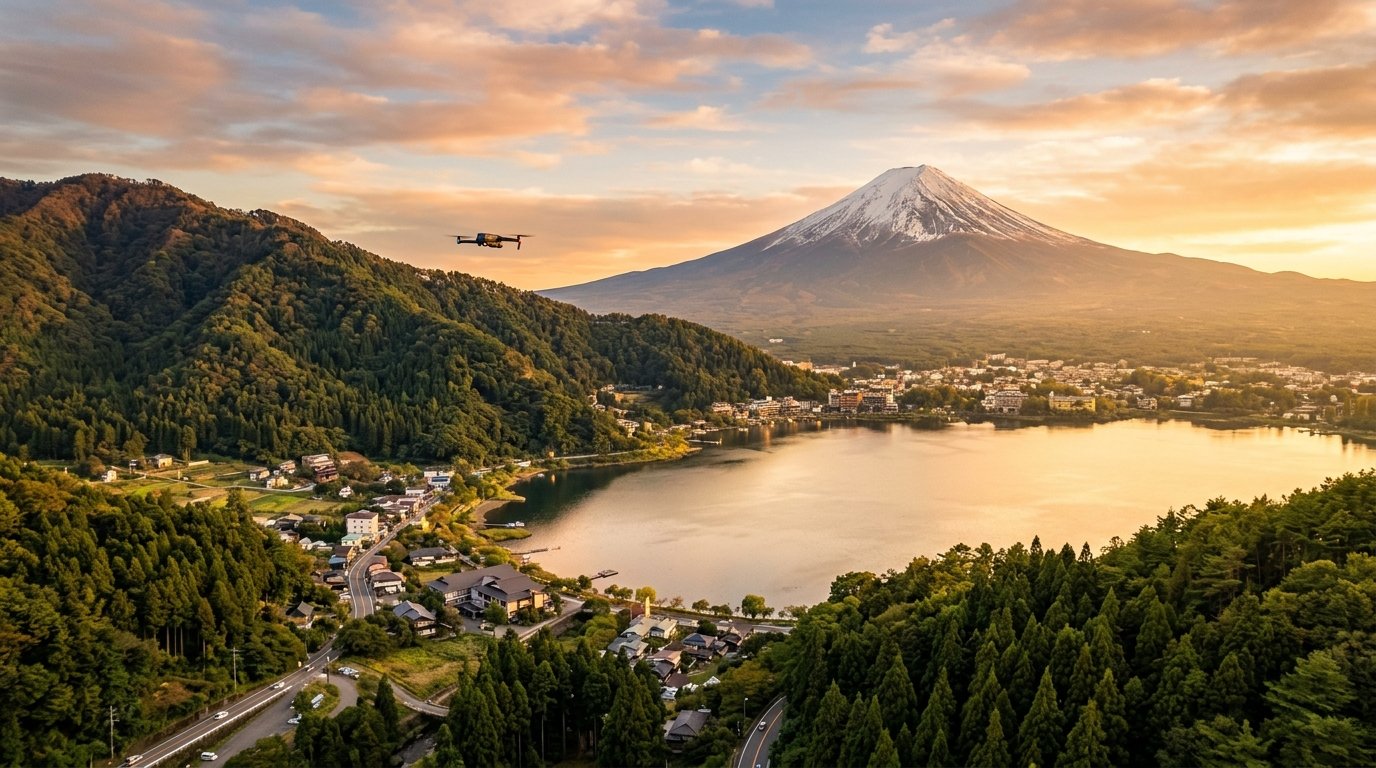
Recreational drones are generally allowed in Japan, but they are subject to strict registration and rigorous airspace laws. Foreign tourists must formally register their drones and adhere to these regulations before taking their first flight.
2. 🛃 Customs & Importation Rules
- Bringing it in: Foreign tourists can legally bring a recreational drone into Japan through airport customs.
- Declarations: There are no special customs declarations required for bringing a single, personal-use drone upon arrival.
- Confiscation: Your drone will not be confiscated at the border simply for lacking flight paperwork. However, you cannot legally fly it anywhere in the country without prior government registration and approval.
3. 📝 Registration & Permit Process for Tourists
- Register BEFORE arriving: Yes, any drone weighing 100g or more (including the battery) must be registered with Japan’s Ministry of Land, Infrastructure, Transport and Tourism (MLIT) before you fly.
- Step-by-step process: Create an account on the official DIPS 2.0 (Drone/UAS Information Platform System) portal. Upload your drone’s specifications, serial number, and mandatory Remote ID information. Verify your identity using your passport, and pay the registration fee. Once approved, you must clearly display the assigned registration number on the drone.
- Fees & Timeline: The online registration fee is around 900 to 1,450 JPY (roughly $6 to $10 USD). Processing generally takes 5 to 10 business days, so it is highly recommended to apply a few weeks before your trip.
4. 🚫 Key Flight Rules & Restrictions
- Standard Rules: Operations are restricted to a maximum altitude of 150 meters (492 feet). You must maintain Visual Line of Sight (VLOS) at all times, fly only during daylight hours, and keep a minimum distance of 30 meters from people, vehicles, and buildings.
- The 100g Rule: Unlike many countries that use a 250g threshold, Japan’s strict weight limit is 100g. Any drone 100g or heavier (such as the DJI Mini series) is classified as an aircraft and requires full registration and an active Remote ID.
- No-Fly Zones: You cannot fly over Densely Inhabited Districts (DIDs), which covers almost all major cities like Tokyo, Kyoto, and Osaka without a special MLIT permit. Flights are strictly prohibited near airports, over crowds or festivals, and within a 1,000-meter buffer zone of important facilities like government buildings, nuclear plants, and military bases.
5. 🔗 Official Sources & Links
For the most current information, please verify your plans with the Japanese government:
- Ministry of Land, Infrastructure, Transport and Tourism (MLIT) – Unmanned Aircraft Rules
- DIPS 2.0 – Official Drone Registration Portal
Disclaimer: Aviation laws change frequently and can vary by region. Always double-check regulations with official local authorities before flying your drone in a foreign country.

Adrenaline junkie with a passion for exploring off-the-beaten-path destinations and finding unique ways to stay active. Expect stunning scenery, challenging workouts, awesome travel tips and a whole lot of fun. Let’s get sweaty and explore the world together!