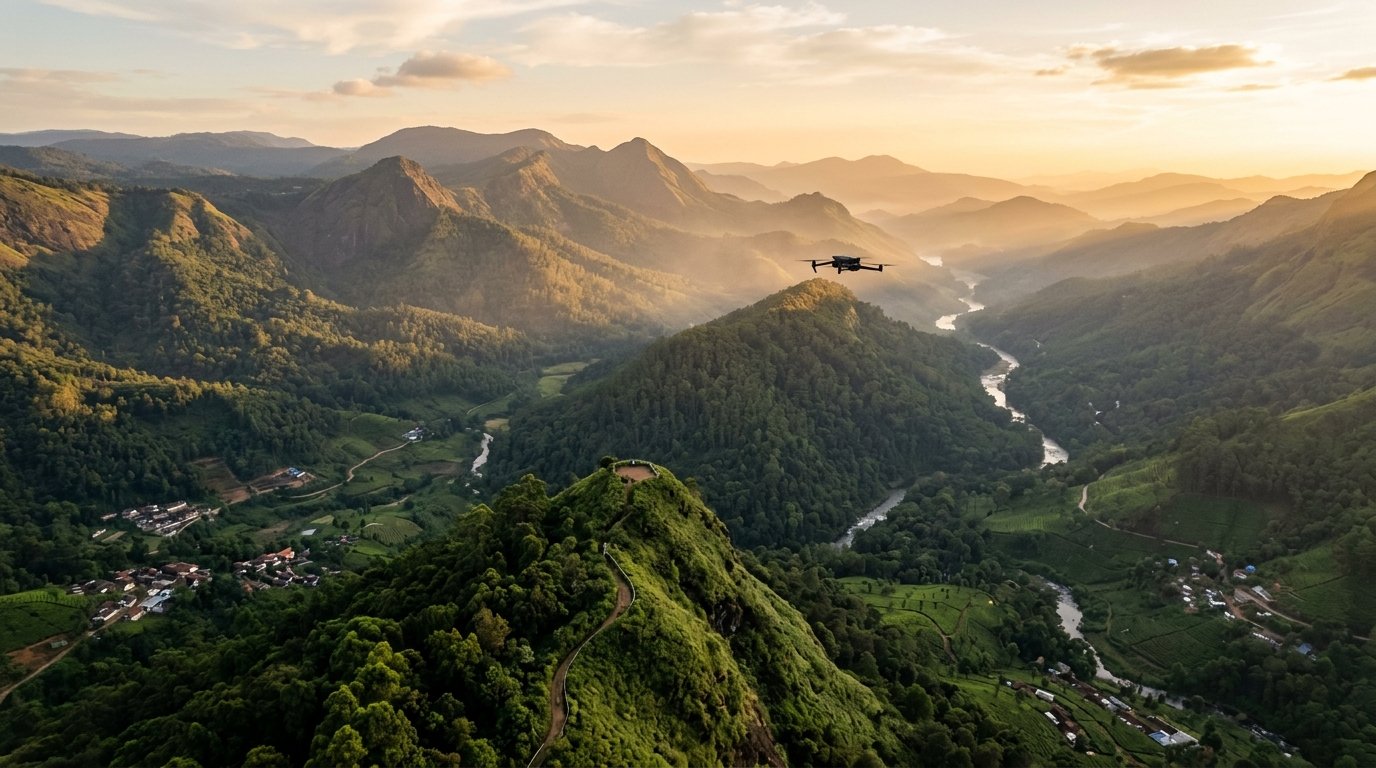
1. 🚦 The Short Answer
Recreational drones are completely banned for foreign tourists in India. Foreigners are prohibited from flying drones, and the country enforces a strict ban on the import of foreign-made drones, meaning any drone brought in passenger luggage will be confiscated at customs.
2. 🛃 Customs & Importation Rules
- Complete Import Ban: A tourist cannot legally bring a recreational drone (including popular sub-250g models like the DJI Mini) into India through airport customs. The Directorate General of Foreign Trade (DGFT) banned the import of foreign drones in 2022 to boost local manufacturing.
- Customs Declaration: If you are traveling with a drone, you must declare it at the Red Channel upon arrival.
- Confiscation at the Border: If you bring a drone into India, customs officers will seize it. In some instances, officers may provide a receipt allowing you to store the drone at the airport and retrieve it upon your departure—but typically only if you are flying out of the exact same airport. This process is highly bureaucratic, incurs storage fees, and is never guaranteed.
3. 📝 Registration & Permit Process for Tourists
- No Permits Available: There is no registration or permit process available for foreign tourists visiting India.
- DigitalSky Limitations: India’s official drone management system, the DigitalSky platform managed by the Directorate General of Civil Aviation (DGCA), requires an Indian passport, Aadhaar card, or an Indian business entity to obtain a Unique Identification Number (UIN). Therefore, tourists cannot register a drone before or after arriving.
- Exemptions Do Not Apply: Even though local laws exempt “Nano” drones (under 250g) from registration and pilot licenses, the overarching ban on foreigners operating drones and the border import ban supersede this rule.
4. 🚫 Key Flight Rules & Restrictions
If you are an Indian citizen or legally operating under a local commercial entity, the standard Drone Rules, 2021 apply:
- Operational Rules: Flights are restricted to a maximum altitude of 400 feet (120 meters) in Green Zones and must be kept within Visual Line of Sight (VLOS) during daylight hours.
- Weight Classes: Nano drones (under 250g) do not require a Remote Pilot Certificate or UIN. Micro drones (250g to 2kg) and larger require pilot certification, UIN registration, and hardware-enforced NPNT (No Permission, No Takeoff) compliance.
- No-Fly Zones: Flying is strictly prohibited in Red Zones (military bases, international borders, strategic locations) and all National Parks and Wildlife Sanctuaries. Flying near airports (Yellow Zones) requires prior air traffic control permission.
5. 🔗 Official Sources & Links
For the most up-to-date information, you can verify India’s drone regulations directly through the following official sources:
Disclaimer: Aviation and customs laws change frequently. Always double-check with the official Directorate General of Civil Aviation (DGCA) and Indian Customs before making any travel arrangements involving drones.

Adrenaline junkie with a passion for exploring off-the-beaten-path destinations and finding unique ways to stay active. Expect stunning scenery, challenging workouts, awesome travel tips and a whole lot of fun. Let’s get sweaty and explore the world together!