
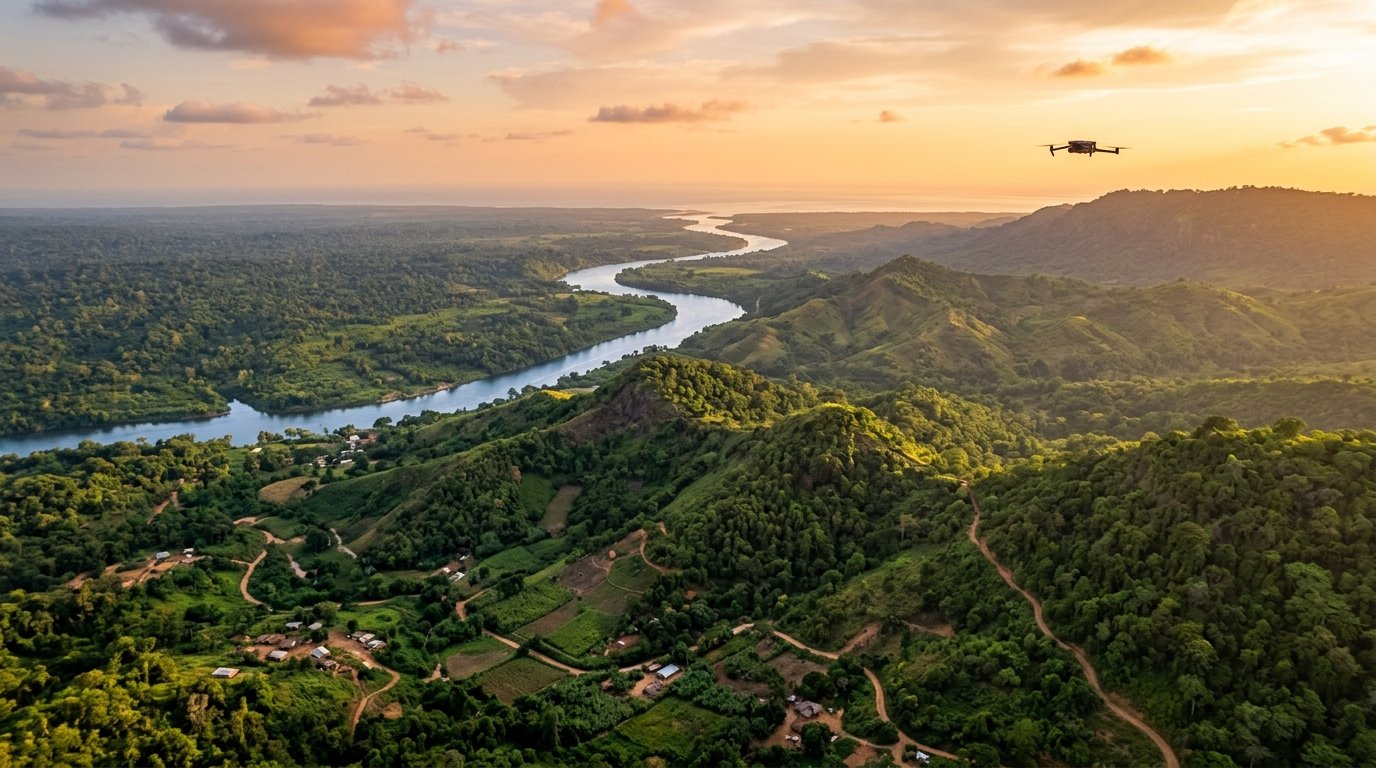
1. 🚦 The Short Answer
Recreational drones are allowed for tourists in Ghana, but they are subject to strict regulations. You must formally register your drone and obtain a temporary permit from the Ghana Civil Aviation Authority (GCAA), which requires an in-person physical inspection of your equipment.
2. 🛃 Customs & Importation Rules
- Airport Customs: Tourists can legally bring drones into Ghana, but you must be prepared for a potential hold at customs (like Kotoka International Airport).
- Declarations: You must declare your drone upon arrival. Because the GCAA requires a physical inspection to finalize your permit, customs officers will typically detain your drone and issue you a detention receipt.
- Retrieval: Your drone will not be permanently confiscated as long as you comply. You simply take your detention receipt to the GCAA head office (located right next to the airport), process the paperwork, pay the fee, and obtain a release letter to get your drone back.
3. 📝 Registration & Permit Process for Tourists
- Before Arriving: You cannot fully complete the process before arriving, but you can start it. Download GCAA Form R28-AF-001 (Application to Import RPAS) and email it to the GCAA with a copy of your passport biodata page.
- Upon Arrival: Visit the GCAA office in Accra. You will need to present your drone for a routine physical inspection and pass a brief theoretical quiz to obtain a “Temporary Use of RPAS” approval.
- Fees & Processing Time: Registration for a recreational drone weighing less than 7kg typically costs around $40 USD. If you visit the office during regular weekday business hours, the entire process usually takes just a few hours.
4. 🚫 Key Flight Rules & Restrictions
- Standard Operations: You must maintain Visual Line of Sight (VLOS) with your drone at all times. The maximum allowed altitude is 400 feet (120 meters). Drone operators must be at least 18 years old.
- Weight Classes: Ghana classifies standard consumer drones into Small RPAS (up to 1.5kg) and Light RPAS (up to 7kg). There are no registration exemptions for sub-250g drones like the DJI Mini; all drones must be registered.
- No-Fly Zones: It is strictly prohibited to fly within 10 kilometers (6.2 miles) of airports and helipads. You may not fly in congested urban areas, over crowds, near military installations, or within 30 meters of buildings and vehicles. National parks also require special permission from wildlife authorities.
- Night Flying: Flying a drone at night is illegal without a special waiver.
5. 🔗 Official Sources & Links
For official forms, scheme of charges, and the most current directives, please visit the Ghana Civil Aviation Authority (GCAA) website.
Disclaimer: Aviation laws and customs policies change frequently. Travelers should always double-check with official local authorities or contact the GCAA directly prior to booking their trip.
Adrenaline junkie with a passion for exploring off-the-beaten-path destinations and finding unique ways to stay active. Expect stunning scenery, challenging workouts, awesome travel tips and a whole lot of fun. Let’s get sweaty and explore the world together!