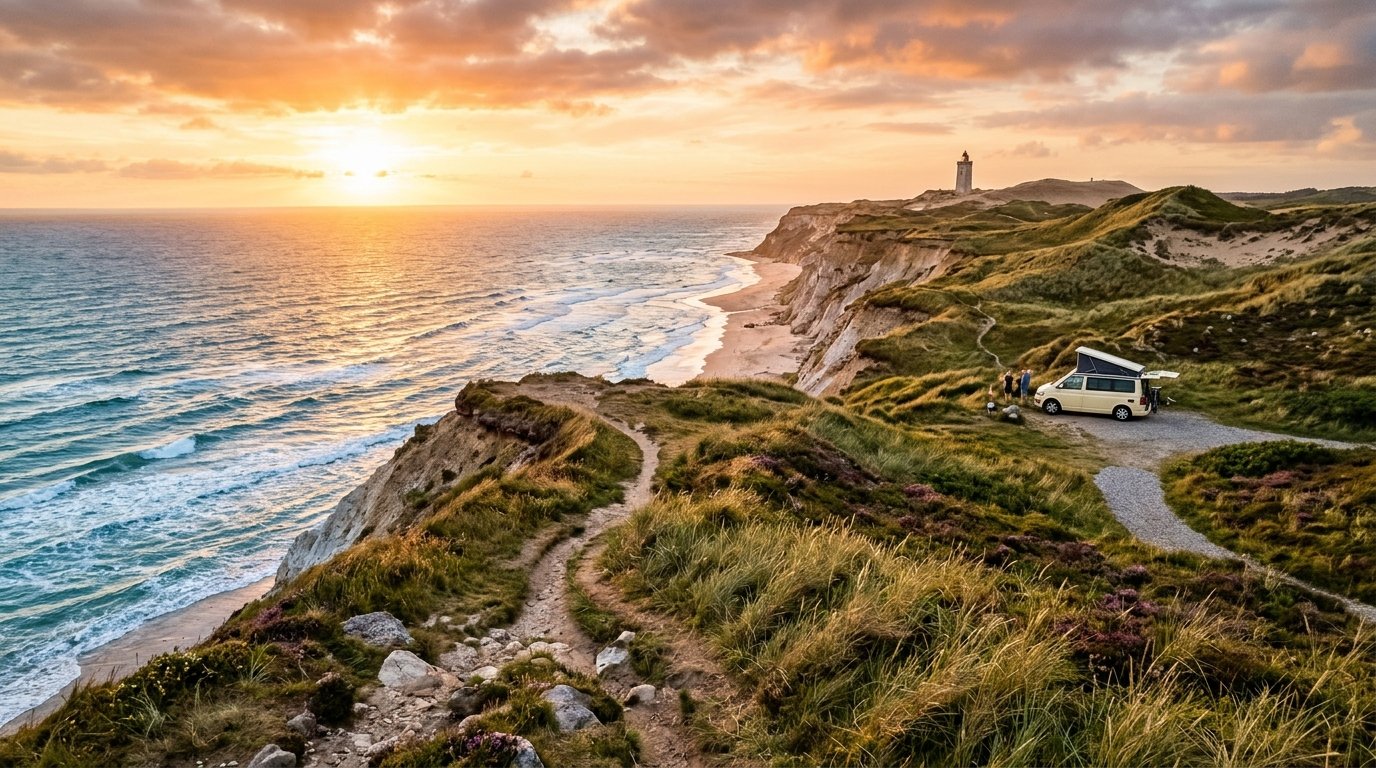
1. 🏕️ The Short Answer
Unlike its Nordic neighbors, Denmark does not have an “Everyman’s Right” (Right to Roam), meaning traditional wild camping is effectively illegal for tourists. However, the country offers a highly organized alternative: a vast, free network of designated “free tenting” (fri teltning) zones and primitive shelters where you can legally sleep in nature. For campervans, the law strictly distinguishes between “resting” in your vehicle (which is tolerated) and “camping” (which is illegal outside of official campsites).
2. 🌲 Wild & Dispersed Camping Rules
- Is camping outside official campsites legal? Pitching a tent randomly on beaches, in dunes, or on private land is strictly prohibited. Instead, you must use one of the ~275 state-owned forests that allow fri teltning (free tenting) or use designated primitive campsites (primitiv overnatningsplads). Sleeping directly on the forest floor in a sleeping bag without a tent is permitted on state land.
- Duration and Distance Rules: In fri teltning forest zones, you may only stay for a maximum of one night in the same spot. You can pitch a maximum of two small tents (up to 3-person size) in the same location, and your camp must not be visible from roads or residential buildings. In primitive campsites, the limit is generally two nights.
- Enforcement: These rules are actively enforced. Illegal wild camping on beaches, nature reserves, or roadsides can result in on-the-spot fines ranging from €5 to €500.
3. 🏞️ National Park & Protected Area Rules
- Permit Systems and Designated Sites: Danish National Parks (like Thy or Mols Bjerge) do not have a separate overarching camping permit. Instead, all overnight stays are restricted strictly to designated shelters and primitive campsites managed by the Danish Nature Agency (Naturstyrelsen).
- Advance Booking: Small primitive campsites and “free tenting” zones are generally first-come, first-served. However, larger shelter sites (lejrplads) designed for groups of 15 or more can and must be pre-booked online. If a large shelter is unbooked, individuals can use it, but booked groups have priority.
- Seasonal Closures: While areas rarely close entirely, severe dry spells in the summer can trigger strict total fire bans across all protected areas and national parks, closing all designated fire pits.
4. 🚐 Van Life & Overnight Vehicle Sleeping
- Sleeping in Vehicles vs. Camping: Under Danish traffic law, you are allowed to “rest” (raste) in your vehicle at highway rest areas and public car parks for up to 24 hours to recover for safe driving. However, “camping” (campere) is completely illegal in these spots.
- The “Camping” Distinction: If you perform any camping behavior—such as rolling out an awning, setting up a table and chairs, cooking outside, or popping up a roof tent that expands your vehicle’s footprint—it transitions from legal resting to illegal camping. Fines will apply.
- Designated Overnight Areas: Campervans are encouraged to use official campsites, municipal motorhome pitches (autocamperplads), or farm-stay networks like Pintrip (similar to France Passion, requiring a membership for 24-hour stays on private farms). Driving onto beaches (like the famous Rømø beach) is permitted during the day, but staying overnight in your vehicle is strictly prohibited.
5. 🔥 Campfires & Practical Restrictions
- Campfire Rules: Open fires are strictly forbidden in nature, except at officially established fire pits (bålpladser) provided by the Nature Agency. You may forage dead wood from the forest floor for these pits, but cutting branches is not allowed. Using enclosed camping stoves (like a Trangia) is generally accepted on bare soil or sand, but never on flammable forest vegetation.
- Fire Bans: During dry periods, municipalities or the Emergency Management Agency will issue total fire bans, which supersede all other rules and make even designated fire pits illegal to use.
- No-Camp Zones: You must completely avoid setting up camp on beaches, in coastal dunes (which are heavily protected to prevent erosion), and in marked military training zones (skydebaner), which are usually indicated by red spheres or hoisted red flags when active.
6. 🔗 Official Sources & Links
To find the official maps of all free tenting areas, primitive campsites, and shelters, as well as the exact legal guidelines, travelers should use the following official Danish government resources:
- The Danish Nature Agency (Naturstyrelsen) – Sleeping Outside Rules
- Udinaturen (Official Interactive Map for Shelters & Tent Zones)
Disclaimer: Land-use laws, fire regulations, and camping rules change frequently. Environmental conditions such as summer droughts can drastically alter what is permitted. Always verify current local regulations and fire bans with official Danish authorities or local tourist offices immediately before and during your trip.

Adrenaline junkie with a passion for exploring off-the-beaten-path destinations and finding unique ways to stay active. Expect stunning scenery, challenging workouts, awesome travel tips and a whole lot of fun. Let’s get sweaty and explore the world together!