
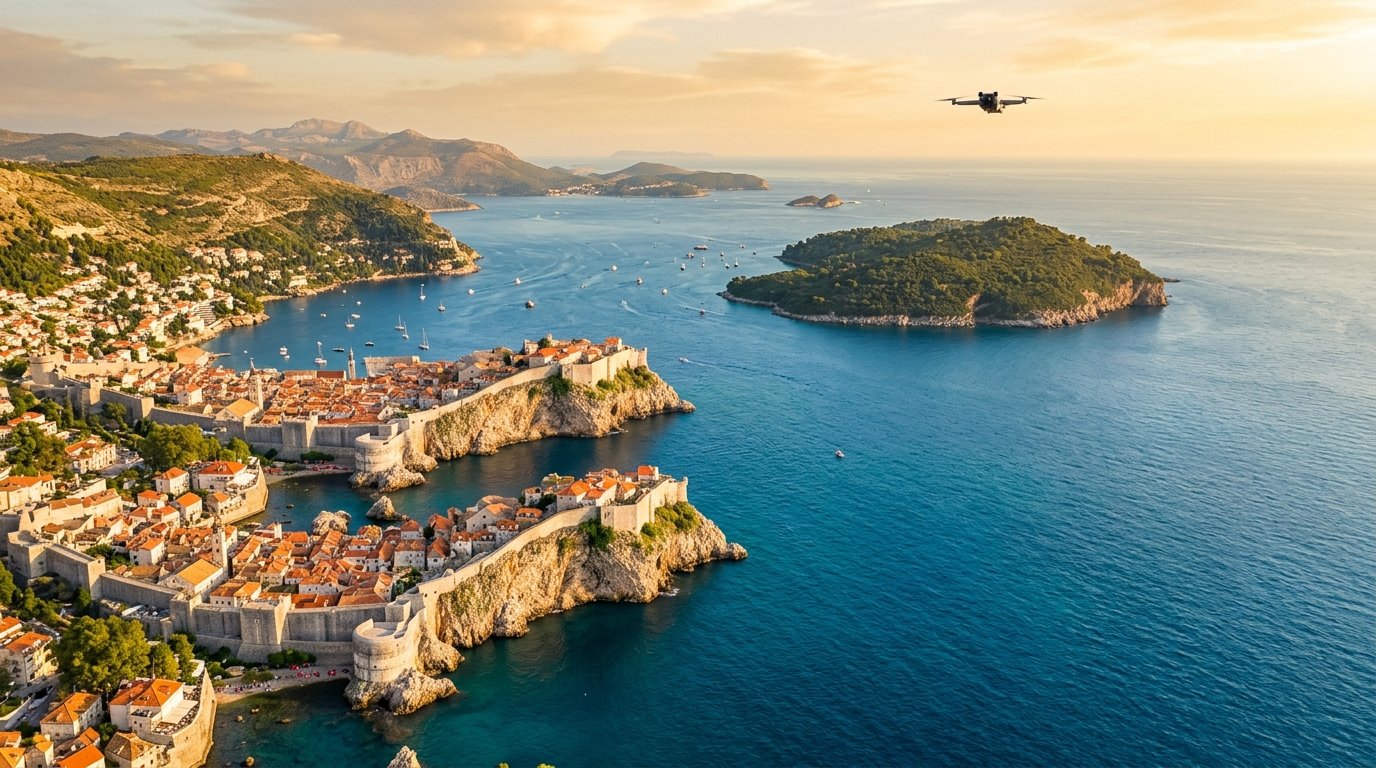
1. 🚦 The Short Answer
Recreational drones are allowed with strict registration and flight approval requirements. While flying is permitted under standard European Union (EASA) regulations, Croatia has a unique legal catch: officially capturing aerial photography of public spaces requires a specific permit that is rarely granted to tourists, though enforcement for personal vacation shots is generally relaxed.
2. 🛃 Customs & Importation Rules
- Bringing it in: Tourists can legally bring recreational drones through Croatian airport customs without issues.
- Declarations: No special customs declarations or import permits are required upon arrival. However, always pack lithium-ion batteries in your carry-on luggage to comply with standard airline safety rules.
- Confiscation: Your drone will not be confiscated at the border for lacking flight paperwork, as customs agents do not enforce civil aviation registration upon entry.
3. 📝 Registration & Permit Process for Tourists
- Pre-arrival registration: If your drone weighs over 250g OR has a camera, you must register as a Drone Operator. If you are already registered in another EU country, your Operator ID is valid in Croatia. If visiting from outside the EU, you must register with the Croatian Civil Aviation Agency (CCAA).
- Flight Reporting (Mandatory): All drone pilots must download the AMC Portal Mobile app, managed by Croatia Control. You must use this app to request airspace approval and report your flight before every single take-off.
- Cost and Time: Operator registration is quick and typically free or carries a small nominal fee. You must clearly mark your drone with your Operator ID. Airspace approvals via the AMC app for uncontrolled airspace are usually instant.
4. 🚫 Key Flight Rules & Restrictions
- Standard Rules: Keep the drone within Visual Line of Sight (VLOS), do not fly higher than 120 meters (400 feet), and never fly over crowds or uninvolved people.
- Weight Classes: Drones under 250g (like the DJI Mini) do not require you to pass a theoretical pilot exam, but you still must register as an Operator because the drone is equipped with a camera. Drones over 250g require the EASA A1/A3 training and exam.
- The Photography Law: Under the State Geodetic Administration, unauthorized aerial filming of public areas is technically prohibited for private individuals. While rarely enforced against casual tourists keeping footage offline, publishing or monetizing videos without a permit can legally result in fines.
- No-Fly Zones: Flying is strictly prohibited near airports, military bases, and densely populated historic centers like Dubrovnik’s city walls. National Parks (like Plitvice Lakes and Krka) also enforce total drone bans.
5. 🔗 Official Sources & Links
For the most current information, verify directly with these official Croatian authorities:
Disclaimer: Aviation laws and national security regulations change frequently. Always double-check official local guidelines and official sources shortly before your trip.
Adrenaline junkie with a passion for exploring off-the-beaten-path destinations and finding unique ways to stay active. Expect stunning scenery, challenging workouts, awesome travel tips and a whole lot of fun. Let’s get sweaty and explore the world together!