
1. 🏕️ The Short Answer
While wild camping is a practical necessity for overland travelers in Chad due to a complete lack of tourism infrastructure, independent, carefree wild camping is effectively illegal and highly restricted. You cannot legally travel or camp outside the capital without mandatory government permits, and in most wilderness regions, you are strictly required to be accompanied by a licensed local guide or military escort.
2. 🌲 Wild & Dispersed Camping Rules
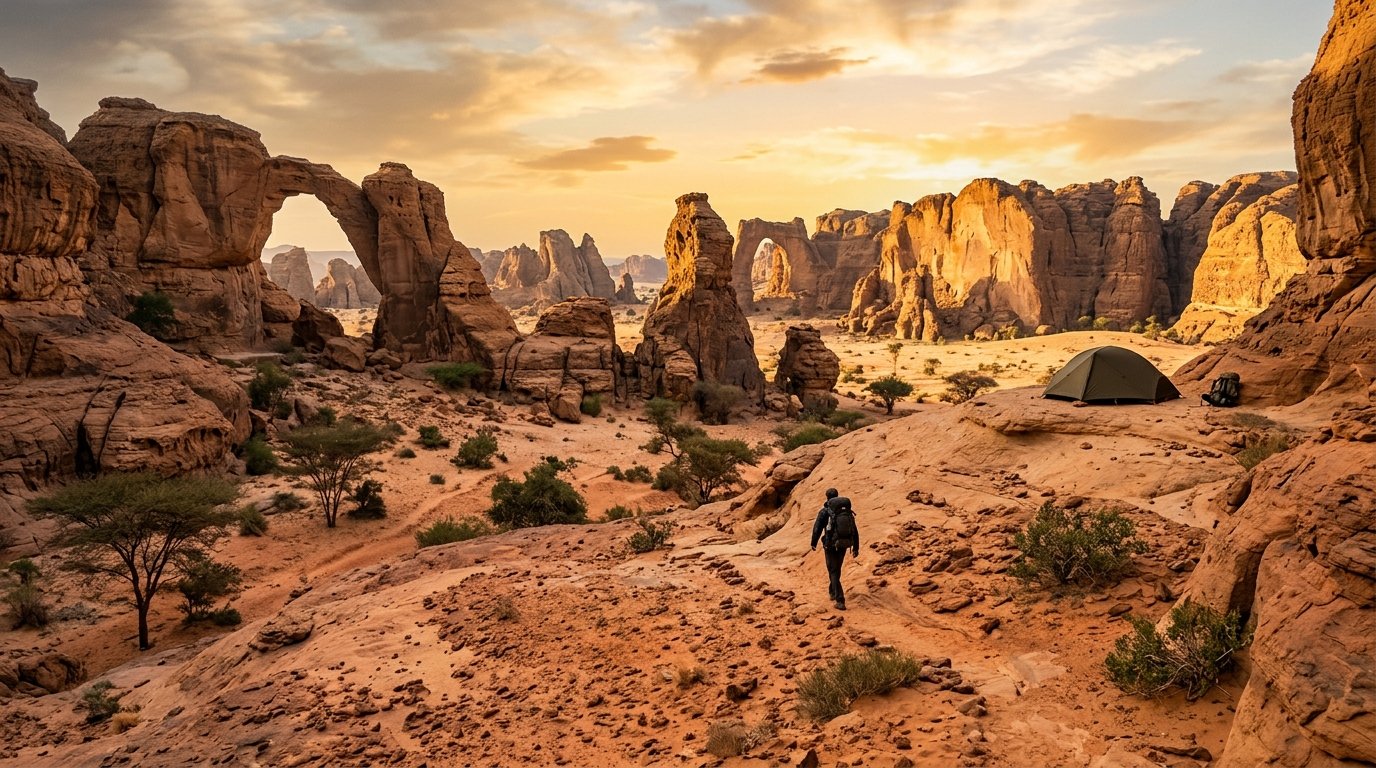
- Legality on Public Land: Wild camping is permitted in vast desert regions (such as the Ennedi Massif) only if you hold an official Autorisation de Circuler (a strict travel permit) issued by the Ministry of Tourism, and after registering with the police upon arrival. Independent roaming is not allowed for foreign tourists.
- Duration and Distance Rules: There are no formal zoning rules regarding how far you must camp from a road or water source, primarily because paved roads are practically non-existent outside major towns. You camp where your mandatory guide determines it is safe and respectful of local nomadic communities.
- Enforcement: Enforcement is exceptionally strict. The country is heavily policed by military and police checkpoints. If you attempt to wild camp or travel through the northern regions (such as the Borkou-Ennedi-Tibesti) without a registered guide and your official travel permits, you will be stopped, detained, or turned back immediately.
3. 🏞️ National Park & Protected Area Rules
- Permit Systems: Chad’s premier wildlife destination, Zakouma National Park, is managed by African Parks and operates under a strict, separate entry and accommodation system. Unregulated wild camping inside the park boundaries is strictly prohibited.
- Designated Sites and Advance Booking: Within Zakouma, camping is restricted to designated areas like Camp Salamat (a basic self-catering campsite) or Tinga Camp. Advance booking is absolutely required, and visitors must submit passport details ahead of time for security clearance and invitation letters.
- Seasonal Closures: Yes. Zakouma National Park and many other wilderness areas are completely closed to tourists during the wet season (typically June through November). During this time, heavy rains cause severe flooding, making all dirt tracks completely impassable.
4. 🚐 Van Life & Overnight Vehicle Sleeping
- Overnight Sleeping: Western-style “van life” does not exist in Chad. Sleeping in a vehicle in urban areas, public car parks, or roadsides near towns is highly unsafe, suspicious to locals, and will draw immediate police scrutiny. Conversely, out in the remote desert, sleeping in a rugged 4×4 or rooftop tent is the standard way to travel.
- Parking vs. Camping: There is no legal distinction between parking and camping. If your vehicle is stopped for the night, authorities will consider you to be camping and will demand to see your travel permits and your local guide.
- Designated Areas: There are zero designated rest stops, RV parks, or “aires” in Chad. In the capital, N’Djamena, overlanders typically pay to park and sleep inside secure, walled compounds, such as Catholic missions or hotel courtyards.
5. 🔥 Campfires & Practical Restrictions
- Campfires: Open campfires are generally tolerated in the Sahara and Sahel regions, provided you are a safe distance from dry brush. However, firewood is exceptionally scarce. Tourists must practice “Leave No Trace” and avoid stripping deadwood from the environment, as local nomadic tribes rely heavily on the sparse vegetation for their livestock.
- Key No-Camp Zones: Chad is subject to extreme security risks. Tourists must absolutely avoid camping anywhere near the borders of Libya, Sudan, the Central African Republic, and Nigeria. The Lake Chad basin (due to extremist groups) and the Tibesti Mountains (due to rebel activity and unexploded landmines) are strictly off-limits to tourists without high-level government clearance and armed military escorts.
6. 🔗 Official Sources & Links
To verify protected area camping rules, visit the official management authority for Zakouma National Park: African Parks – Zakouma.
Because security and travel regulations change rapidly in this region, it is crucial to consult your government’s travel warnings, such as the U.S. Department of State Chad Travel Advisory, before planning any overland trip.
Disclaimer: Camping and land-use laws, as well as regional security situations, change frequently. The information in this guide is for educational purposes. Always verify current regulations, permit requirements, and security advisories with official local authorities and your embassy prior to your trip.

Adrenaline junkie with a passion for exploring off-the-beaten-path destinations and finding unique ways to stay active. Expect stunning scenery, challenging workouts, awesome travel tips and a whole lot of fun. Let’s get sweaty and explore the world together!