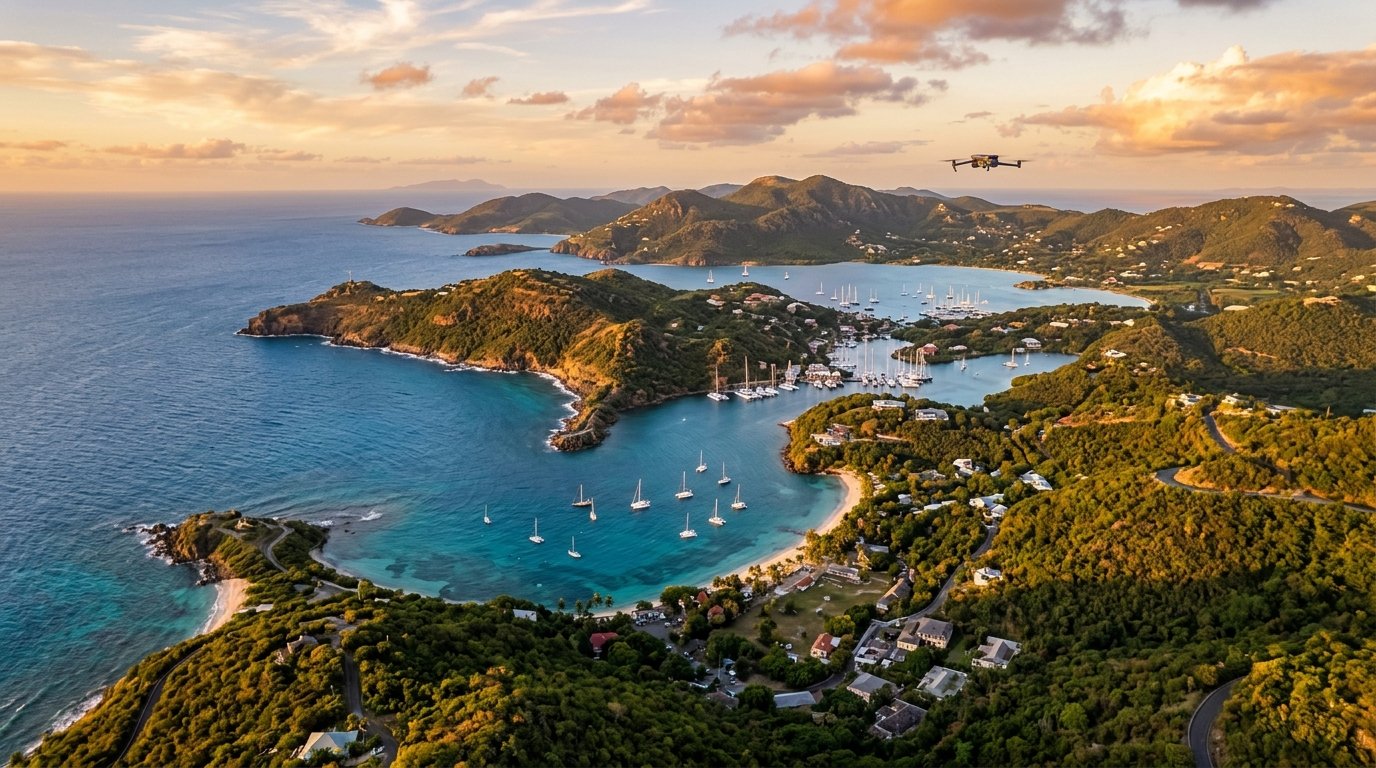
1. 🚦 The Short Answer
Recreational drones are legally permitted in Antigua and Barbuda. Tourists can fly their drones provided they declare the devices at customs and follow basic flight guidelines. Drones weighing over 250 grams generally require prior registration, while sub-250g models face fewer regulatory hurdles.
2. 🛃 Customs & Importation Rules
- Legal Importation: Foreign tourists can legally bring recreational drones into the country through airport customs.
- Declarations: You must officially declare your drone on your arrival customs form. Customs officials may ask to see proof of local drone registration or an approval letter.
- Confiscation Risk: If you fail to declare the equipment or lack the required paperwork for drones over 250g, customs officials have the authority to confiscate and securely hold your drone at the airport until your departure flight.
3. 📝 Registration & Permit Process for Tourists
- Prior Approval: Drones over 250g require formal registration before arriving. Sub-250g drones (such as a DJI Mini) flown strictly for recreation usually bypass the formal permit process, though checking in with authorities is still highly recommended.
- The Process: Drone aviation is regulated by the Eastern Caribbean Civil Aviation Authority (ECCAA) alongside local air traffic control. Tourists must email their drone specifications, travel dates, and intended flight maps to the ECCAA to initiate the registration process.
- Fees & Timeline: Registration fees are roughly EC$60 (around $22 USD). Because processing can be slow, you should submit your application at least 30 to 45 days before arriving in Antigua and Barbuda.
4. 🚫 Key Flight Rules & Restrictions
- Standard Operations: You must maintain direct Visual Line of Sight (VLOS) with your drone at all times. The maximum allowed flight altitude is 300 feet (90 meters) above ground level. Night flying and dropping objects from the drone are strictly prohibited.
- Distance Requirements: Maintain a safe distance of at least 50 feet from all buildings and structures, and stay at least 100 feet laterally away from vehicles and open-air assemblies of people.
- Common No-Fly Zones: Do not fly near seaports, military facilities, or airports. Specifically, flights are banned within 2.5 to 3 miles north and south of airport runway centerlines, and 5 miles east and west of runway thresholds. Flights over highways, crowded beaches, and sporting events are also restricted without special permission.
5. 🔗 Official Sources & Links
Travelers should verify all drone regulations directly with the regional aviation authority:
Disclaimer: Aviation laws and customs policies change frequently. Travelers should always double-check with official sources or local authorities shortly before their trip to ensure compliance.

Adrenaline junkie with a passion for exploring off-the-beaten-path destinations and finding unique ways to stay active. Expect stunning scenery, challenging workouts, awesome travel tips and a whole lot of fun. Let’s get sweaty and explore the world together!