
1. 🏕️ The Short Answer
Wild and dispersed camping in Ethiopia exists in a legal grey area but is widely tolerated and serves as a primary mode of accommodation for overland travelers. However, for safety and cultural reasons, wild camping should always be done with the explicit permission of the local community, while camping inside national parks is strictly regulated and requires staying at designated sites with an official armed scout.
2. 🌲 Wild & Dispersed Camping Rules
- Legality on Public Land: There is no explicit national ban preventing tourists from pitching a tent on rural public land, but land is usually communally managed by nearby villages. Therefore, spontaneous wild camping is less about state law and more about securing local permission.
- Duration and Distance Rules: There are no codified duration limits for tourists, nor specific distance rules from roads. However, travelers should avoid camping near vital water sources that locals and livestock rely on, or setting up directly on animal trails.
- Enforcement: Official enforcement by police is rare in rural areas. Instead, local villagers will almost certainly spot you. It is standard etiquette—and a critical safety measure—to approach the local village leader to ask for permission before setting up camp. You may be asked to pay a small, informal fee for the night, which helps support the community and ensures you are watched over.
3. 🏞️ National Park & Protected Area Rules
- Permits and Scouts: National Parks in Ethiopia (such as the Simien Mountains, Bale Mountains, and Awash) are managed by the Ethiopian Wildlife Conservation Authority (EWCA). You must pay an entrance fee at the park headquarters and, by law, you must be accompanied by an official, armed park scout or licensed guide at all times.
- Designated Sites: Inside protected areas, wild camping is strictly prohibited. You must camp at officially designated campsites (e.g., Sankaber or Geech in the Simiens). Advance booking is not typically required online; you arrange your campsites, fees, and scouts upon arrival at the park headquarters.
- Seasonal Closures: While there are rarely hard seasonal closures, the rainy season (June to September) makes many dirt tracks impassable and river crossings dangerous, effectively closing off remote backcountry access to tourists.
4. 🚐 Van Life & Overnight Vehicle Sleeping
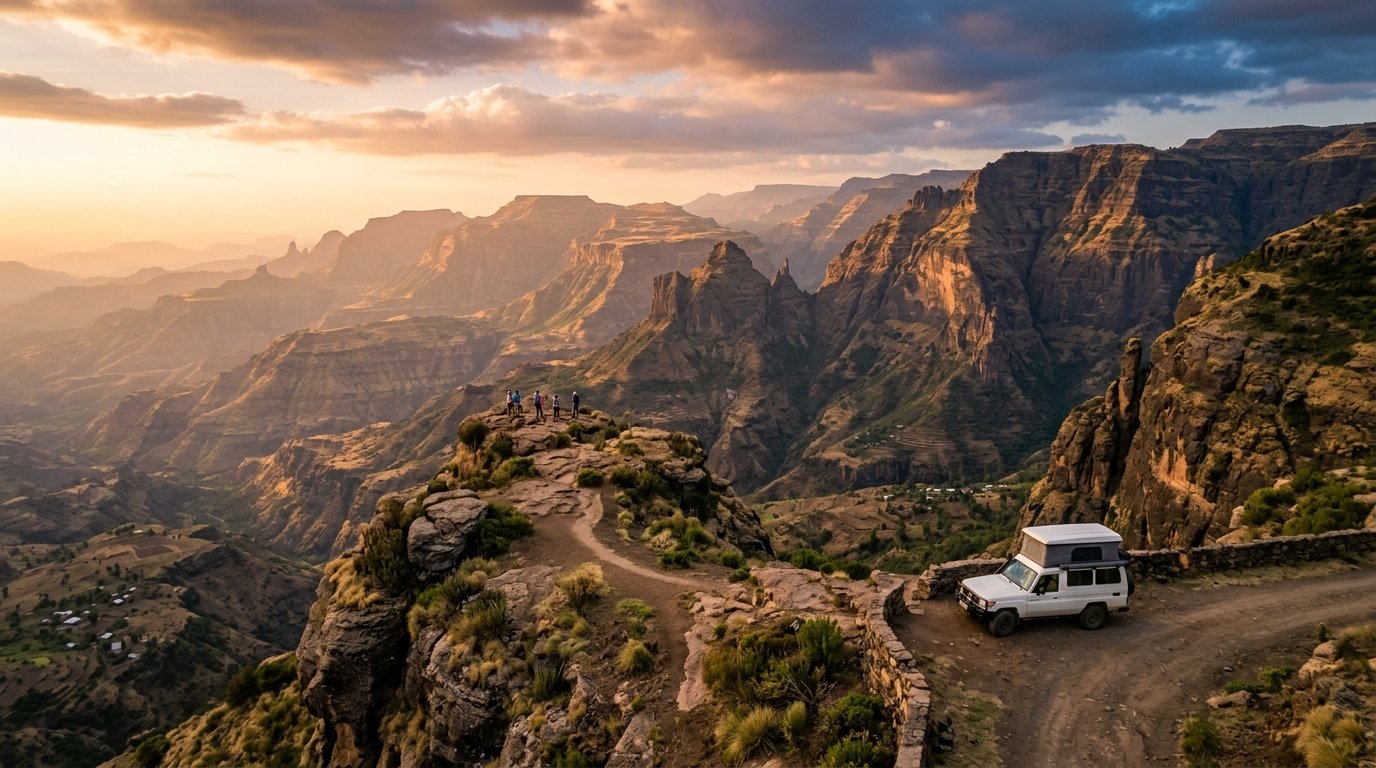
- Sleeping in Vehicles: Sleeping in a 4×4 or overland vehicle (often in a roof-top tent) is entirely legal and one of the most popular ways for independent tourists to navigate the country.
- Parking vs. Camping: Ethiopian law does not specifically distinguish between parking and camping. However, pulling over on random roadsides or highways to sleep is highly discouraged due to safety risks, including traffic accidents and petty theft.
- Designated Areas: There is no network of European-style public rest stops. Overlanders typically ask to park overnight in secured areas such as the courtyards of local hotels, police stations, churches, or schools, usually for a small negotiated fee.
5. 🔥 Campfires & Practical Restrictions
- Campfire Regulations: Outside of national parks, small campfires are tolerated, but you must bring your own fuel. In national parks, fires are strictly forbidden outside of designated campsite fire pits. Cutting live wood or protected species (like Erica wood in the highlands) is illegal and heavily penalized. Due to severe deforestation issues, travelers are strongly urged to use portable gas stoves instead of wood fires.
- No-Camp Zones: Tourists must absolutely avoid wild camping near border regions (especially the borders with Eritrea, Somalia, Sudan, and South Sudan) due to high militarization, unexploded ordnance, and conflict risks. Furthermore, never camp near military installations, government buildings, or radio towers, as these are considered sensitive security infrastructure. Visiting extreme zones like the Danakil Depression requires specialized permits, a guided convoy, and military escorts to camp safely.
6. 🔗 Official Sources & Links
For the most current information, permits, and park regulations, travelers should consult the Ethiopian Wildlife Conservation Authority (EWCA) or the Ethiopia Ministry of Tourism.
Disclaimer: Camping and land-use laws, as well as regional security situations, change frequently in Ethiopia. Foreign travelers should always verify current regulations, border conditions, and safety advisories with official local authorities and their home country’s foreign travel advisory before embarking on their trip.

Adrenaline junkie with a passion for exploring off-the-beaten-path destinations and finding unique ways to stay active. Expect stunning scenery, challenging workouts, awesome travel tips and a whole lot of fun. Let’s get sweaty and explore the world together!