
1. 🏕️ The Short Answer
While wild and dispersed camping in Venezuela is legally a gray area rather than strictly outlawed nationwide, it is highly restricted and strongly discouraged for foreign tourists due to severe security risks and strict protected-area controls. For practical purposes, recreational wild camping outside of specialized, guided expeditions or heavily secured private land is effectively impossible for tourists. Van lifers must rely on highly secure, permission-based parking, and backcountry hikers must use designated camps alongside local indigenous guides.
2. 🌲 Wild & Dispersed Camping Rules
- Legal Status: There is no overarching federal law explicitly banning dispersed camping on all public lands, making it a regional gray area. However, local municipal laws and land ownership rights dictate that you cannot simply pitch a tent anywhere. Tourists are expected to have local authorization.
- Distance and Duration: Because wild camping is not a formalized recreational activity for independent tourists, there are no standard distance rules or duration limits. You are entirely dependent on securing permission from private landowners or local indigenous community councils (such as in the Gran Sabana).
- Enforcement: Land access is actively managed by a heavy military and police presence, with frequent checkpoints (alcabalas) across the country. Attempting to wild camp in unauthorized areas will likely result in questioning, detainment, or extortion by authorities, or expose you to extreme danger from criminal elements.
3. 🏞️ National Park & Protected Area Rules
- Permit System: National parks and natural monuments are managed by INPARQUES (Instituto Nacional de Parques). Access to major outdoor destinations requires registering with park authorities and paying entrance fees.
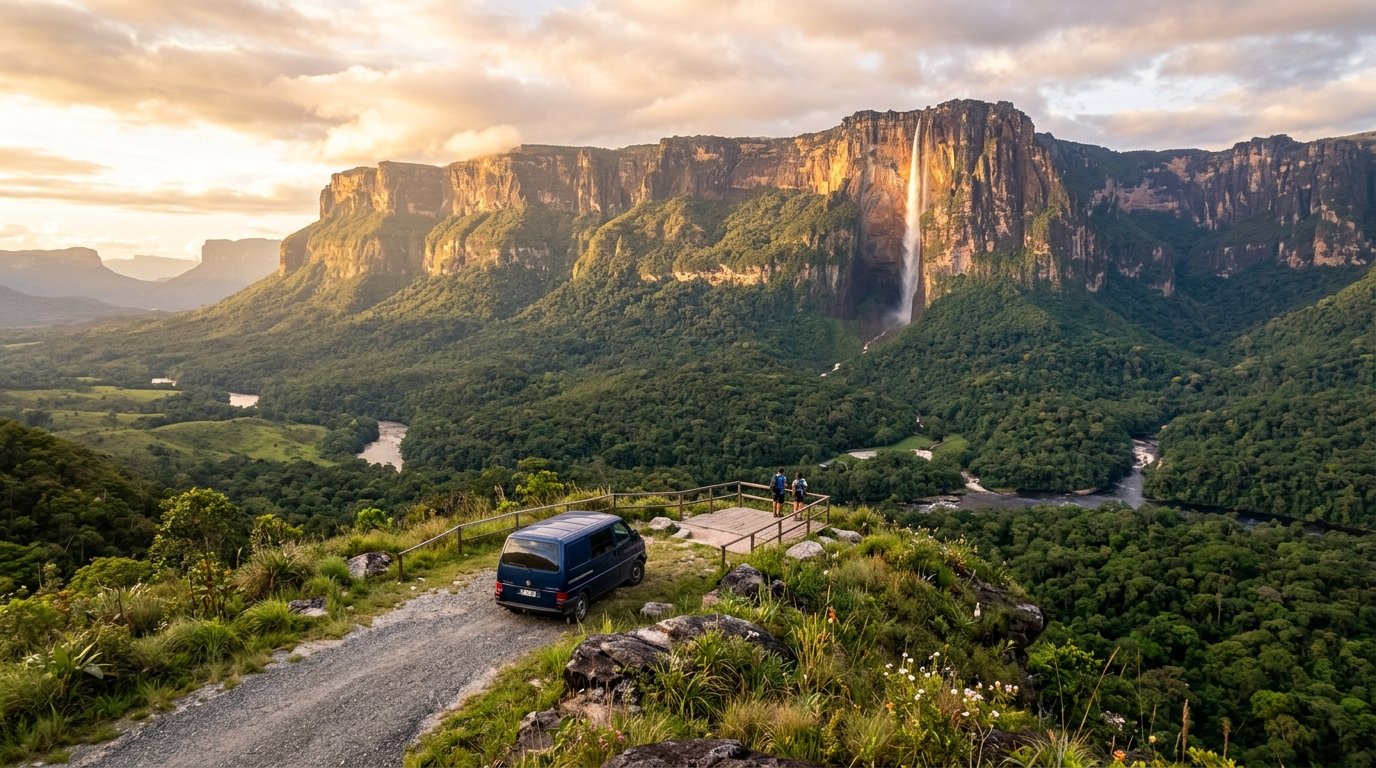
- Designated Sites & Guides: In world-famous parks like Canaima (home to Angel Falls) and along the Mount Roraima trek, wild camping is strictly forbidden. Tourists must hire authorized local guides (often from the Pemón indigenous community) and sleep only in established camps (campamentos).
- Seasonal Closures: INPARQUES frequently implements strict access controls or closes trails without prior notice due to weather conditions, ecological preservation, or severe wildfire risks during the dry season (December to April).
4. 🚐 Van Life & Overnight Vehicle Sleeping
- Legality & Parking vs. Camping: Sleeping in a vehicle is not explicitly illegal, but municipal laws generally prohibit setting up a “camp” (deploying awnings, chairs, or cooking equipment) in public spaces.
- Designated Areas: There is no network of official tourist rest stops or aires in Venezuela. Due to the extreme security situation, pulling over on the side of the highway, sleeping in urban car parks, or parking at an empty beach overnight is highly dangerous and strongly advised against.
- Practical Reality: Historically, overlanders and van lifers traveling through Venezuela only sleep in heavily secured areas. This usually means asking for permission to park overnight inside the gated compounds of fire stations (bomberos), police stations, or negotiating a small fee to sleep in a 24-hour guarded hotel or restaurant parking lot.
5. 🔥 Campfires & Practical Restrictions
- Campfire Rules: Open fires are strictly banned in almost all national parks and protected areas by INPARQUES to protect fragile ecosystems. In the few private or indigenous-run areas where fires are allowed, they are strictly limited to designated fire rings. Causing a wildfire can lead to severe criminal penalties.
- Key No-Camp Zones:
- Border Regions: Never camp near the borders with Colombia, Brazil, or the disputed Essequibo region (Guyana border). These areas are militarized and heavily controlled by armed guerrilla groups and smugglers.
- Mining Areas: Avoid the deep Amazon interior (the Orinoco Mining Arc), which is dominated by illegal mining camps (sindicatos) and is extremely dangerous.
- Earthquake Disaster Zones (Caracas & La Guaira): As of mid-2026, the Caracas and La Guaira regions are recovering from devastating earthquakes that struck in late June 2026. Thousands of displaced locals are currently camping in streets, plazas, and emergency shelters. These areas lack infrastructure and are entirely off-limits for recreational tourism.
6. 🔗 Official Sources & Links
To verify the most current regulations, tourists should consult the following official sources:
- INPARQUES (Instituto Nacional de Parques) – The official authority on Venezuela’s national parks, natural monuments, and protected area camping rules.
- US State Department Travel Advisory: Venezuela – Critical for understanding the legal and physical safety realities of traveling and sleeping outdoors in the country.
Disclaimer: Land-use laws, national park regulations, and the security environment in Venezuela change frequently. The information provided in this guide is for educational purposes. Travelers must always verify current camping laws, secure necessary permits, and consult official government travel advisories regarding safety before planning a trip.

Adrenaline junkie with a passion for exploring off-the-beaten-path destinations and finding unique ways to stay active. Expect stunning scenery, challenging workouts, awesome travel tips and a whole lot of fun. Let’s get sweaty and explore the world together!