
Everyone who visits Tbilisi comes home with the same photos: the candy-colored balconies of the Old Town, the sulfur bathhouses, the funicular view over the rooftops at golden hour. I have those photos too. But on my last trip, I went looking for a different Tbilisi — one built not from wood and stucco, but from raw, weathered concrete.
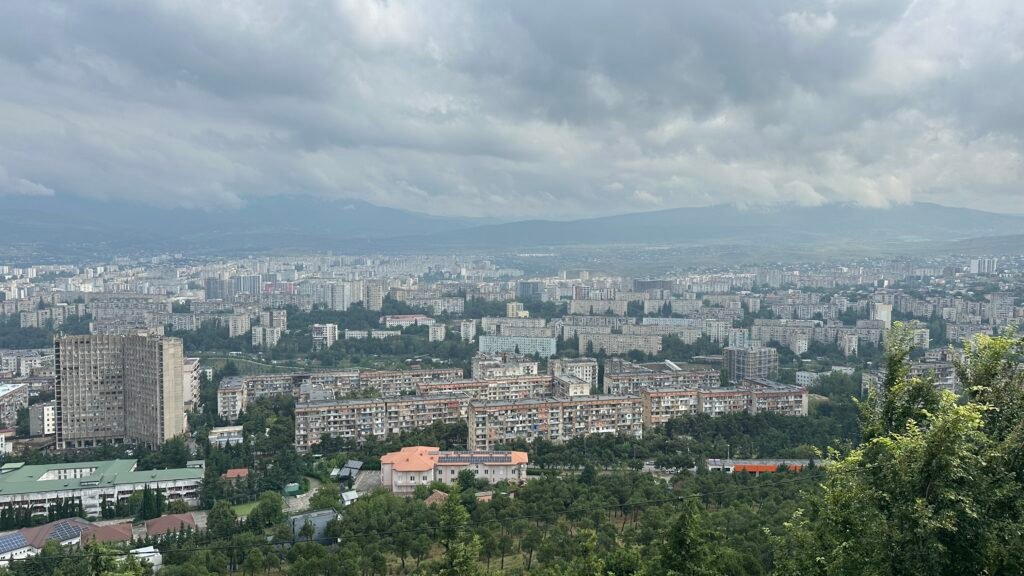
I booked a tour called Brutalist Tbilisi: Urban Exploration, a five-hour, car-based trip through the city’s Soviet and modernist architecture. No souvenir stalls, no crowds (well, almost no crowds — more on that later), just a guide, a car, and some of the strangest, boldest, most emotionally loaded buildings I’ve ever stood in front of. It’s an easy, low-effort way to see a side of the city most visitors never even know exists — you’re driven between stops in comfort, and if you need a coffee, a bathroom break, or a bottle of water, the guide simply pulls over. No hiking boots required, just curiosity.
Here’s what the day looked like, stop by stop.
1. Chronicle of Georgia — the “Georgian Stonehenge”
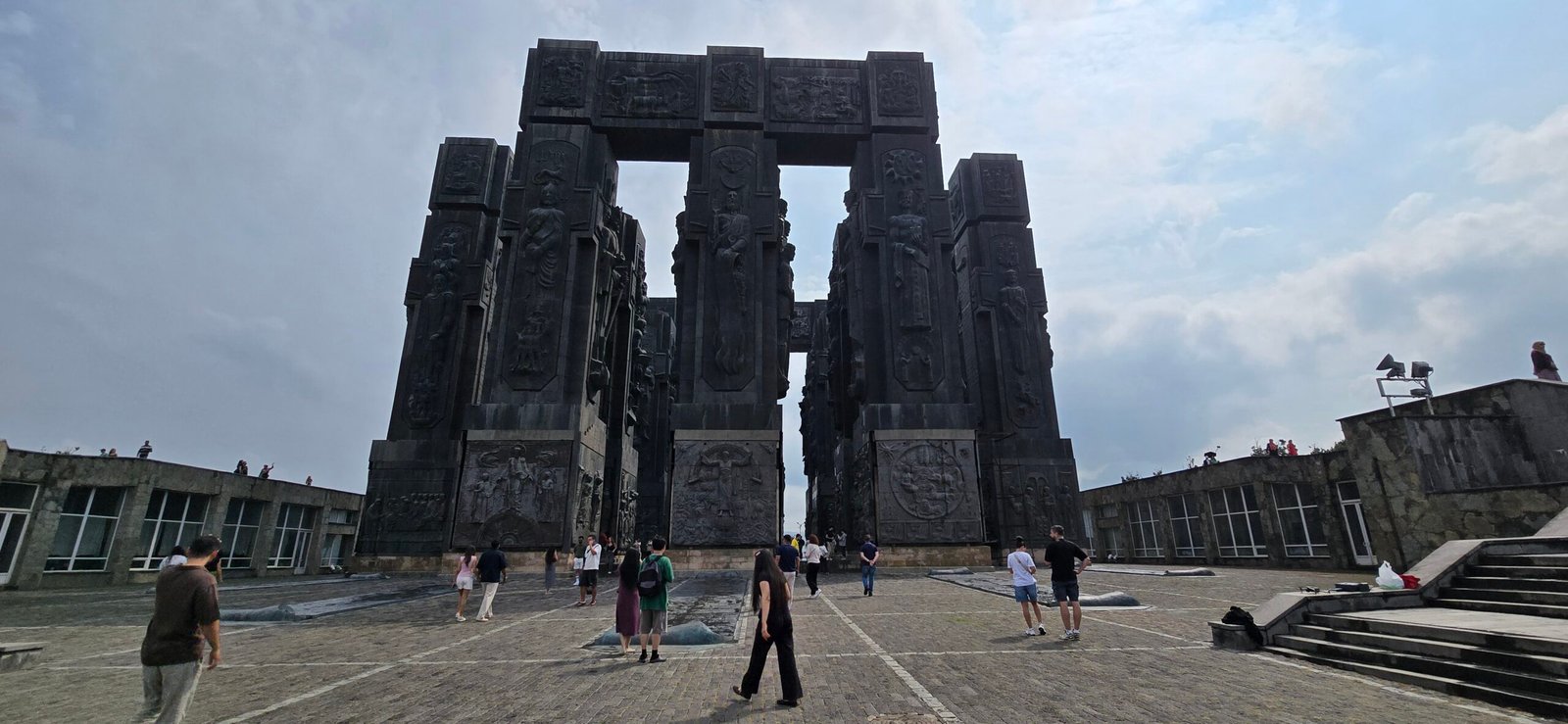
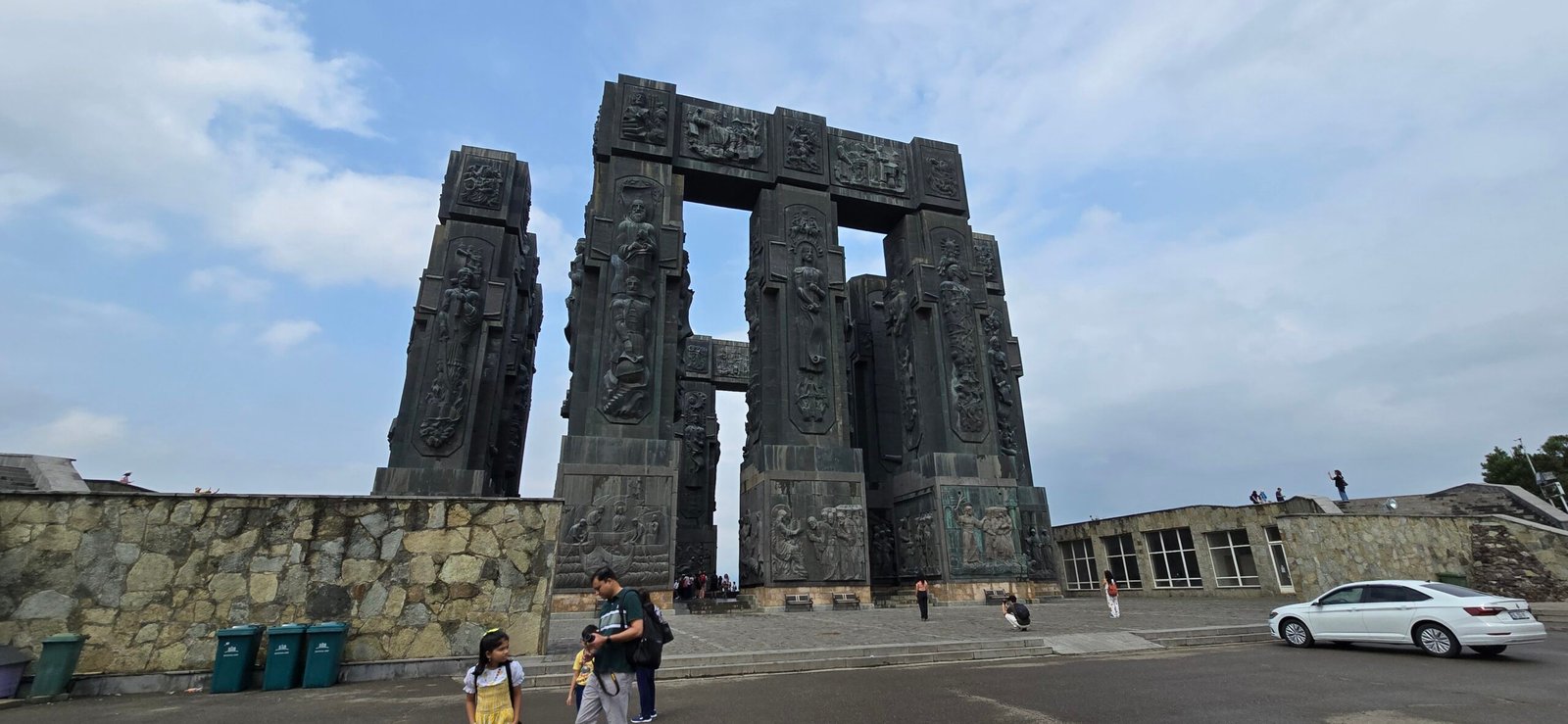
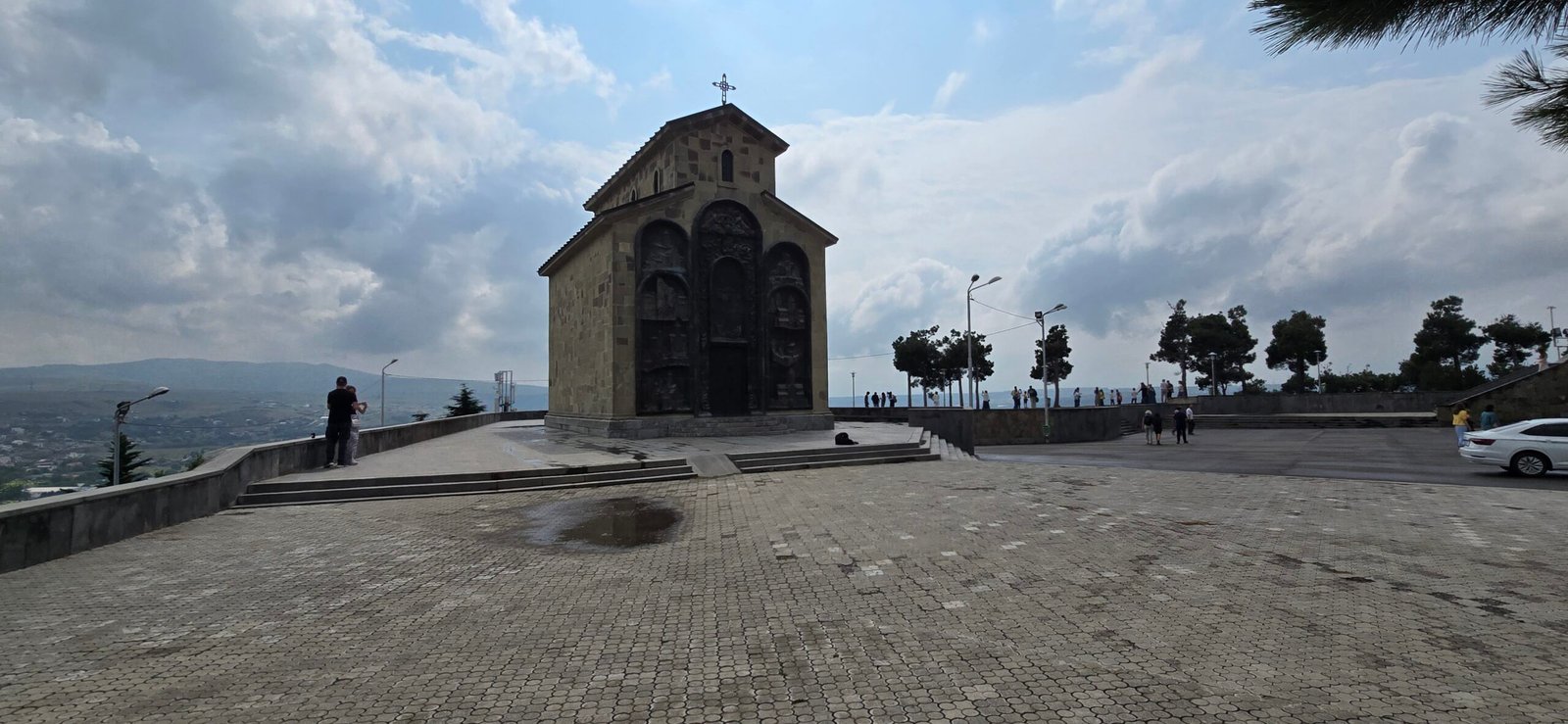
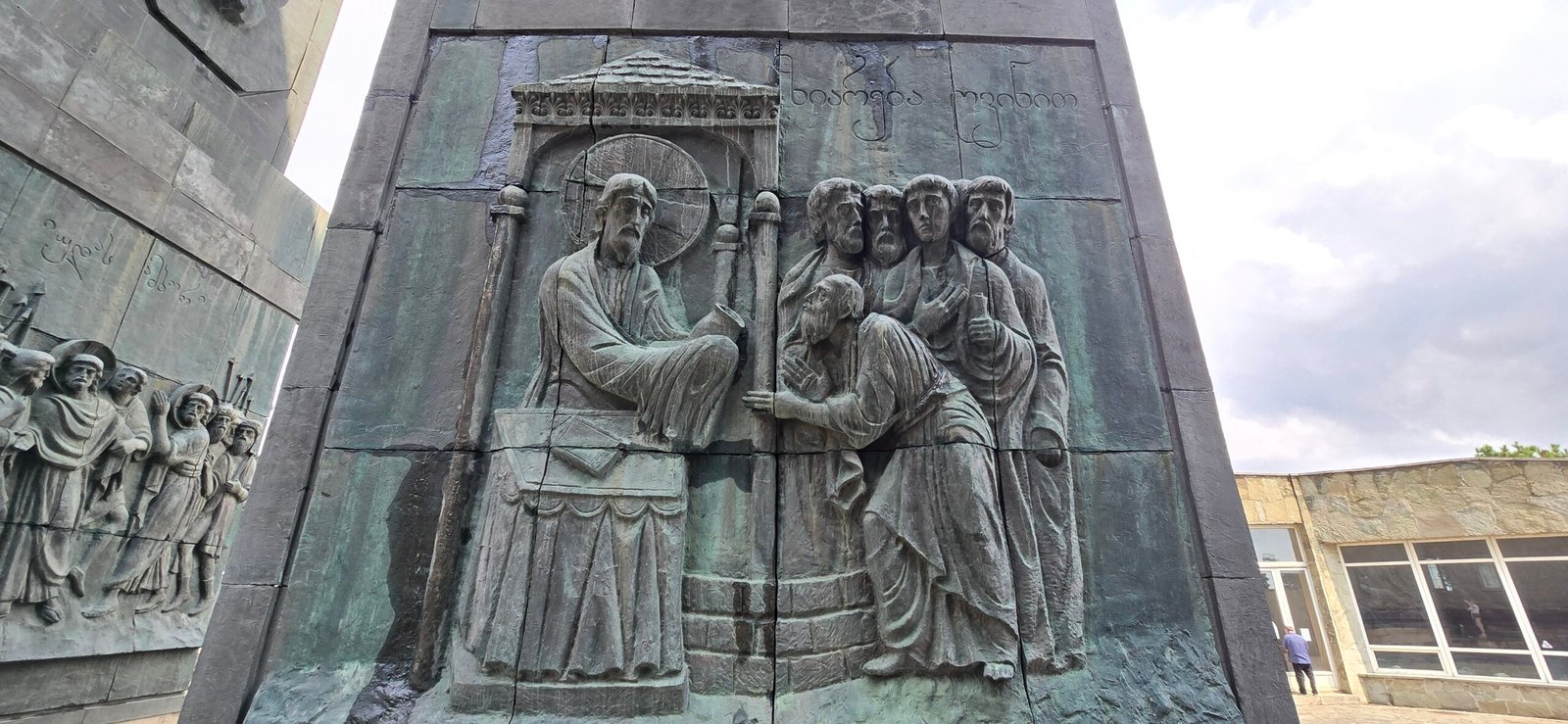
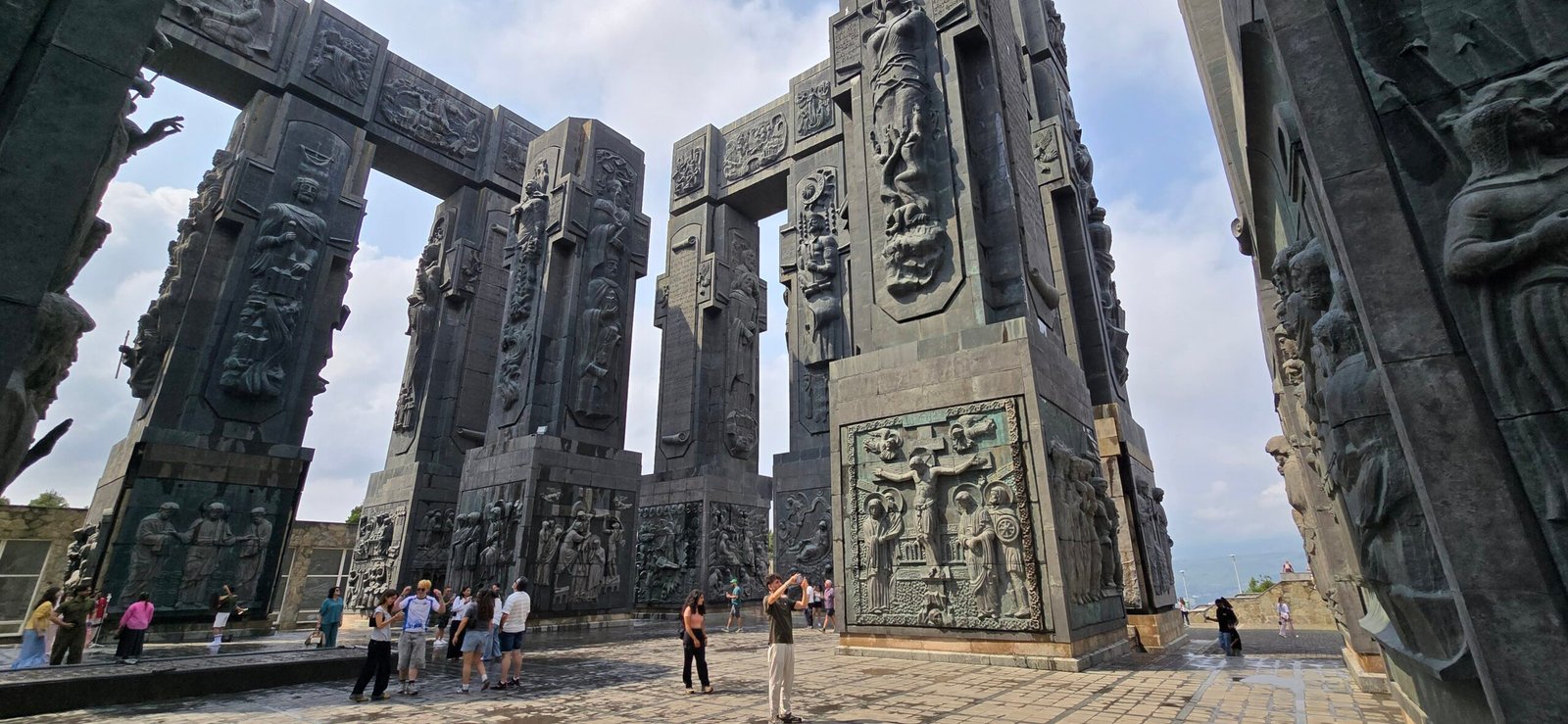
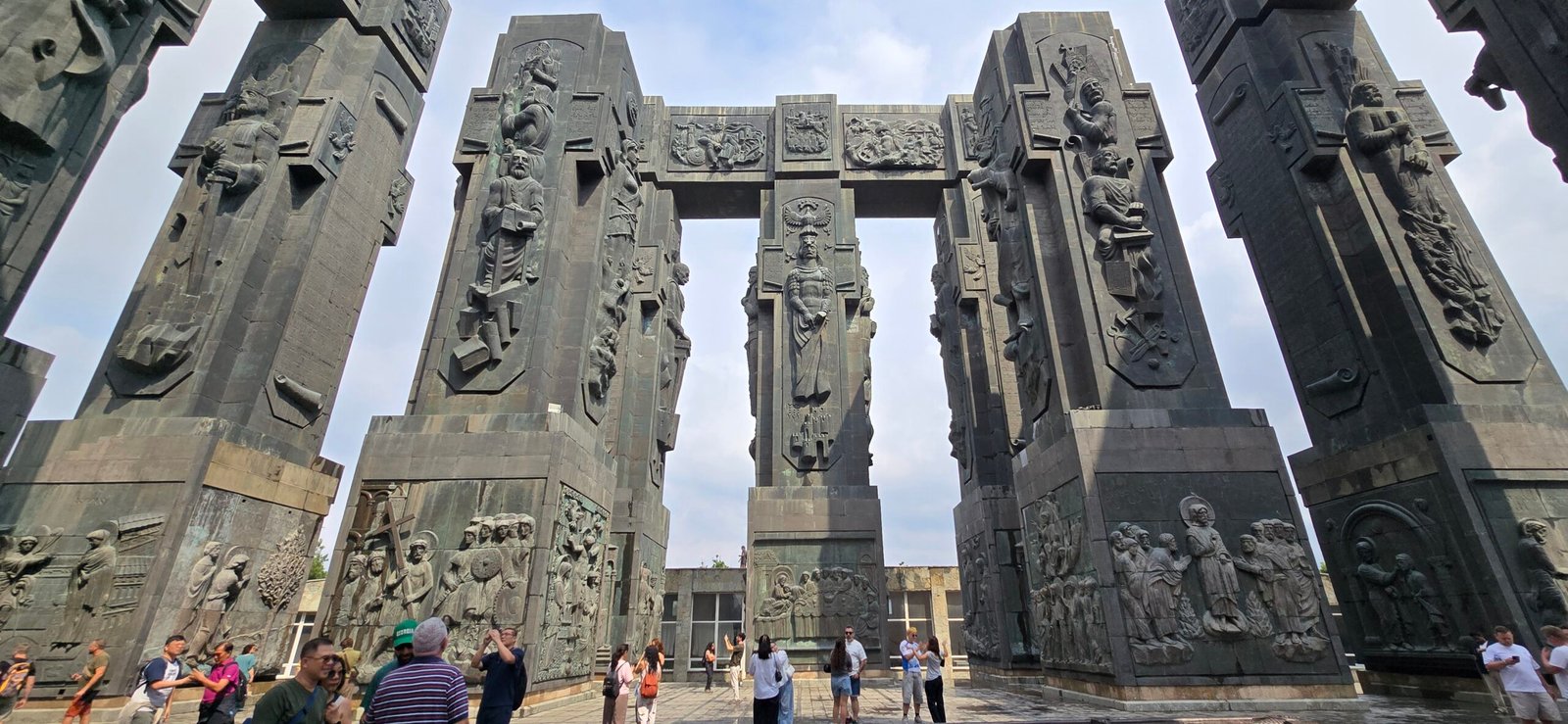
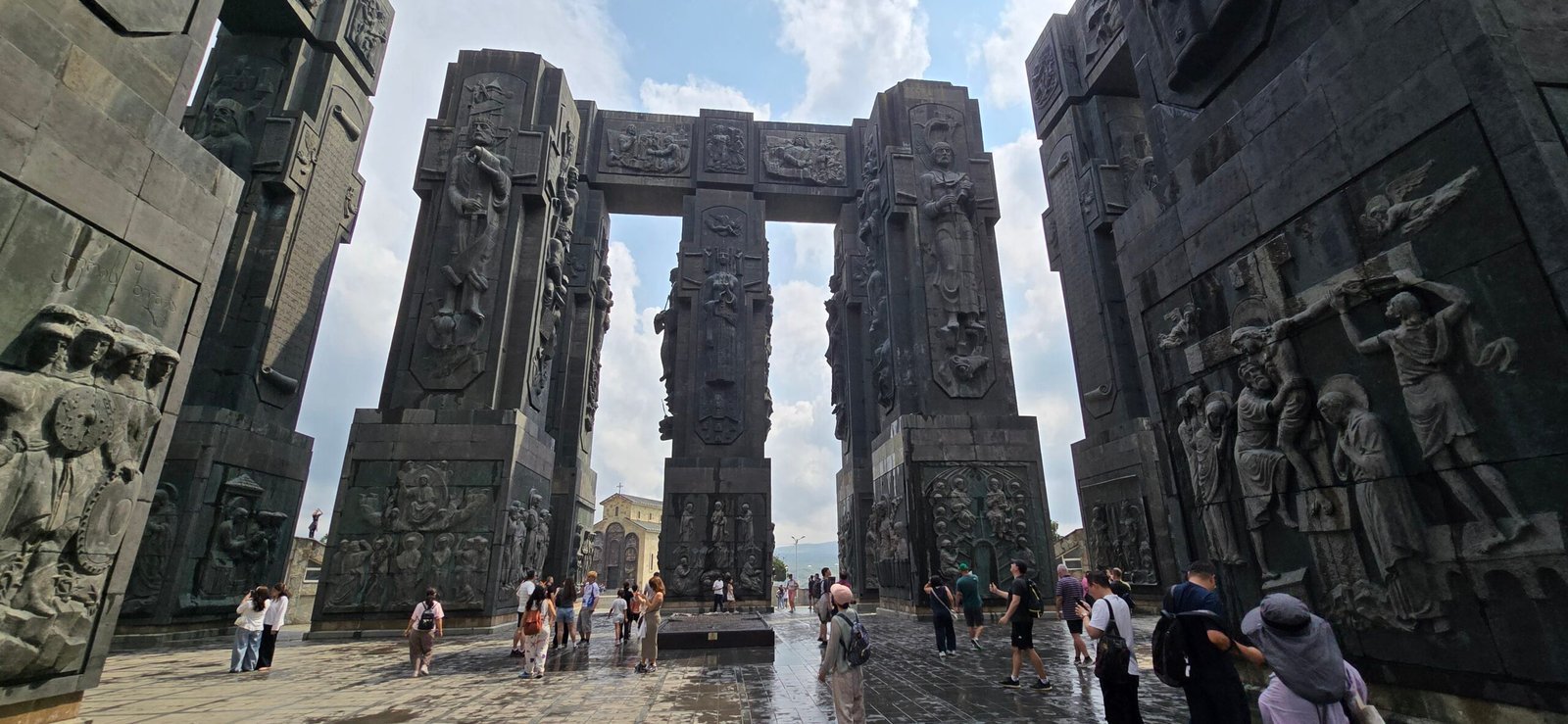
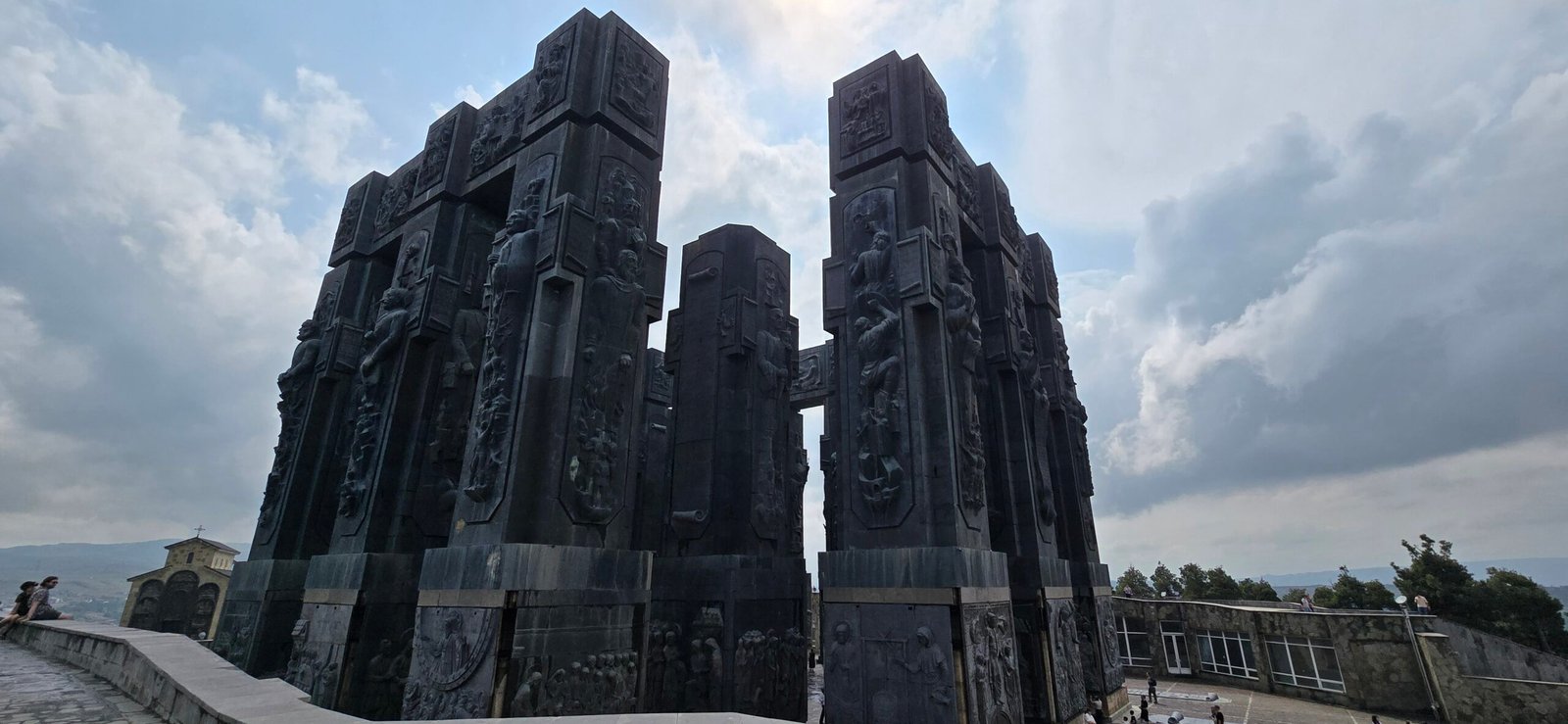
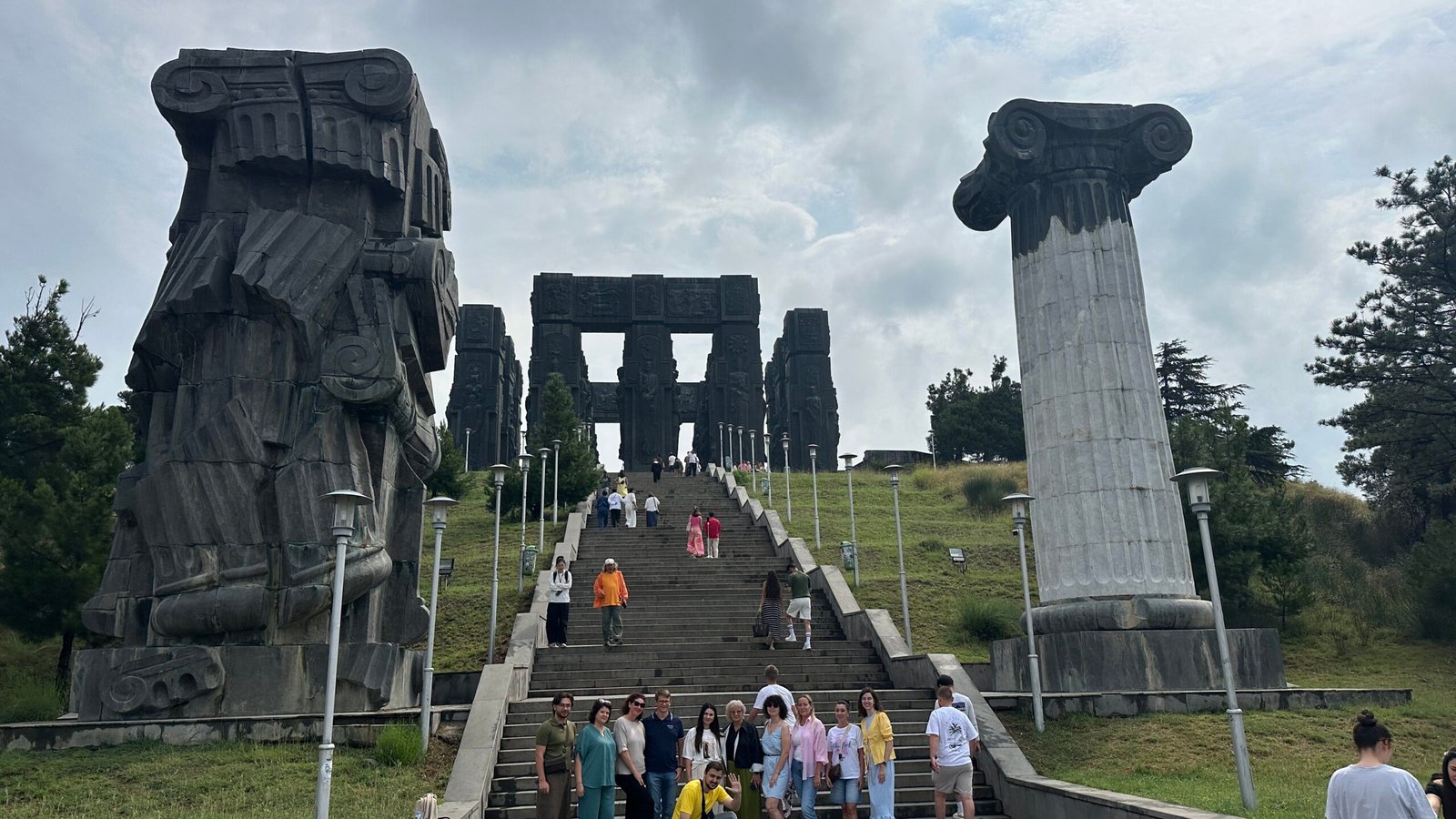
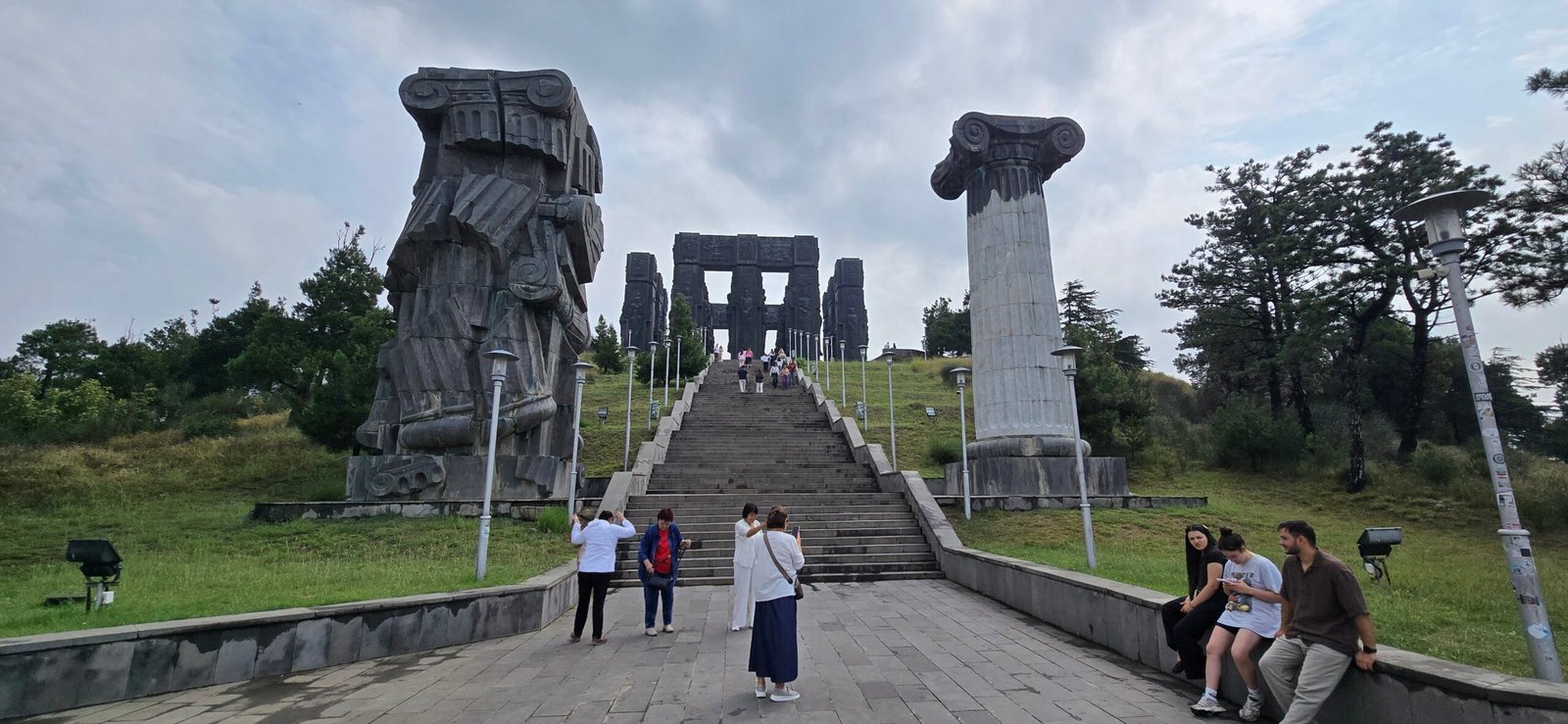
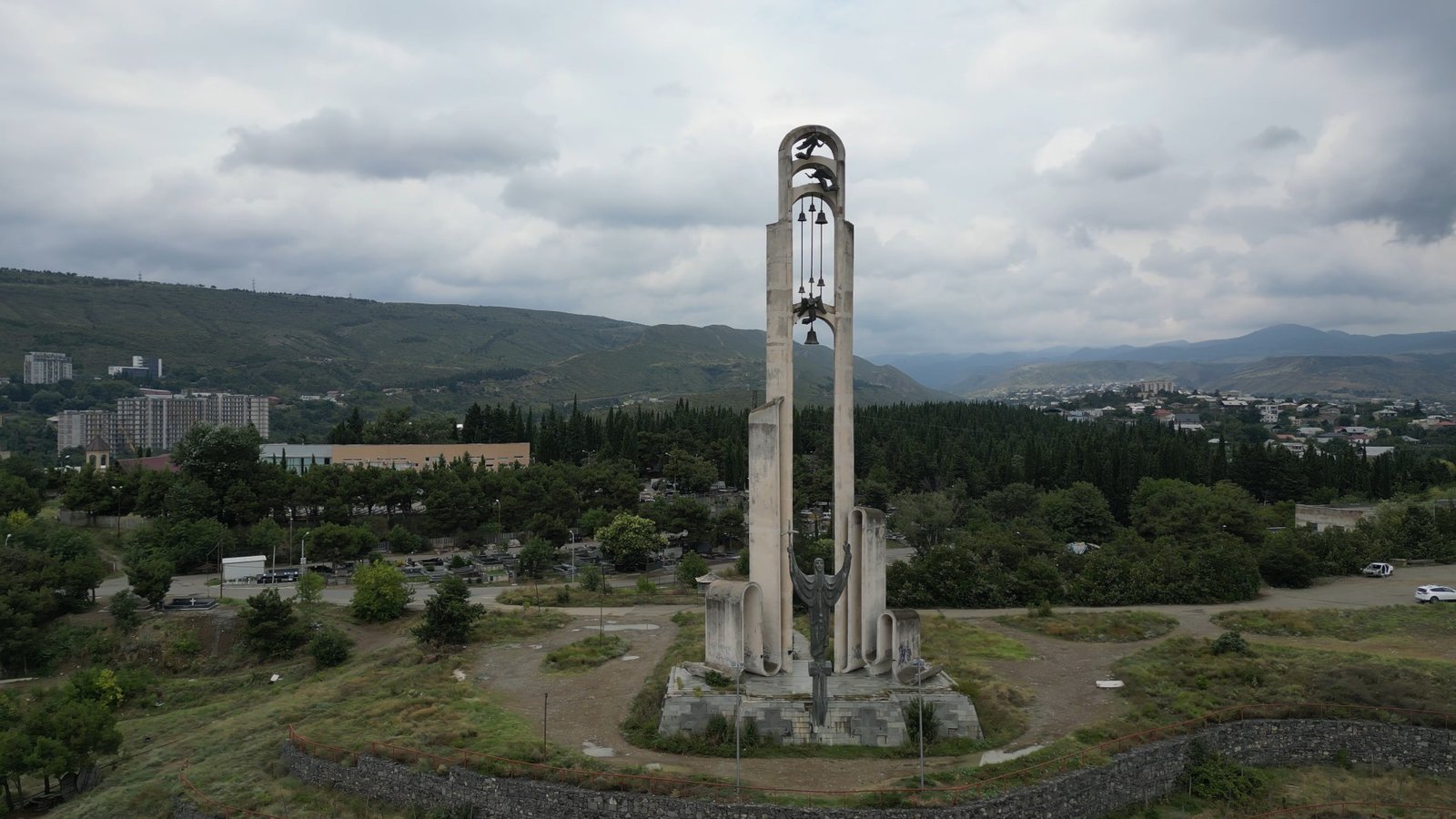
We started at the one stop on this itinerary that is firmly on the tourist trail these days: the Chronicle of Georgia, perched on Keeni Hill above the Tbilisi Sea reservoir. It’s hard to miss — sixteen bronze pillars, each 30 to 35 metres tall, marching up a long staircase like something out of a fantasy film. It’s often nicknamed the “Georgian Stonehenge,” though it has nothing to do with prehistory.
The monument was begun in 1985 by the Georgian sculptor Zurab Tsereteli and, technically, it’s still unfinished. The upper halves of the columns depict Georgian kings, queens and national heroes; the lower halves are carved with scenes from the life of Christ. The whole thing is ultimately a tribute to Saint Nino, the woman credited with converting Georgia to Christianity in 337 AD — one of the earliest state conversions to Christianity anywhere in the world, and a decision that shaped Georgian language, art and identity for the next 1,700 years.
Unlike everywhere else on this tour, Chronicle of Georgia has properly been “discovered.” There were tour buses in the car park and other visitors posing on the steps when we arrived. It’s still worth it — the scale of the thing has to be seen in person — but it was also the last time all day that I saw another tourist.
2. The Ministry of Highways (Bank of Georgia Headquarters)
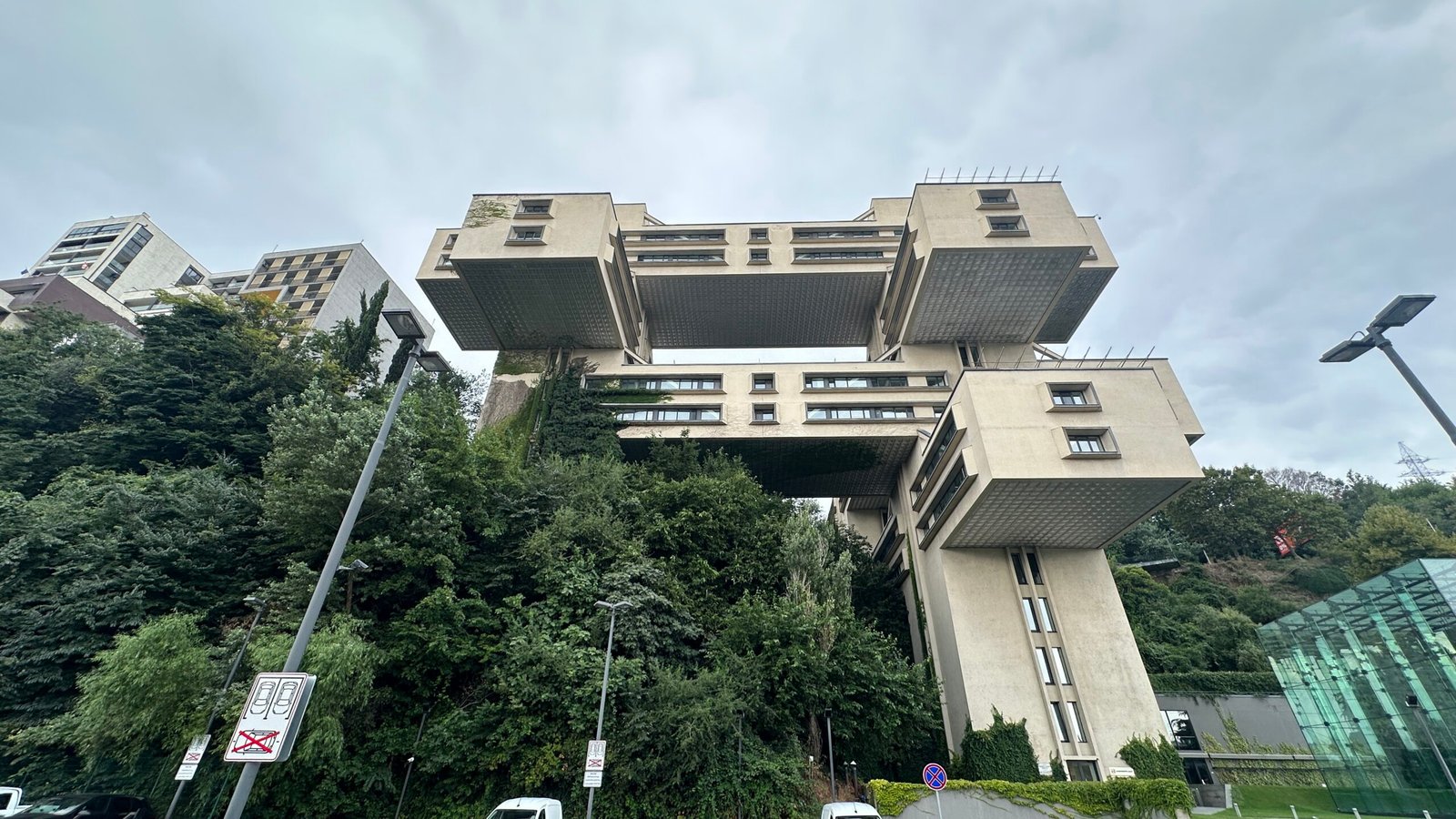
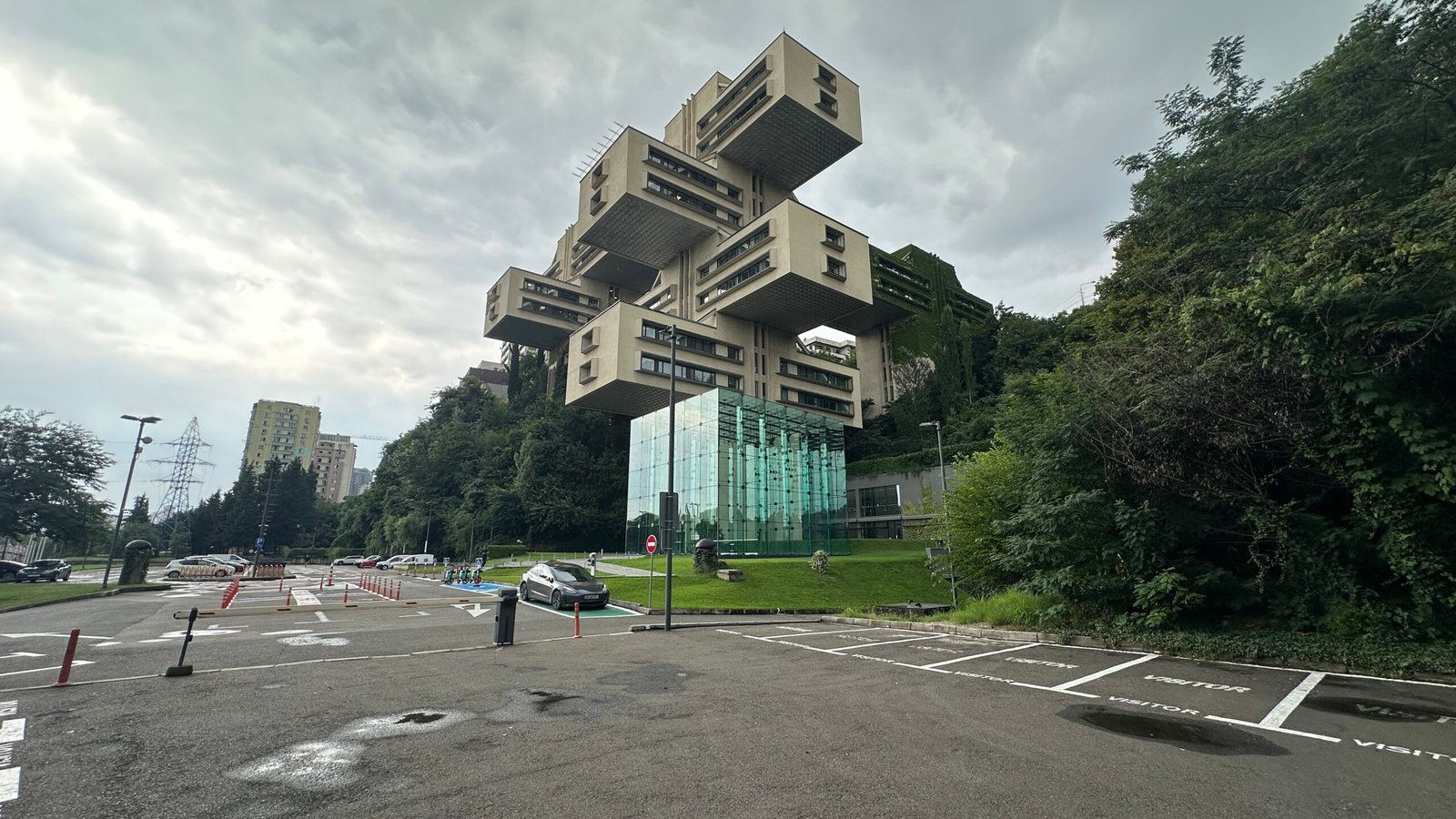
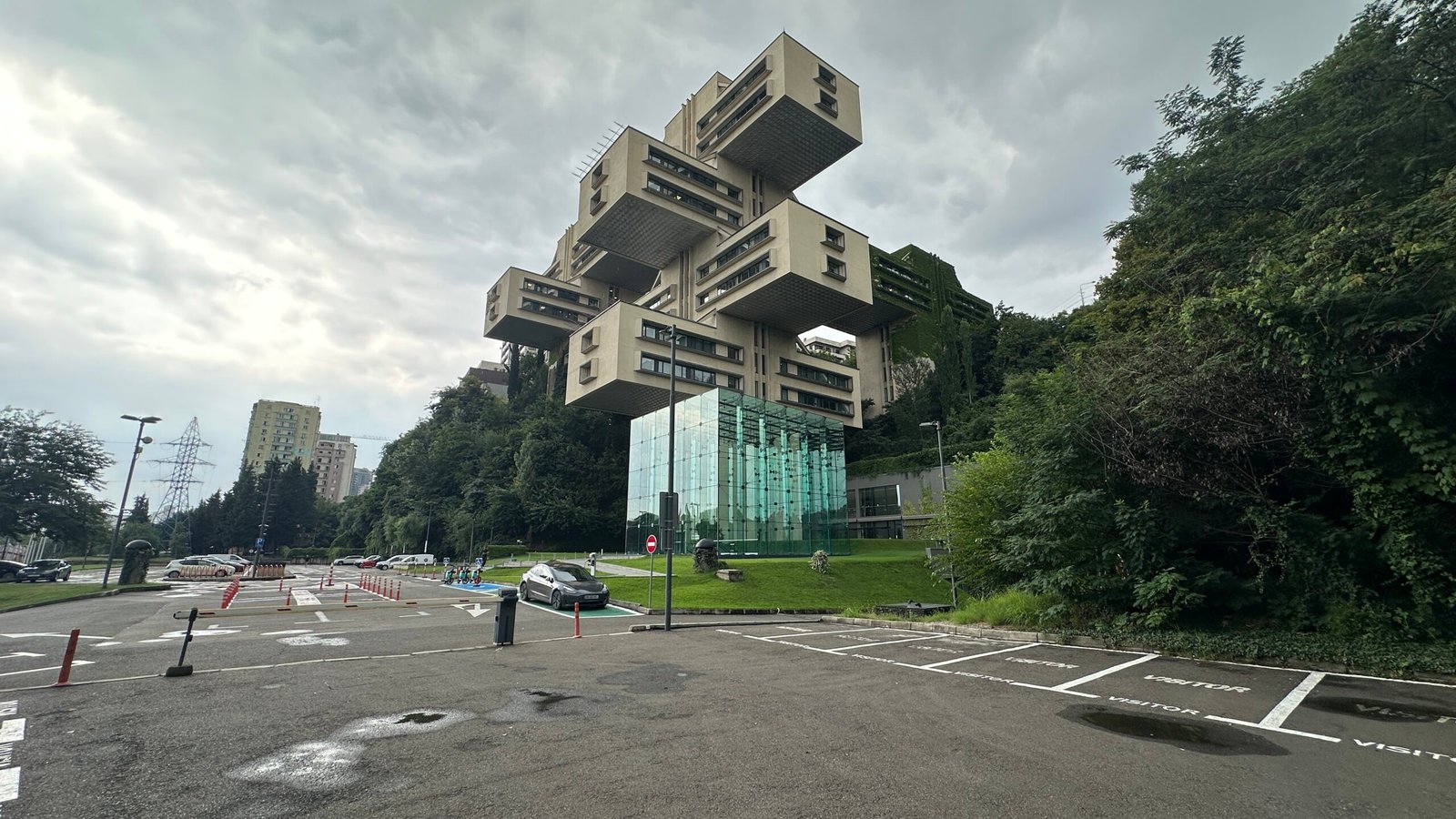
From there we drove to the building that’s arguably the poster child of Georgian Brutalism: the former Ministry of Highways of the Georgian SSR, now the headquarters of the Bank of Georgia.
Built between 1972 and 1975 by architects George Chakhava and Zurab Jalaghania, this thing looks less like a government office and more like a piece of a space station that crash-landed in a forest. Chakhava was in the unusual position of being both the client (as Deputy Minister of Highways) and the lead architect, which may explain how something this radical ever got approved. The design uses what Chakhava patented as the “Space City” method: five massive horizontal concrete blocks, stacked and cantilevered at angles over the hillside, resting on just three vertical cores. The idea, influenced by Russian Constructivism, was to let the building hover above the landscape instead of flattening it — the forest genuinely runs underneath and around the structure rather than being cleared for it.
The Bank of Georgia bought the building in 2007 and gave it protected monument status the same year; a 2010–2011 renovation added a glass entrance pavilion at the base without touching the original concrete forms above. If it looks familiar even if you’ve never been to Georgia, that might be because it had a cameo in Fast & Furious 9.
Standing underneath it, craning your neck up at these enormous cantilevered blocks seemingly defying gravity, is genuinely dizzying. There was no one else there. Just us, the guide, and this improbable concrete cross hanging in the trees.
3. The Former Museum of Archaeology
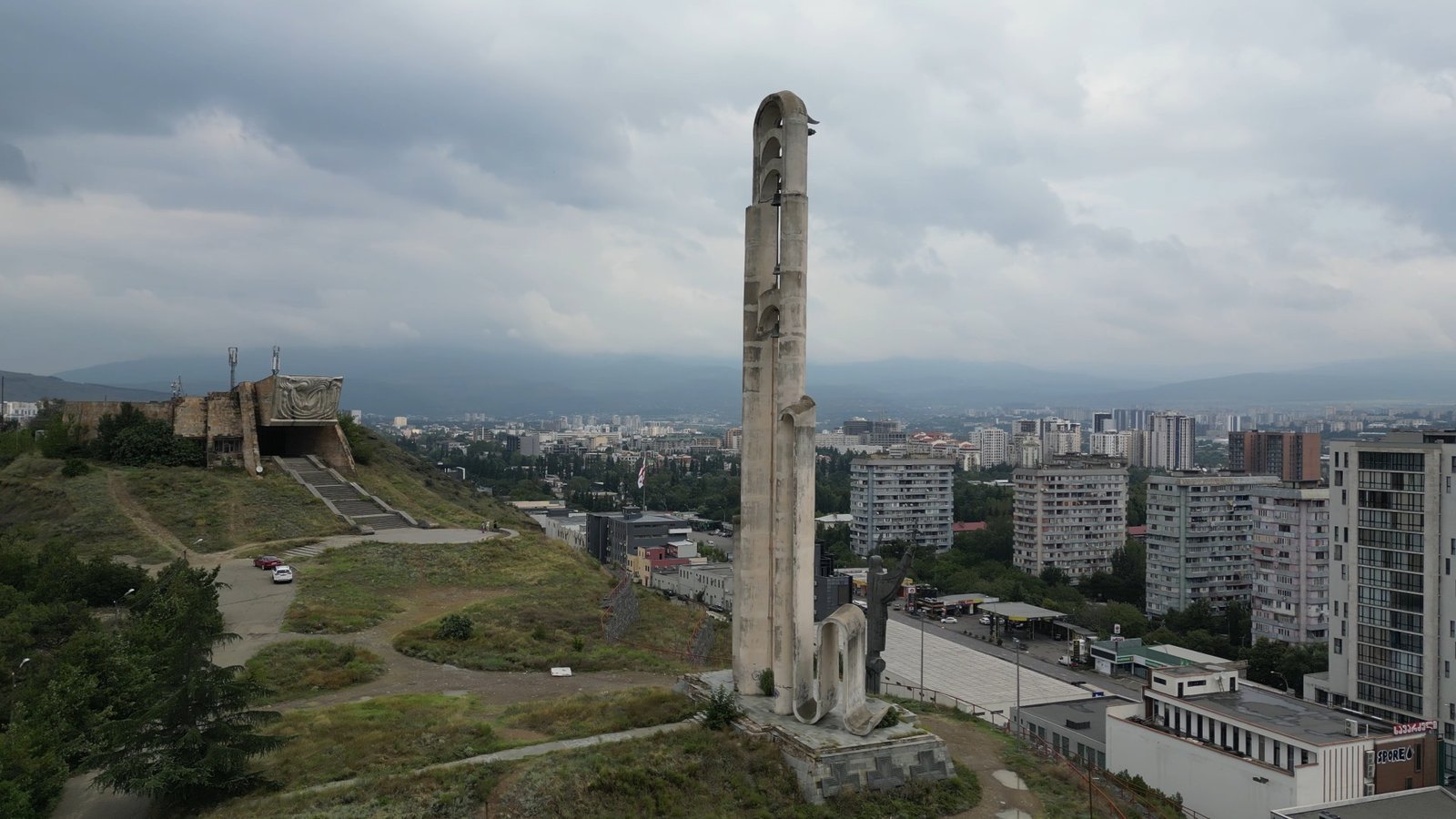
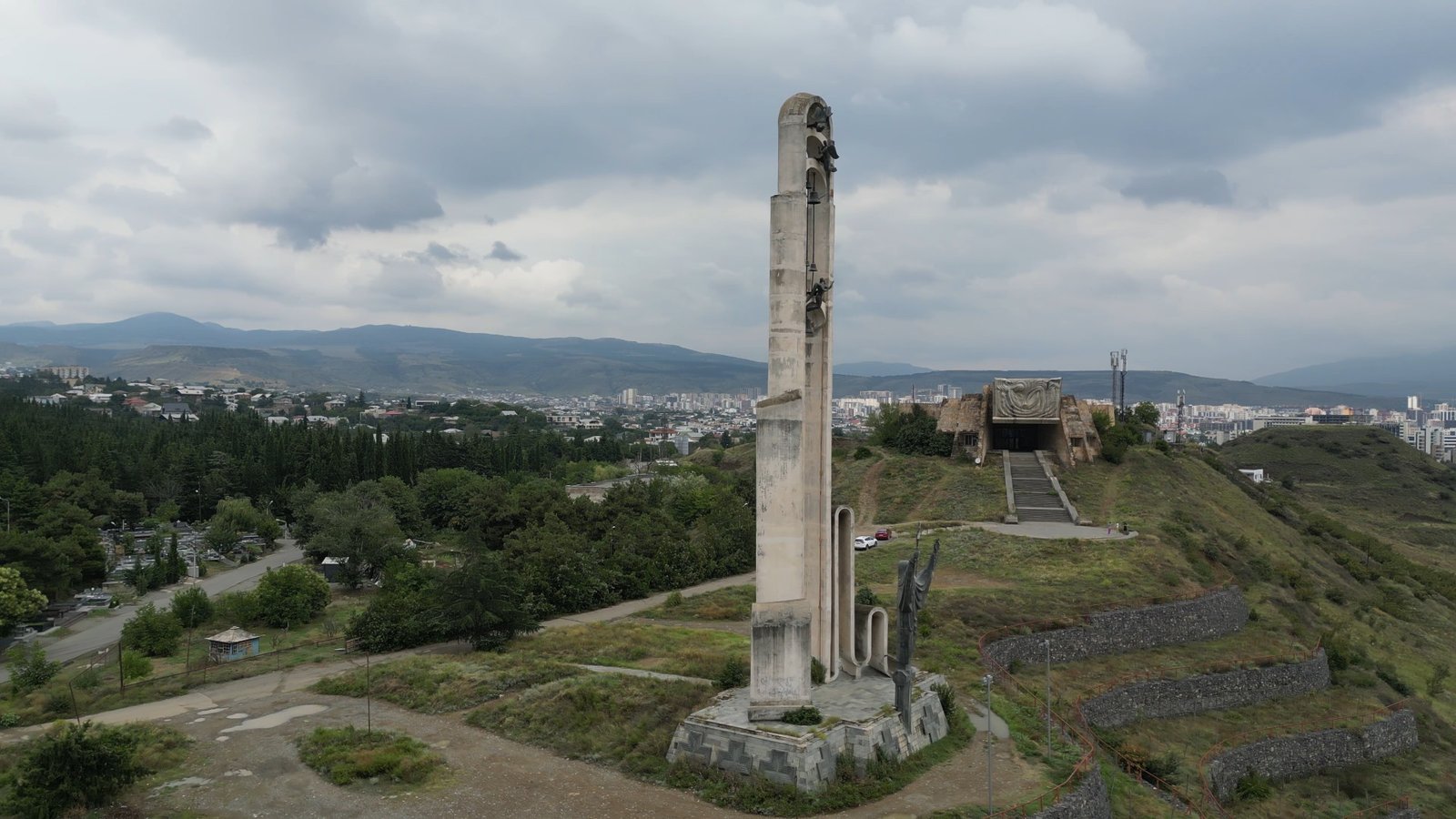
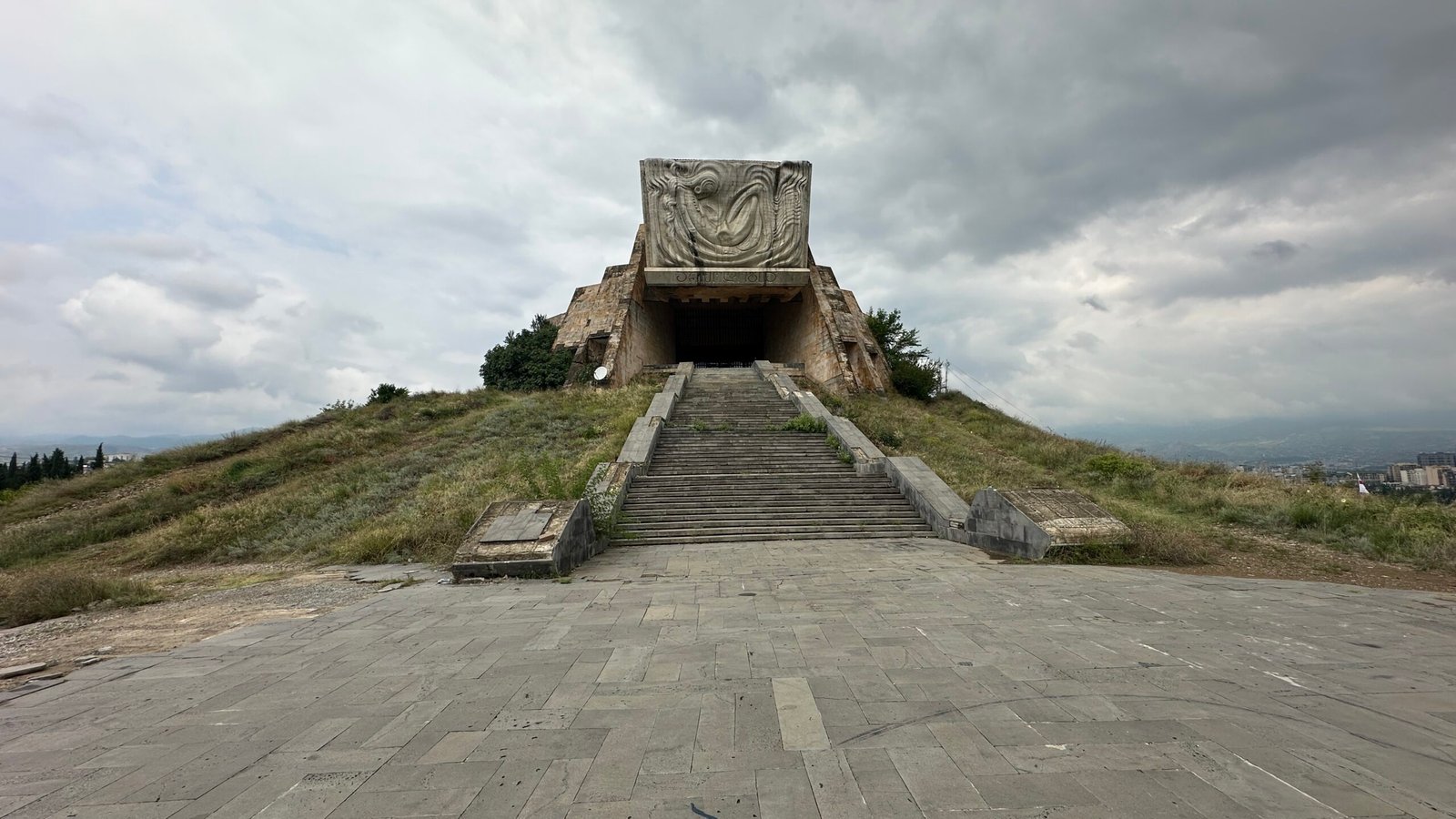
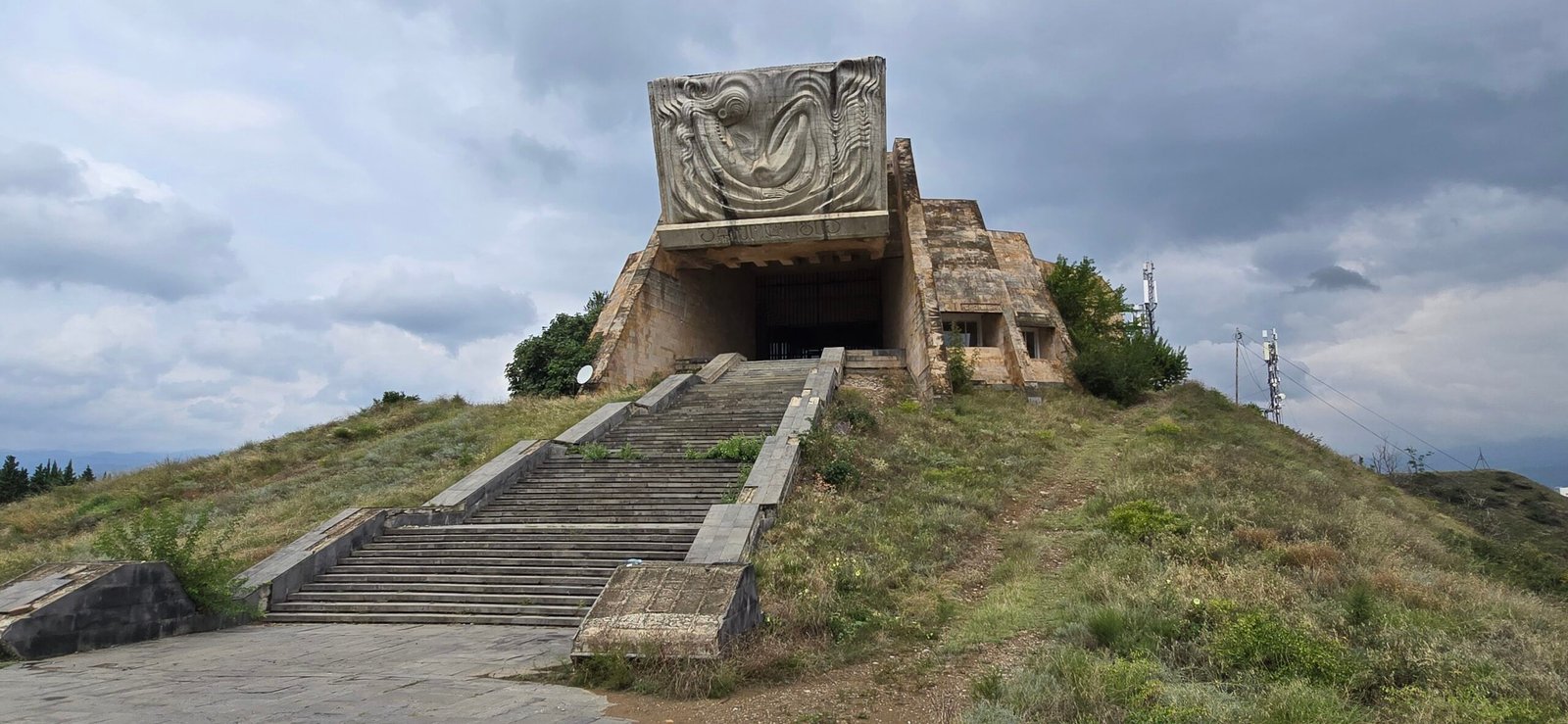
Next came the stop that felt the most like genuine urban exploration: the former Museum of Archaeology, a hulking, pyramidal concrete structure completed in 1988 by architects Shota Kavlashvili and Shota Bostanashvili, with sculpture work by Tengiz Kikalishvili.
Nothing about this building looks like a museum in the conventional sense. It’s more like a modernist temple or a bunker — a tapered concrete mass sitting on top of a bare hill, with a single monumental carved relief set into the front face above the entrance and a long, empty staircase leading up to it. It was built right at the tail end of the Soviet era, and its abandonment is very much tied to what came after: as the USSR collapsed and Georgia went through the economic chaos of the early 1990s, state institutions like this one lost their funding, their staff, and eventually their purpose. What’s left now is essentially a monument to a monument — an empty museum that has itself become the exhibit.
Walking up that staircase with nobody else around, wind picking up, clouds low over the hill — it was the closest the day got to feeling eerie. Genuinely one of the most striking abandoned buildings I’ve ever stood inside.
4. Nutsubidze Skybridge
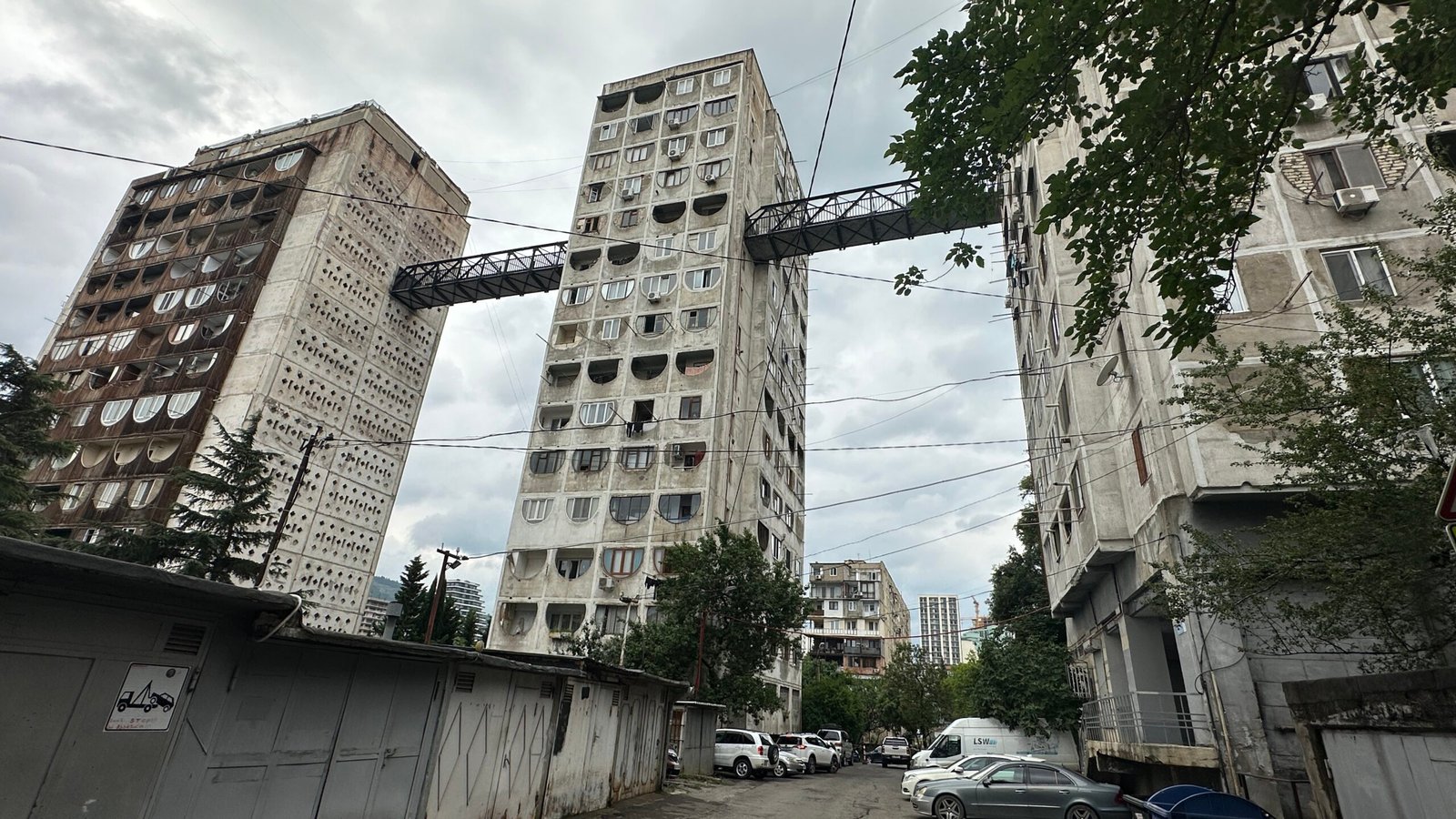
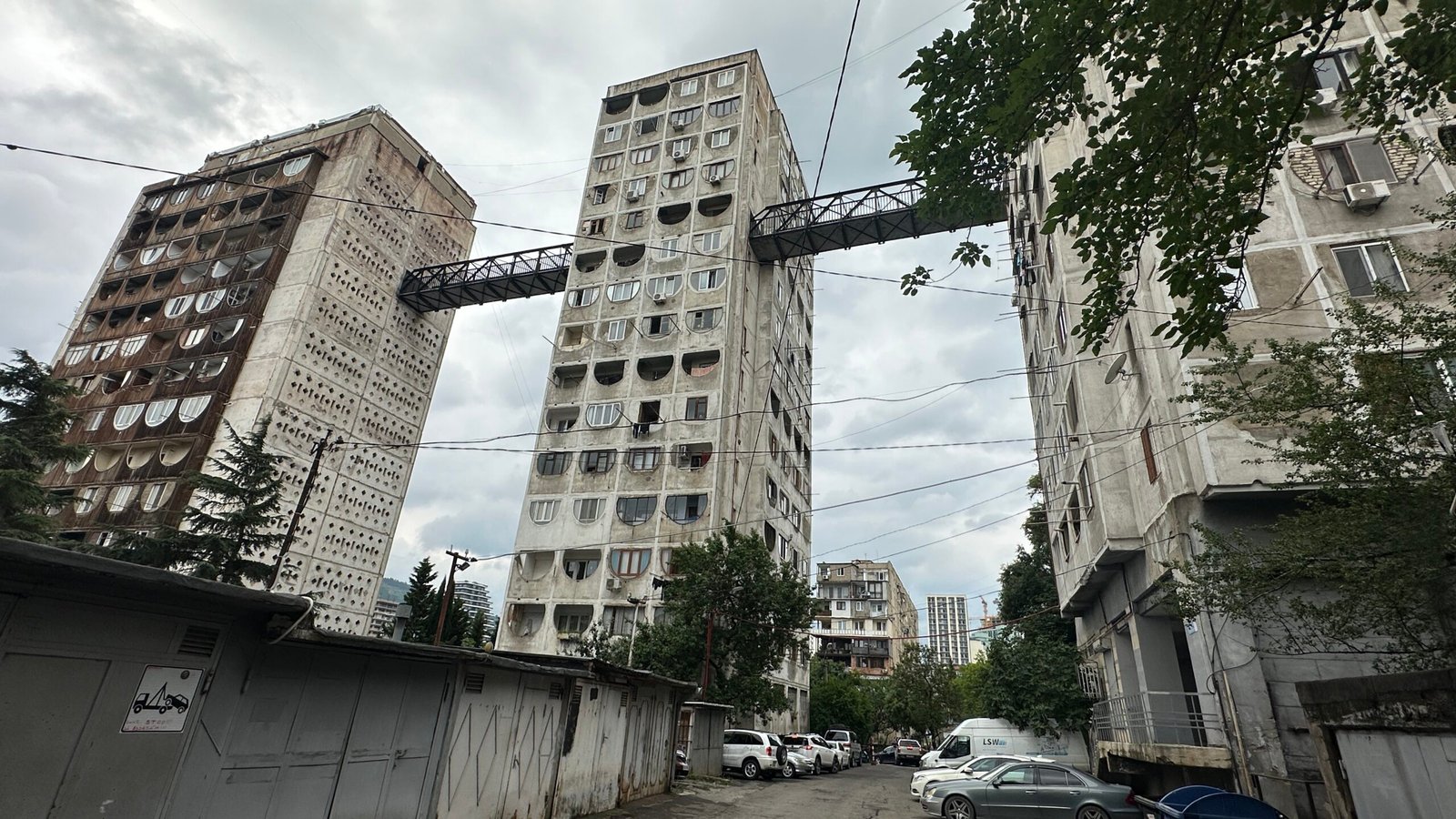
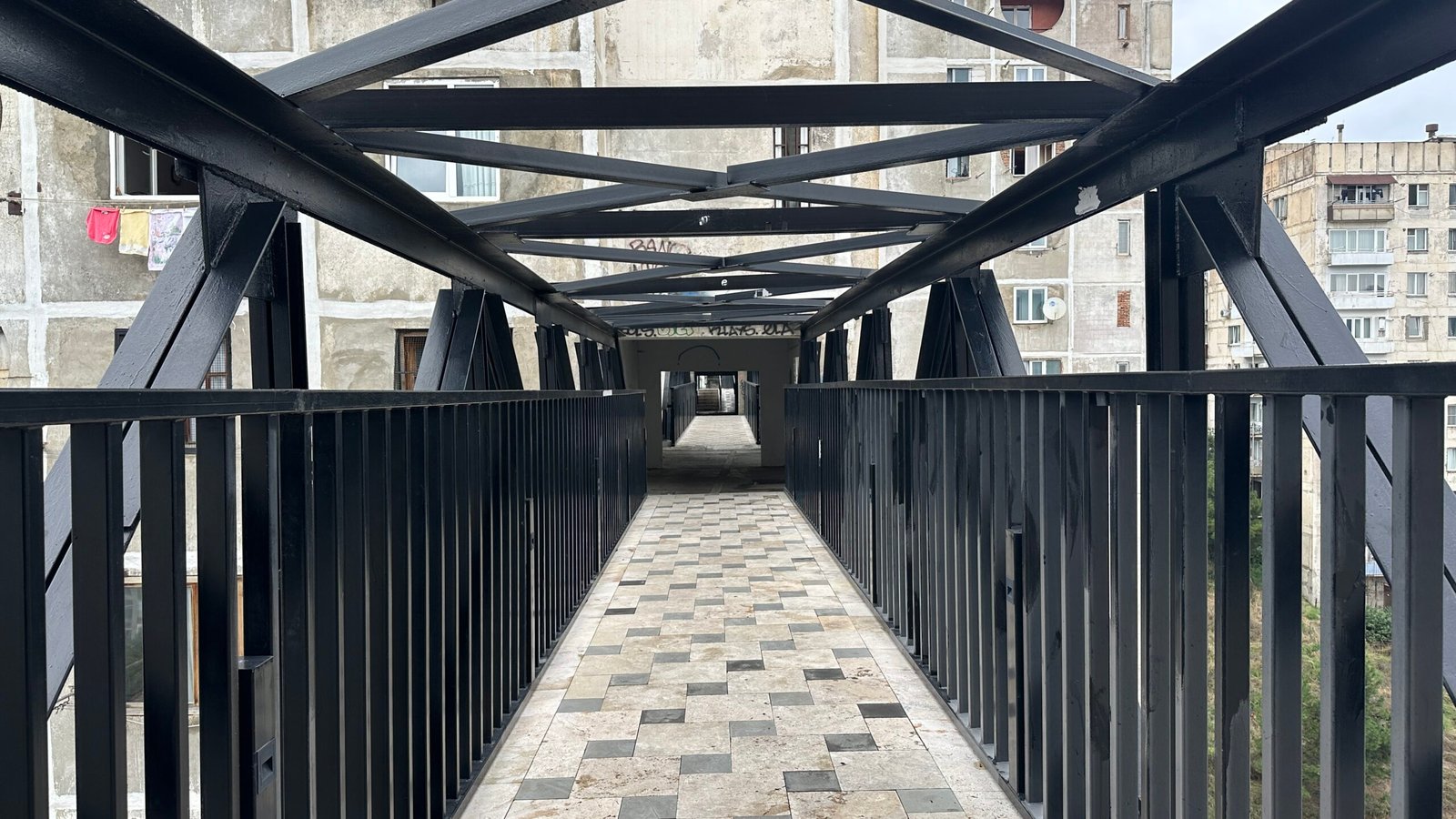
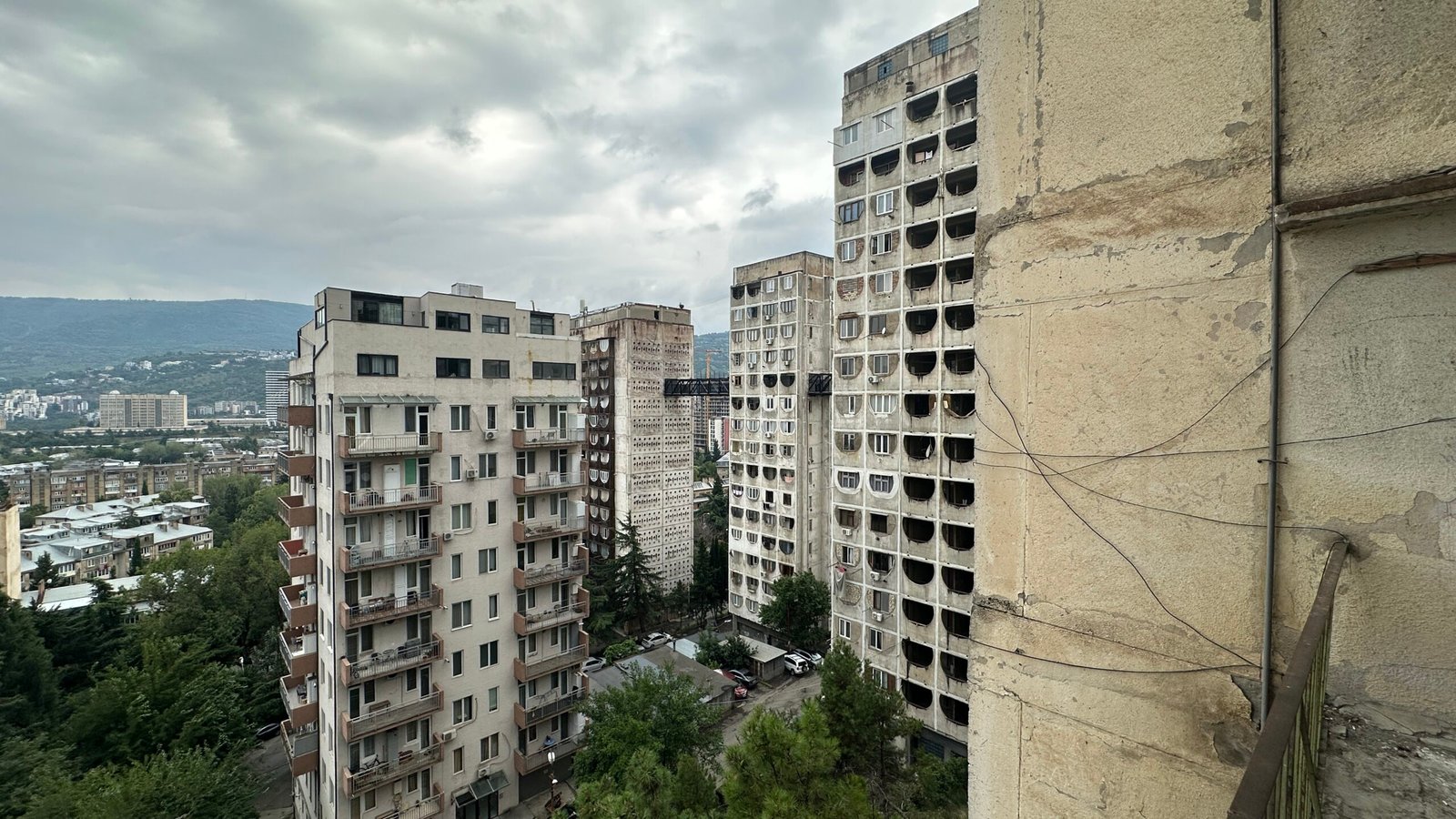
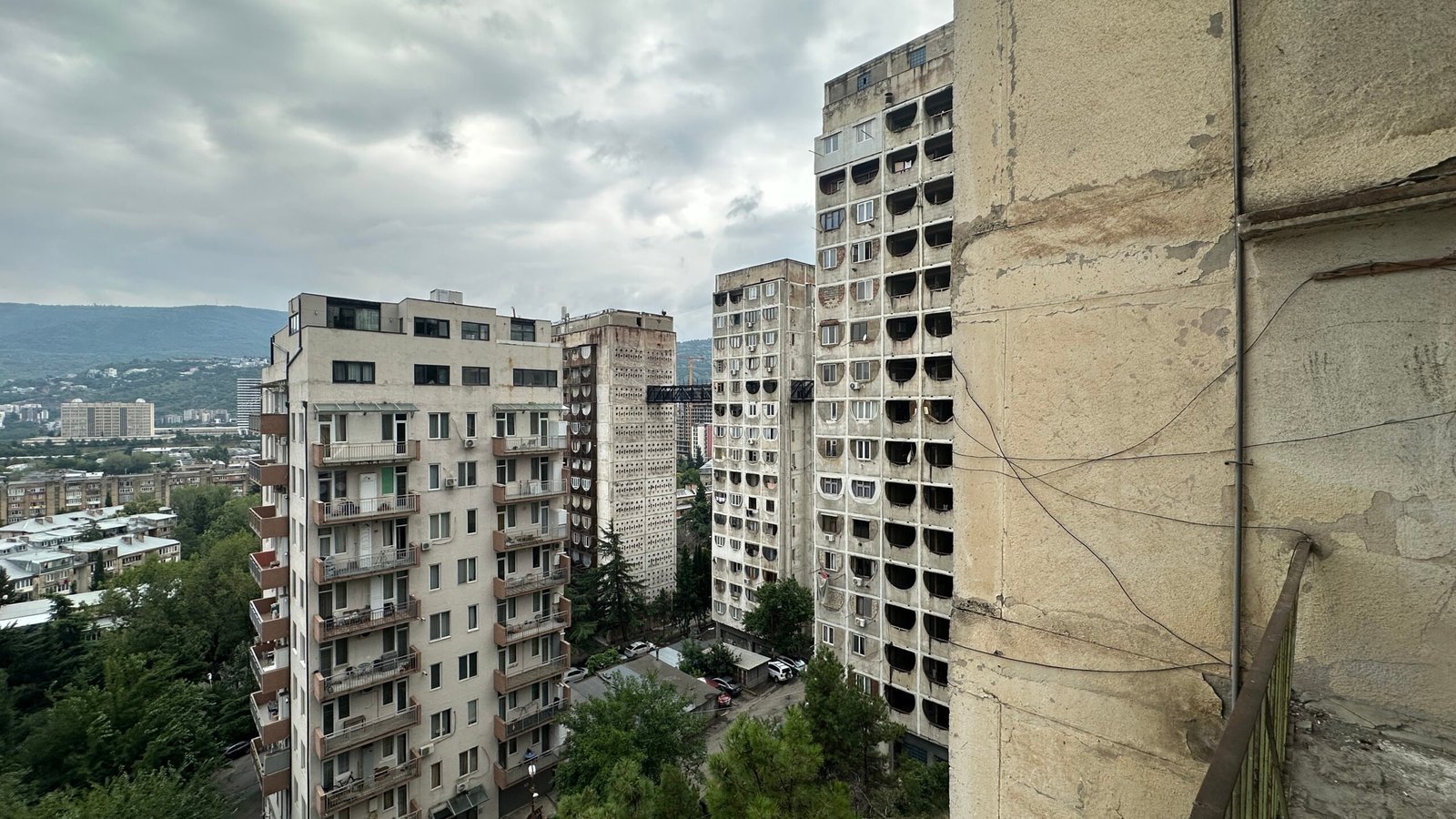
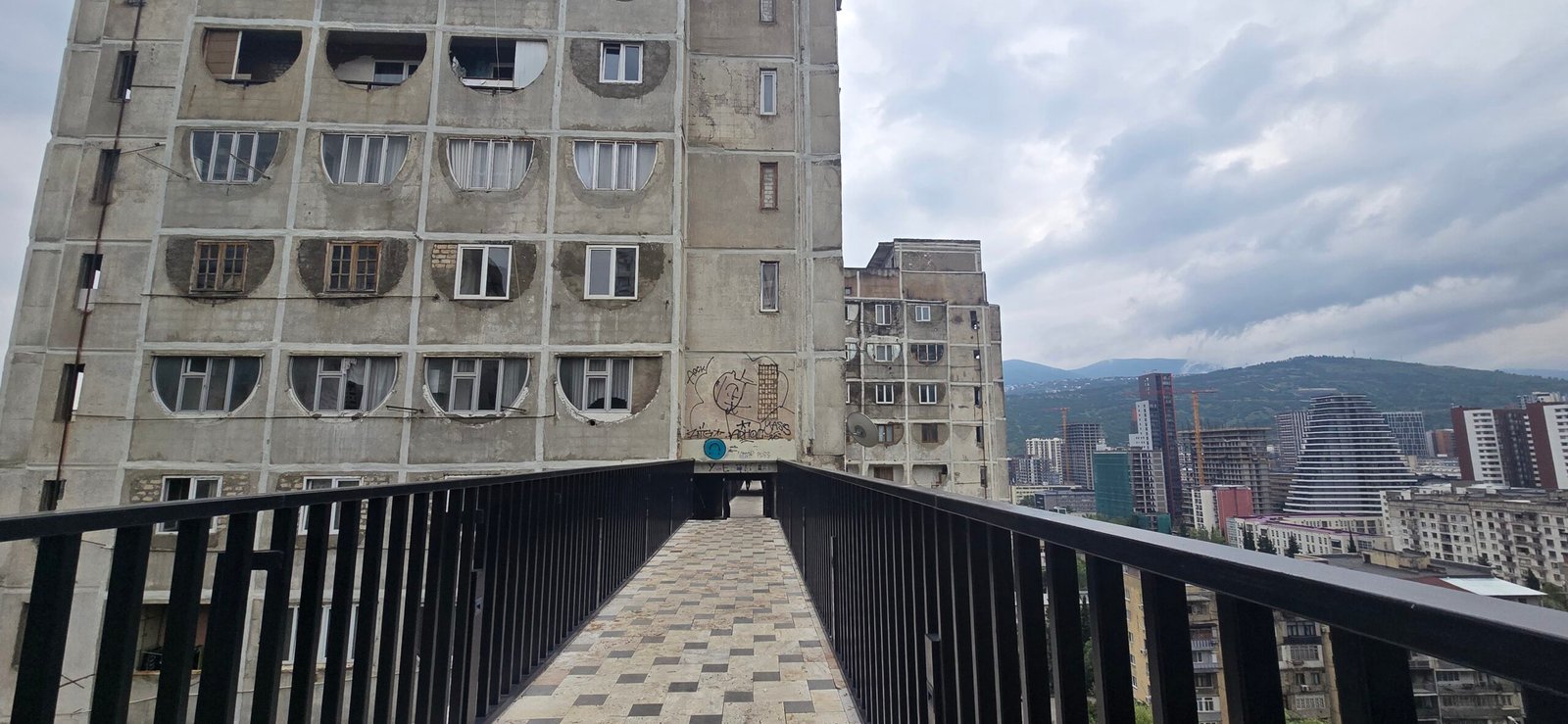
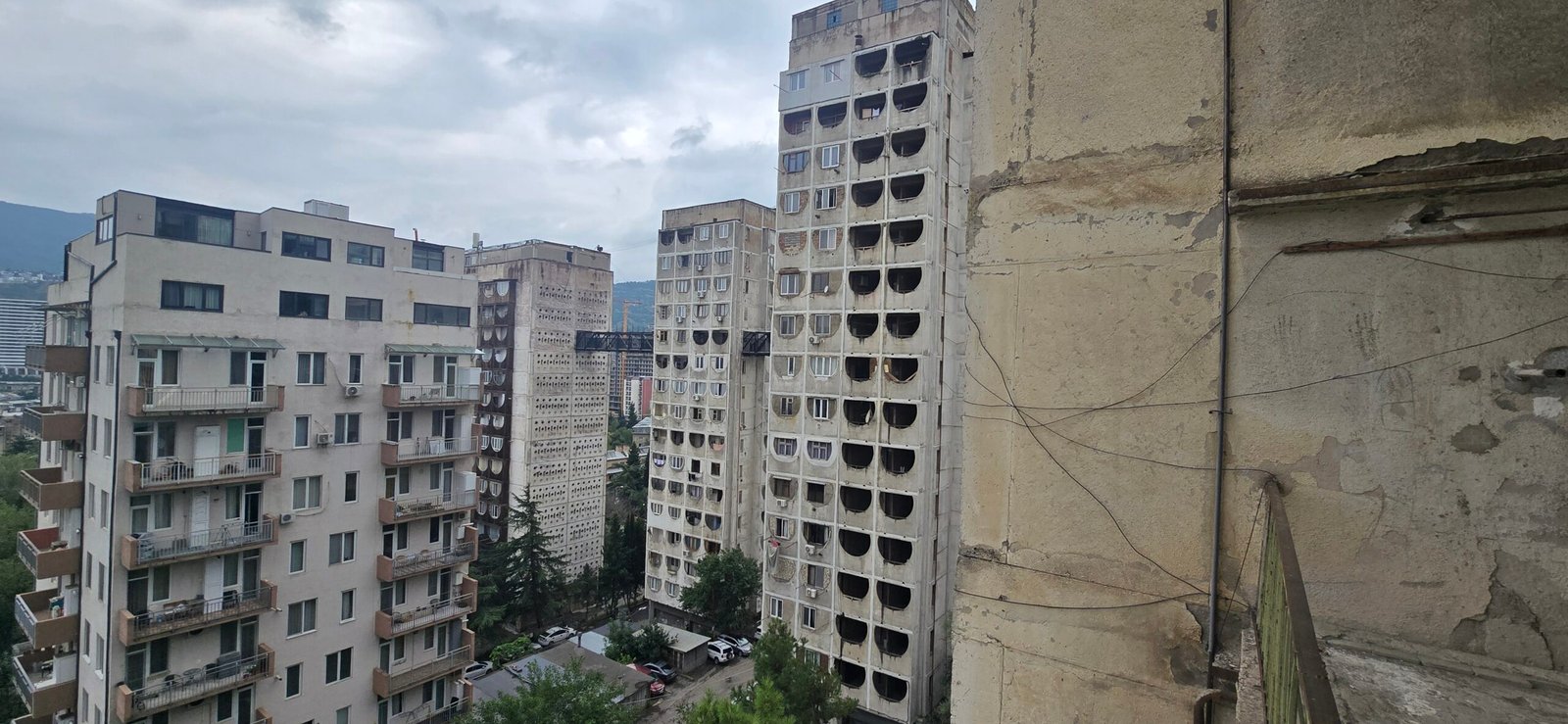

From abandoned to very much still lived-in: the Nutsubidze Skybridge, a residential complex on the Nutsubidze Plateau built in 1974–1976 by architects Otar Kalandarishvili and Gizo Potskhishvili.
The complex is three separate apartment towers connected — at the 10th, 12th and 14th floors — by long metal footbridges, all built to solve a genuinely practical problem: the site sits on a steep hillside, and the bridges (paired with public elevators) let residents cross between blocks without walking all the way down and back up again. But there’s a design story here too. The architects reportedly drew on the historic highland village of Shatili and its stone tower-houses for inspiration; look closely and the lower building is clad in wood, with concrete cut-outs shaped like crosses and arrow slits echoing traditional Georgian fortress architecture.
Unlike the museum, this place is very much alive — families still live in these towers, laundry hangs from the balconies, and the whole complex recently went through a 2024–2025 renovation that repainted the railings and repaved the walkways. It’s a strange, moving thing to stand underneath a piece of “abandoned Soviet architecture” content and realize it’s actually somebody’s home. Our guide was careful to remind us that these are private residences, not a stage set — which is exactly the kind of nuance you don’t get from a guidebook.
5. The Old University Library — and the murals underneath it
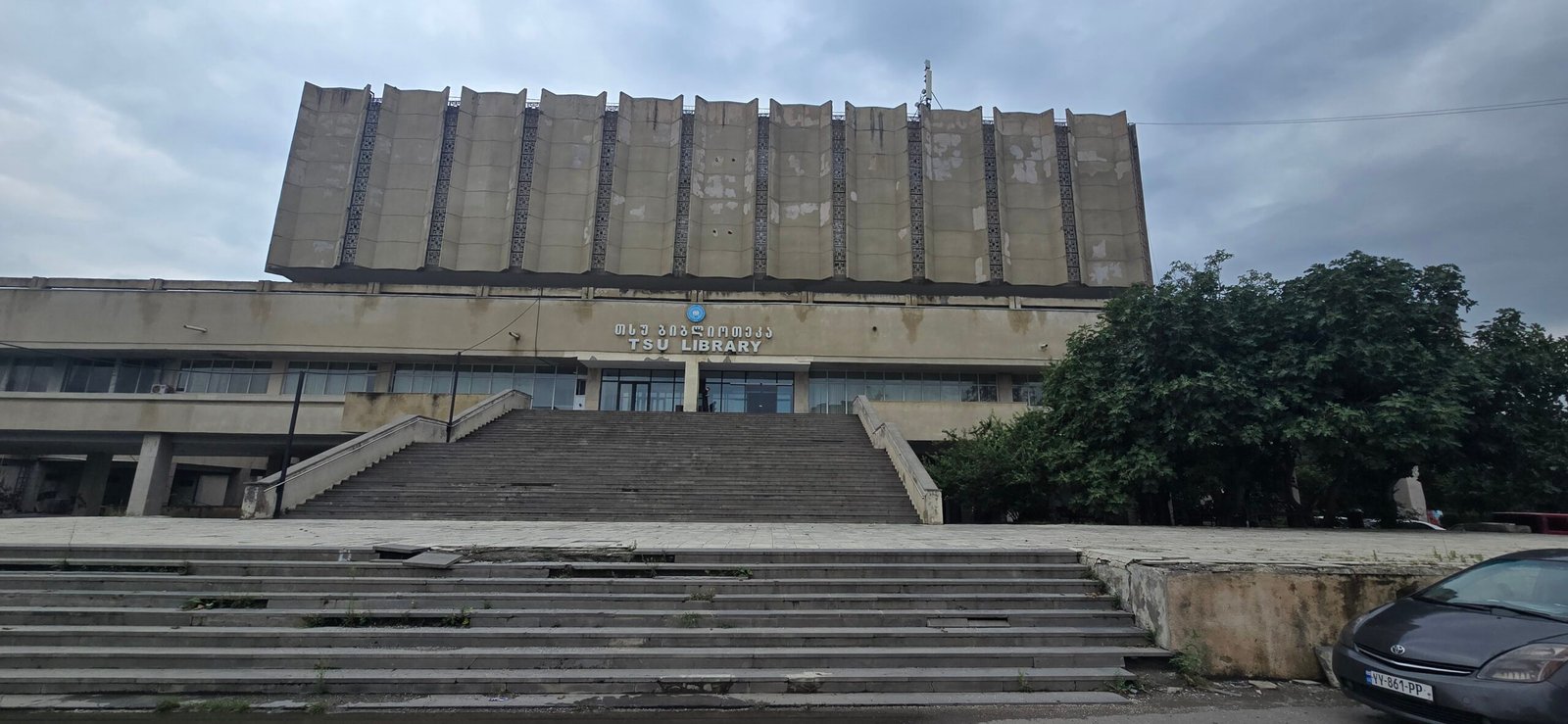
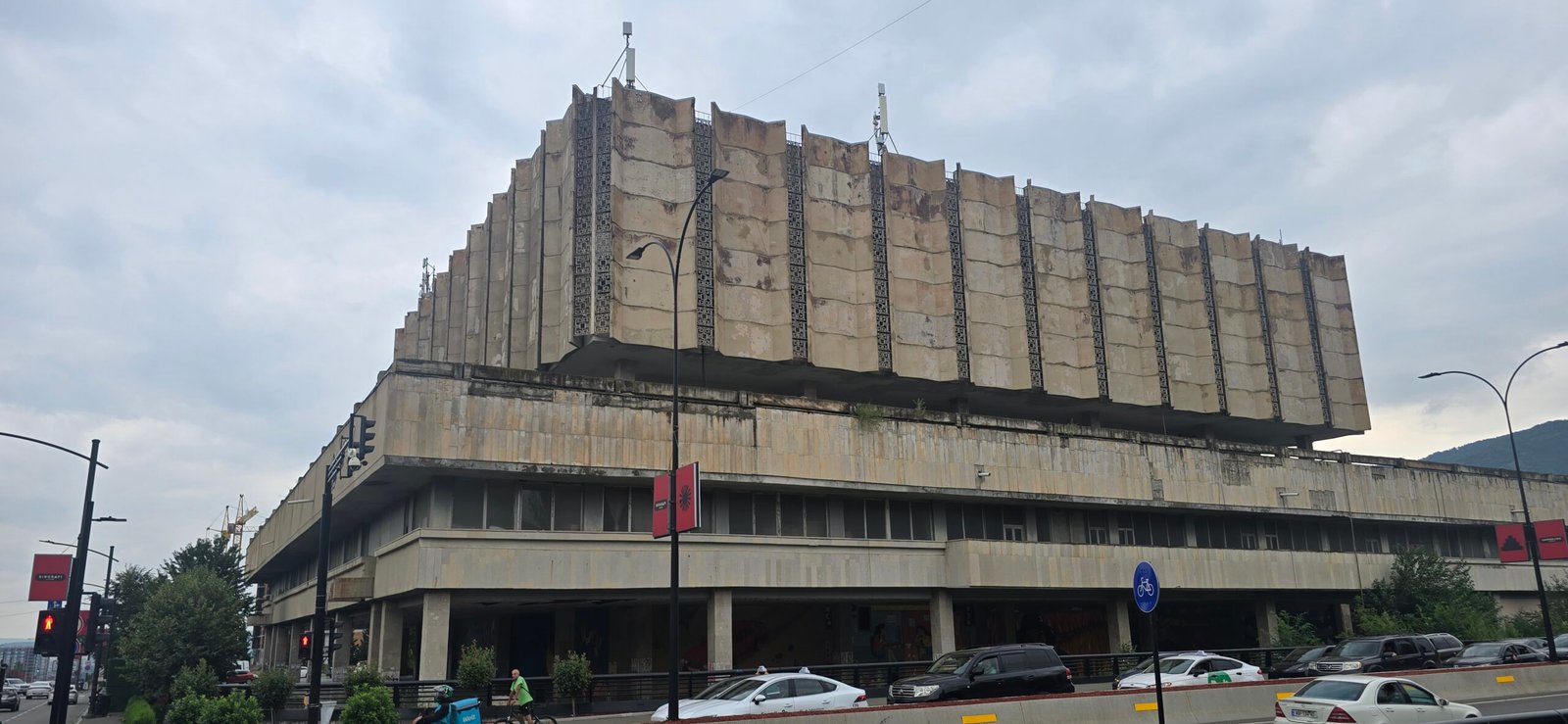
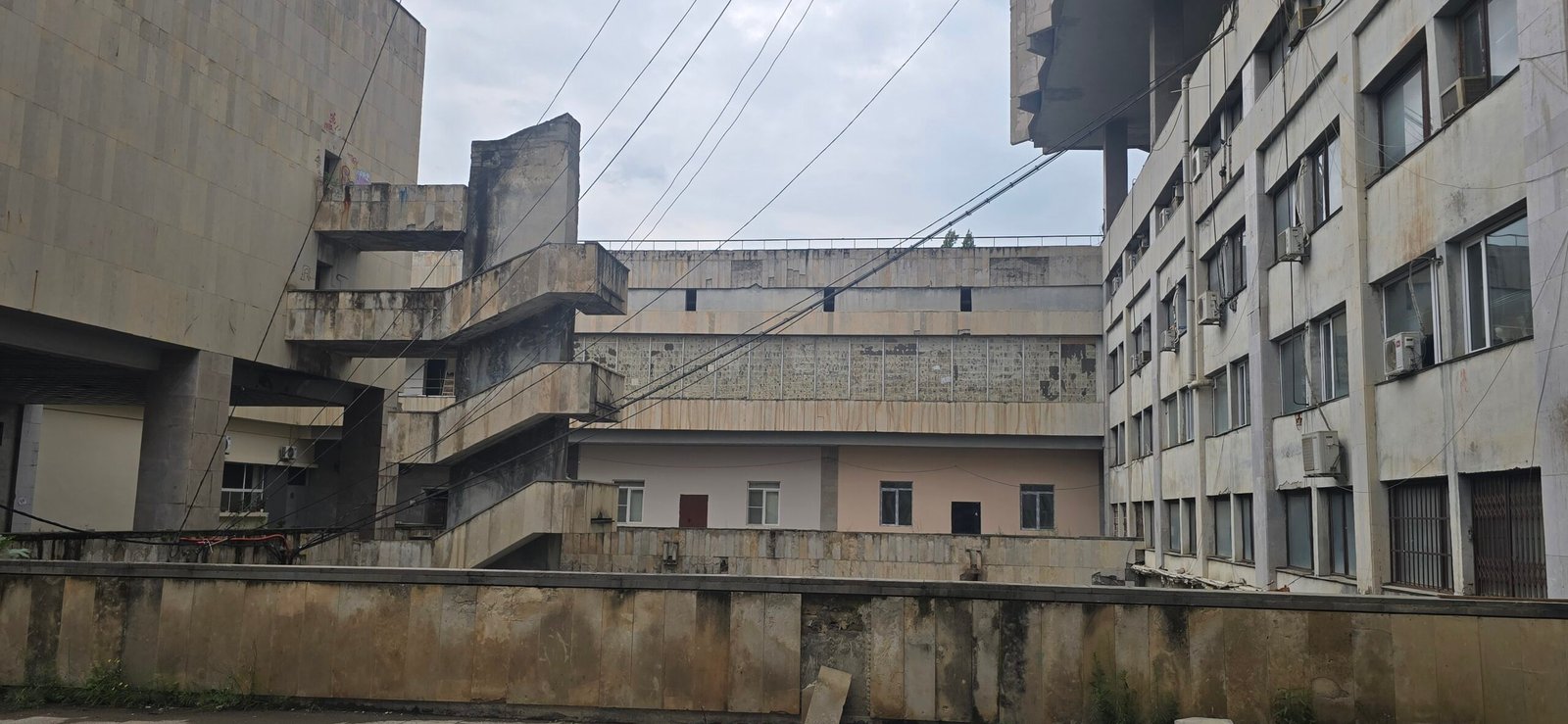
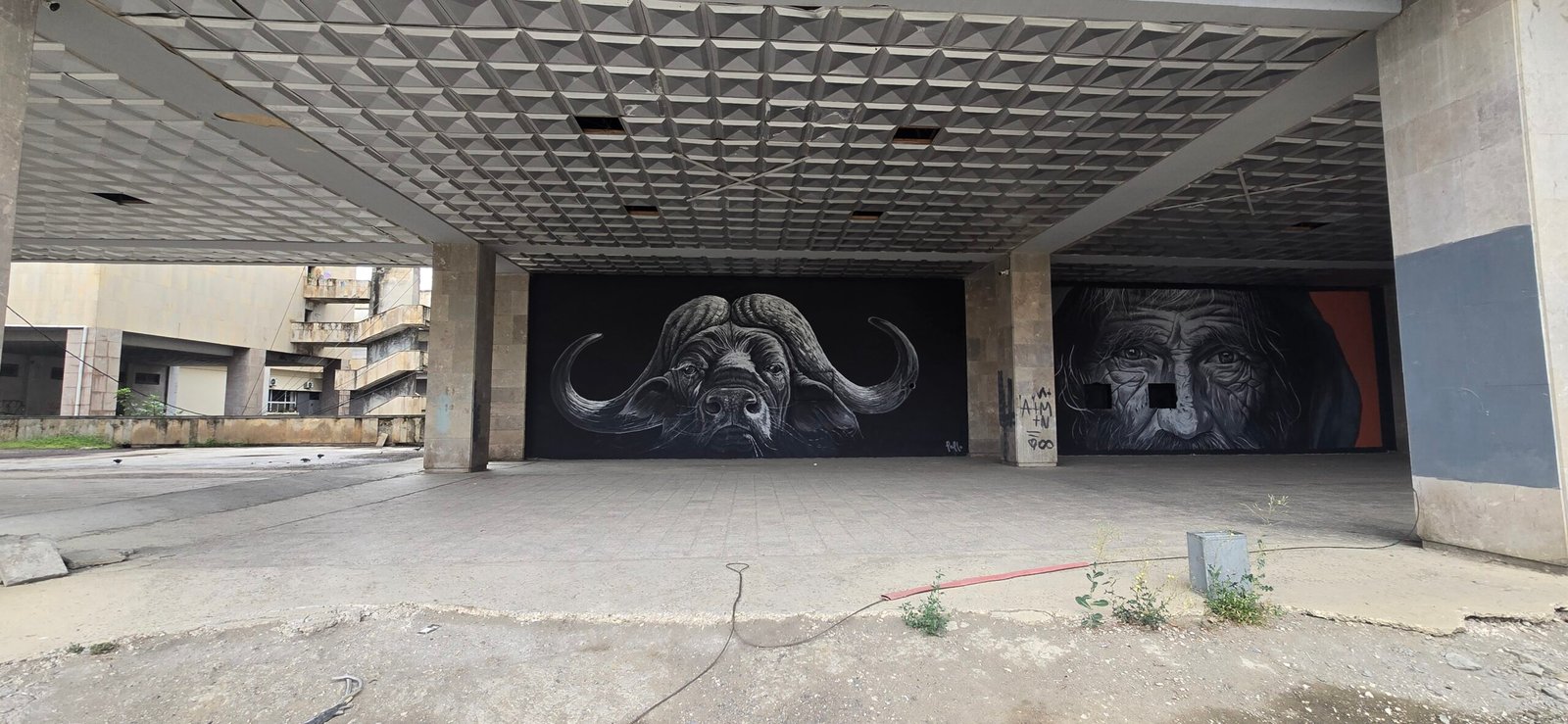
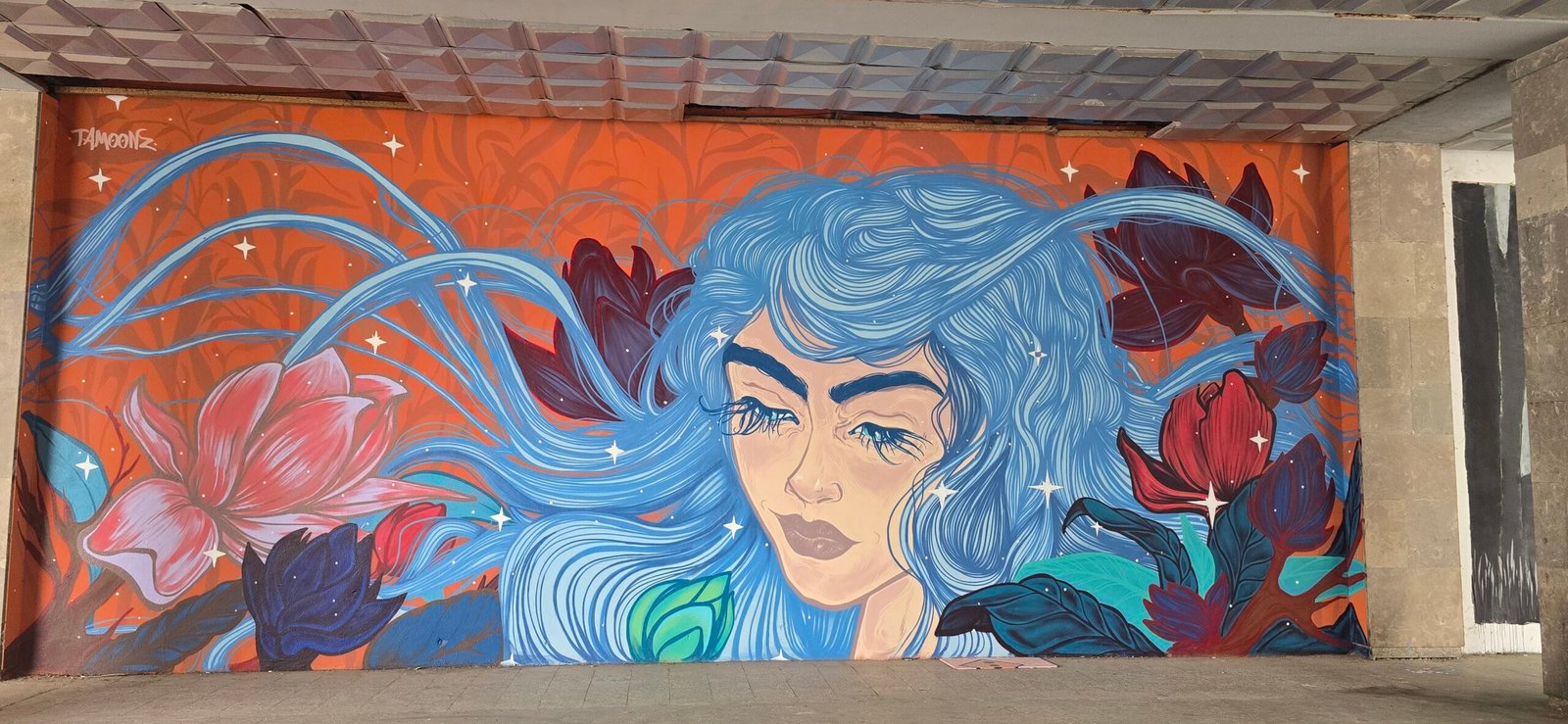
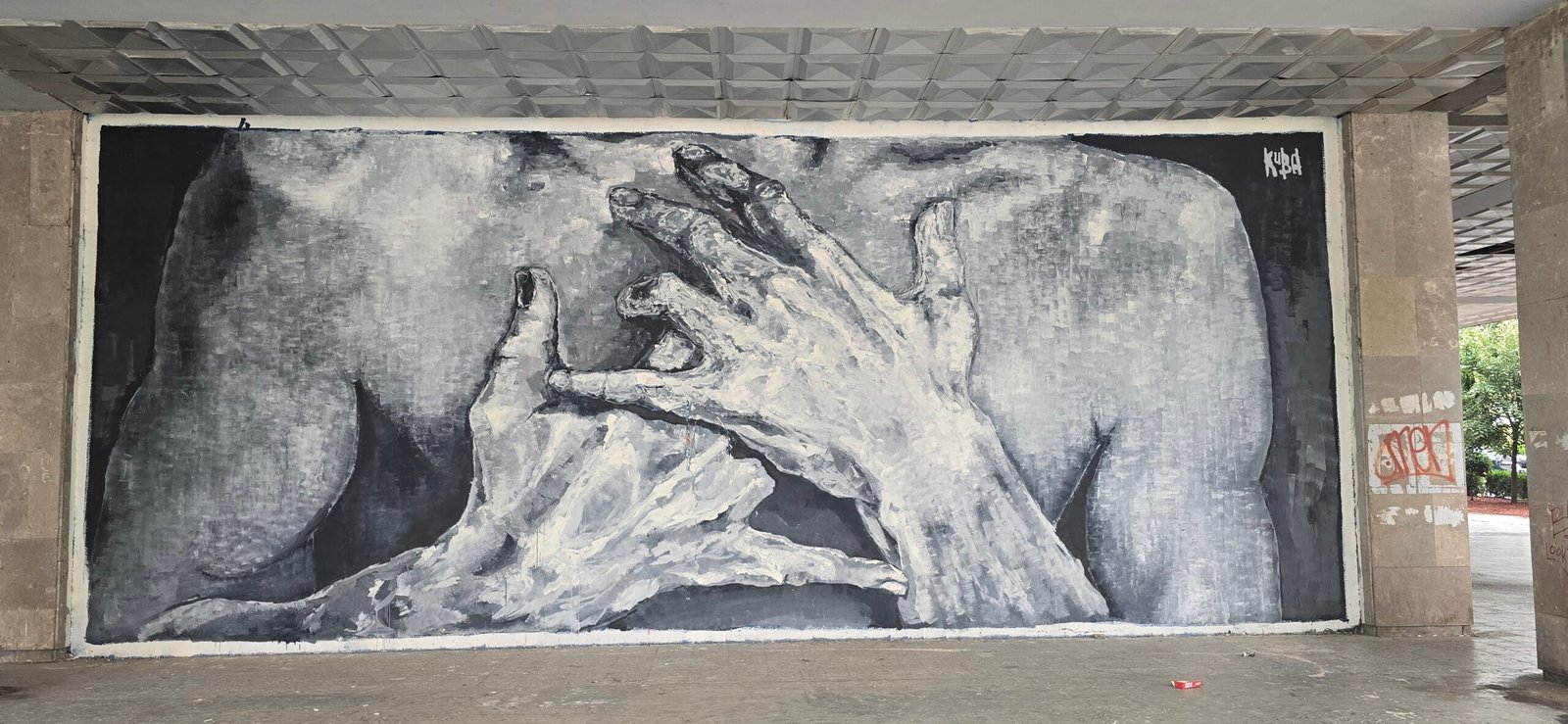
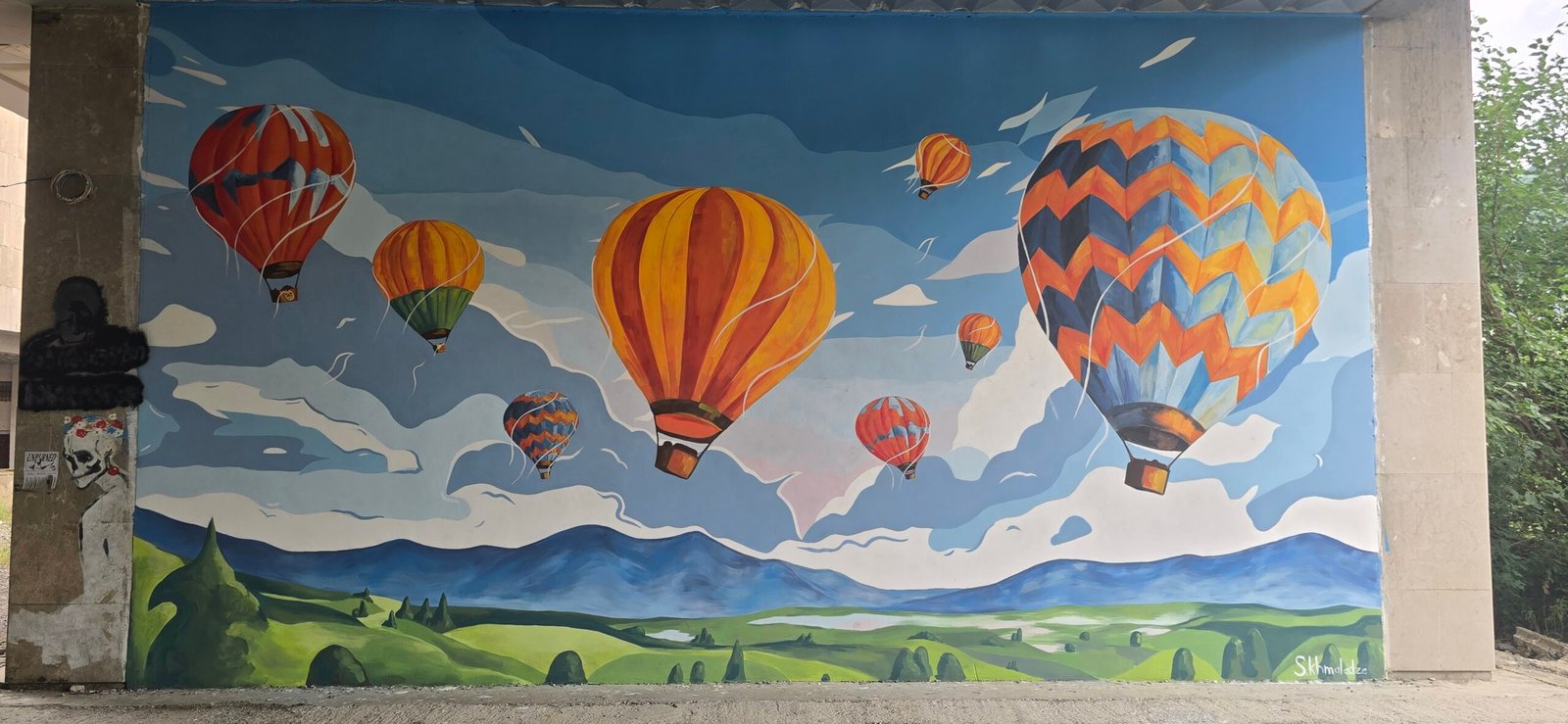
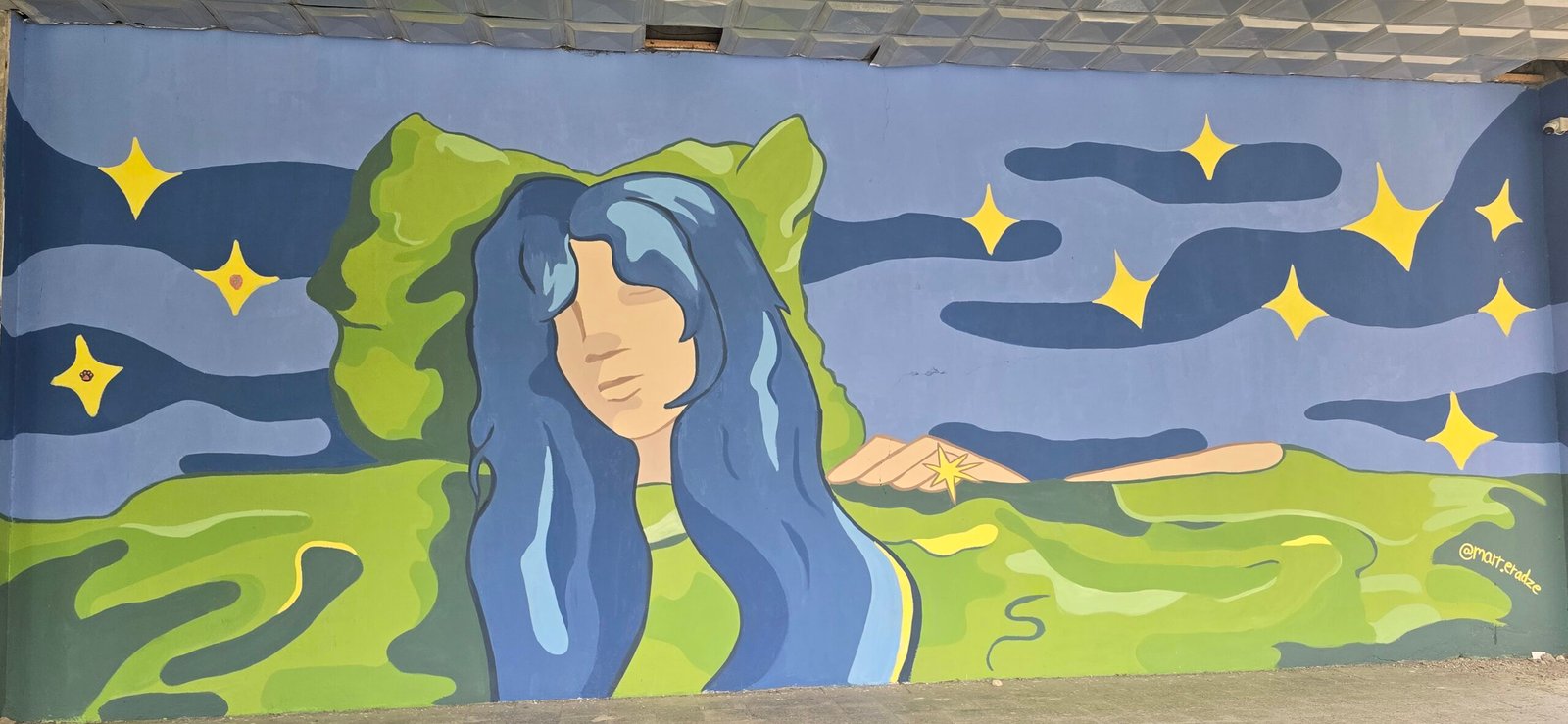
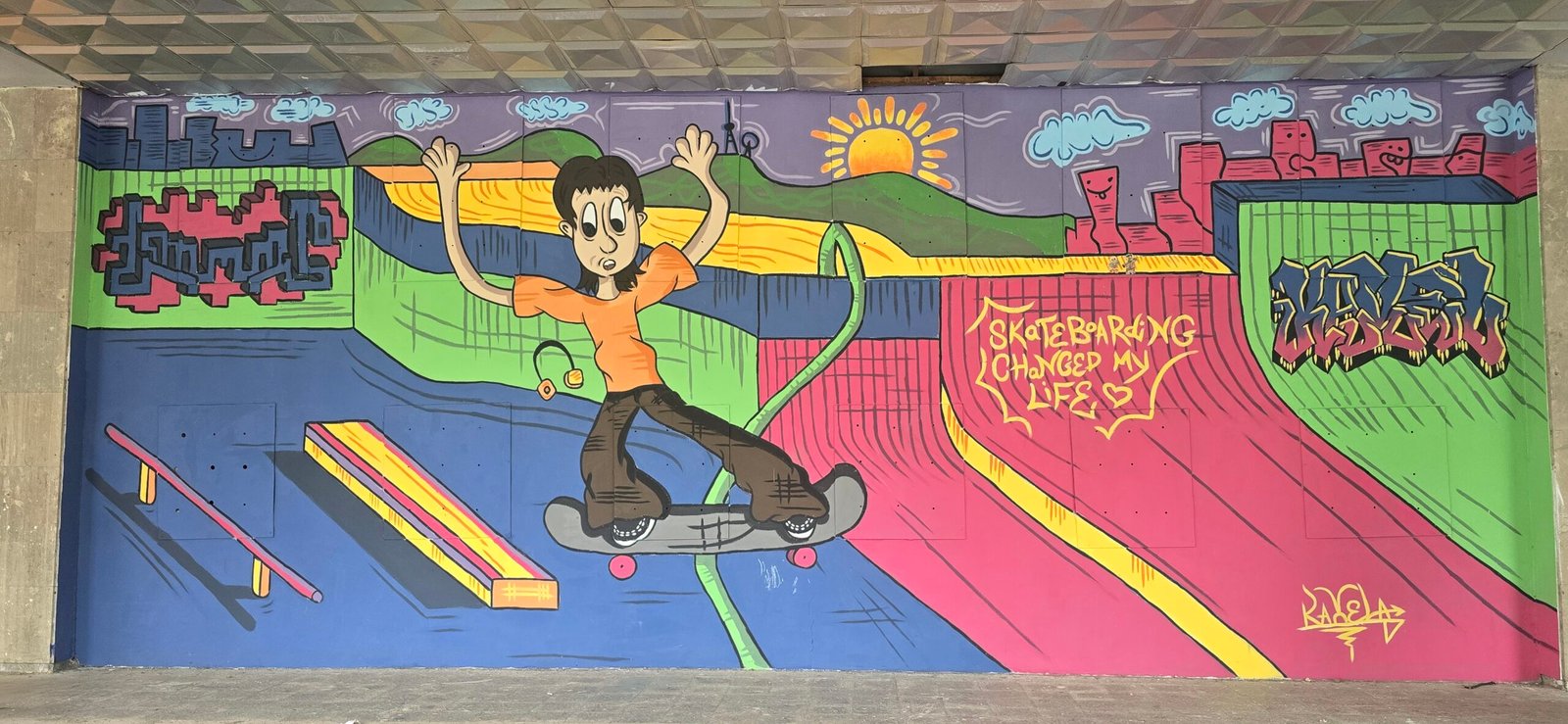
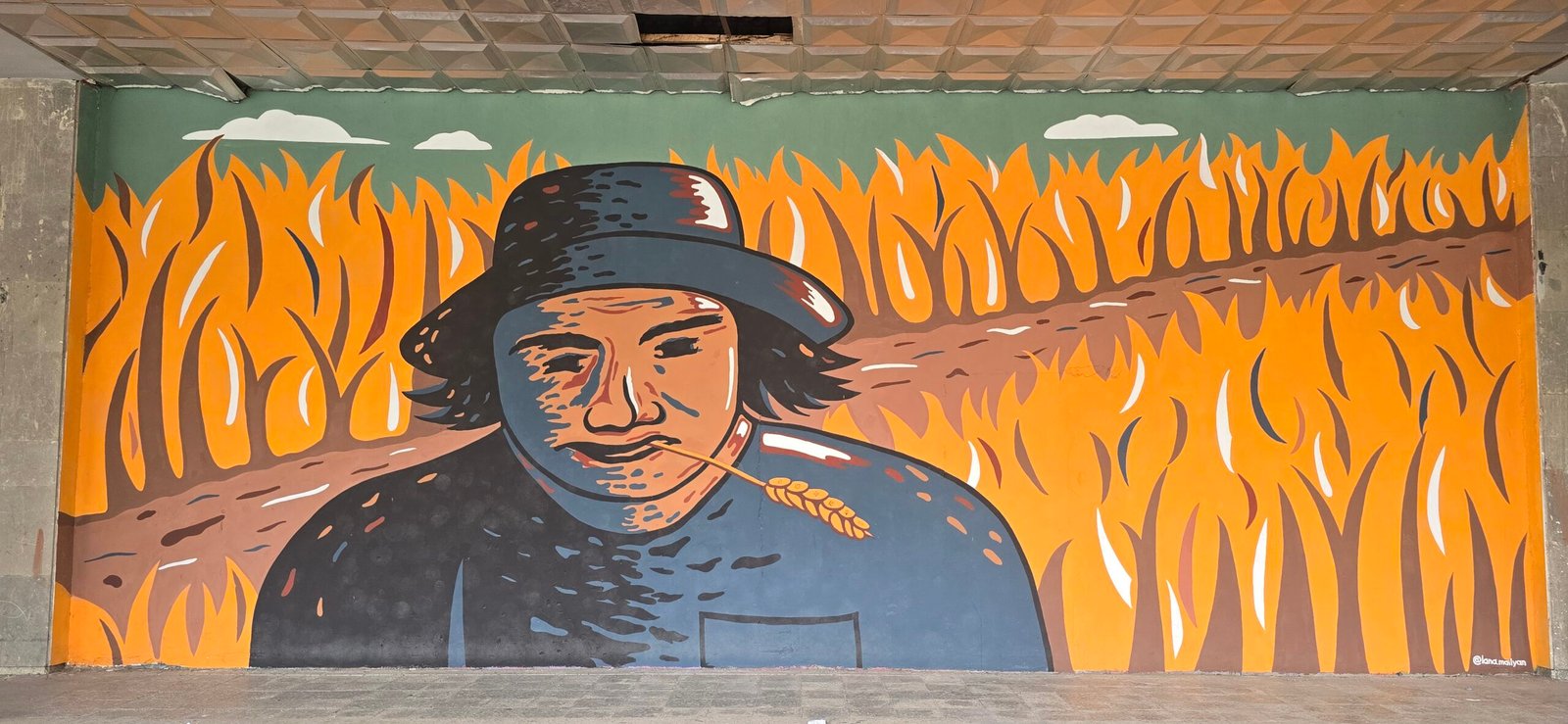
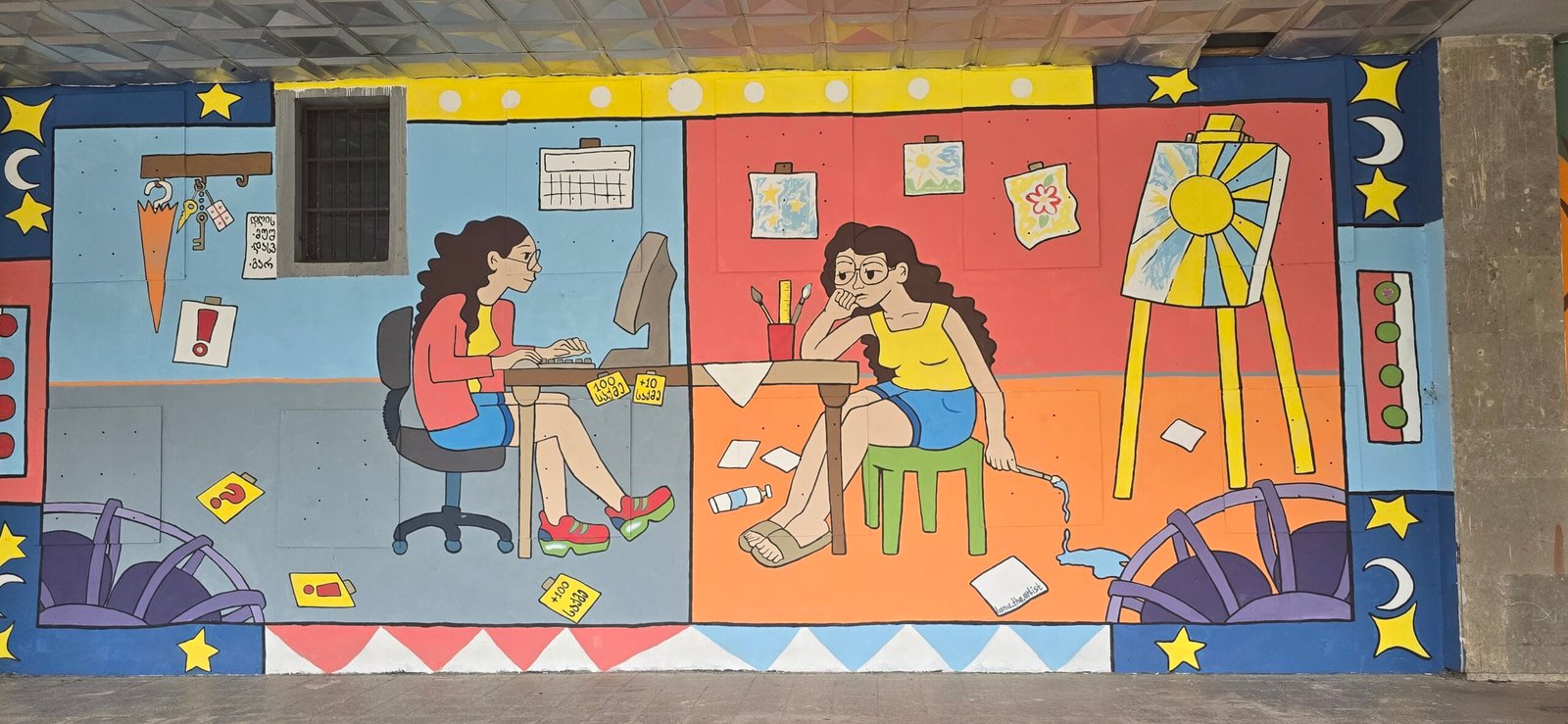
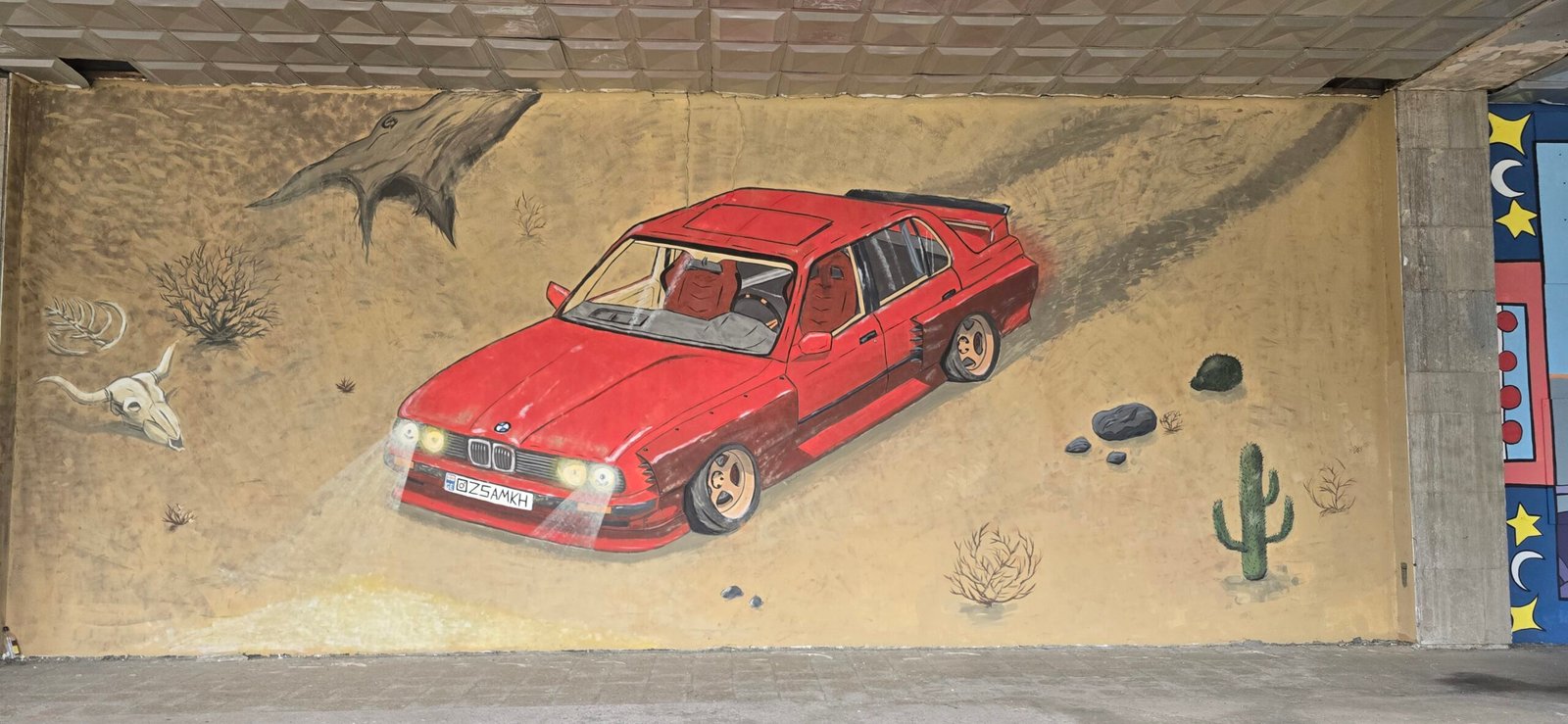
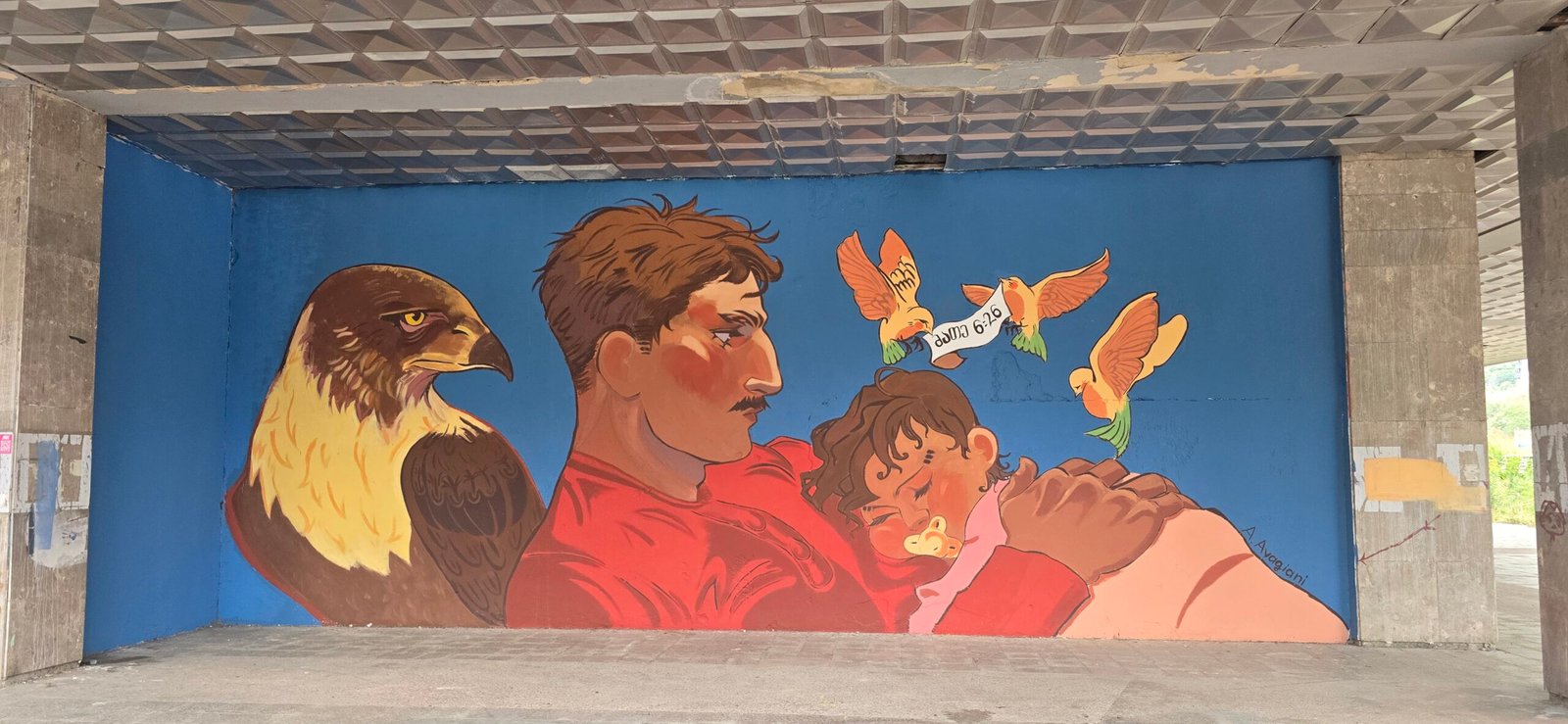
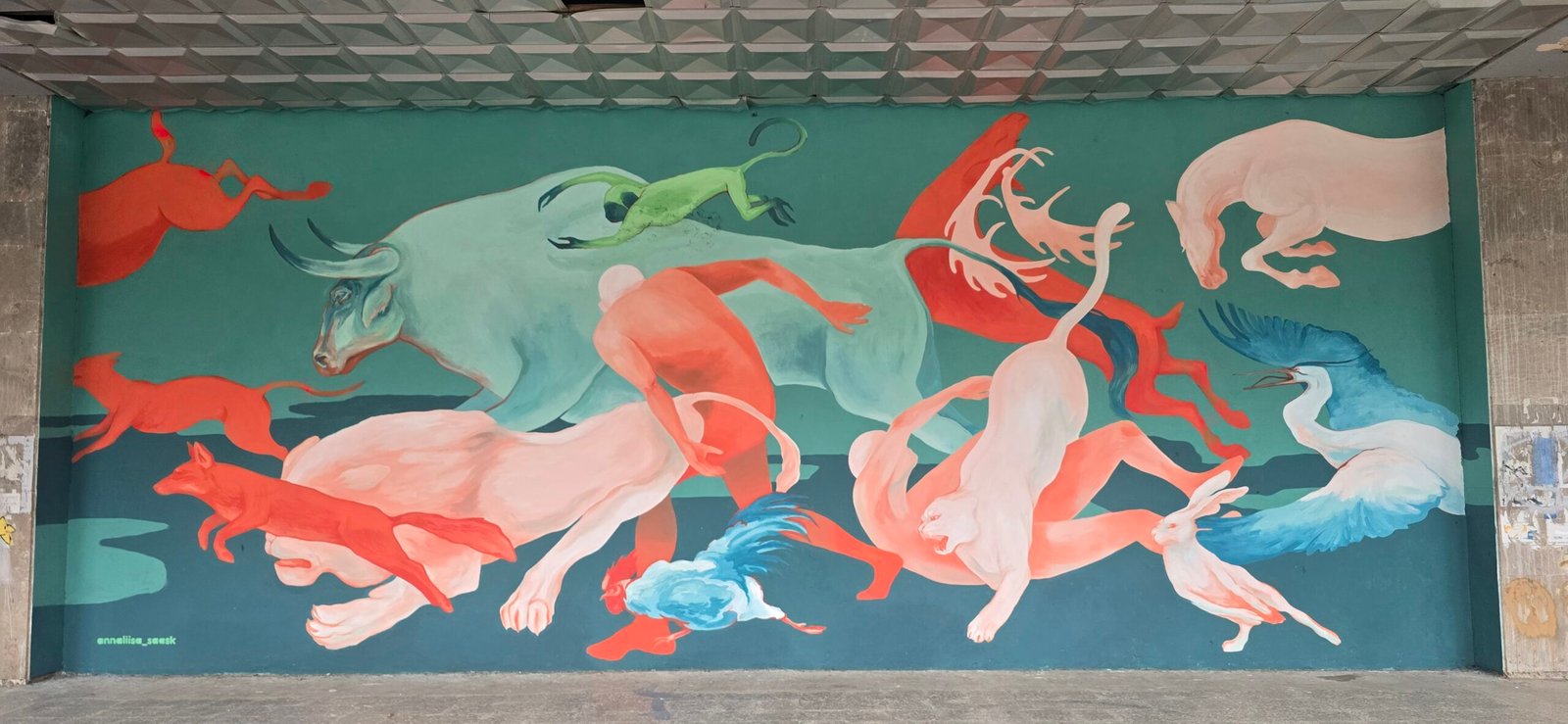
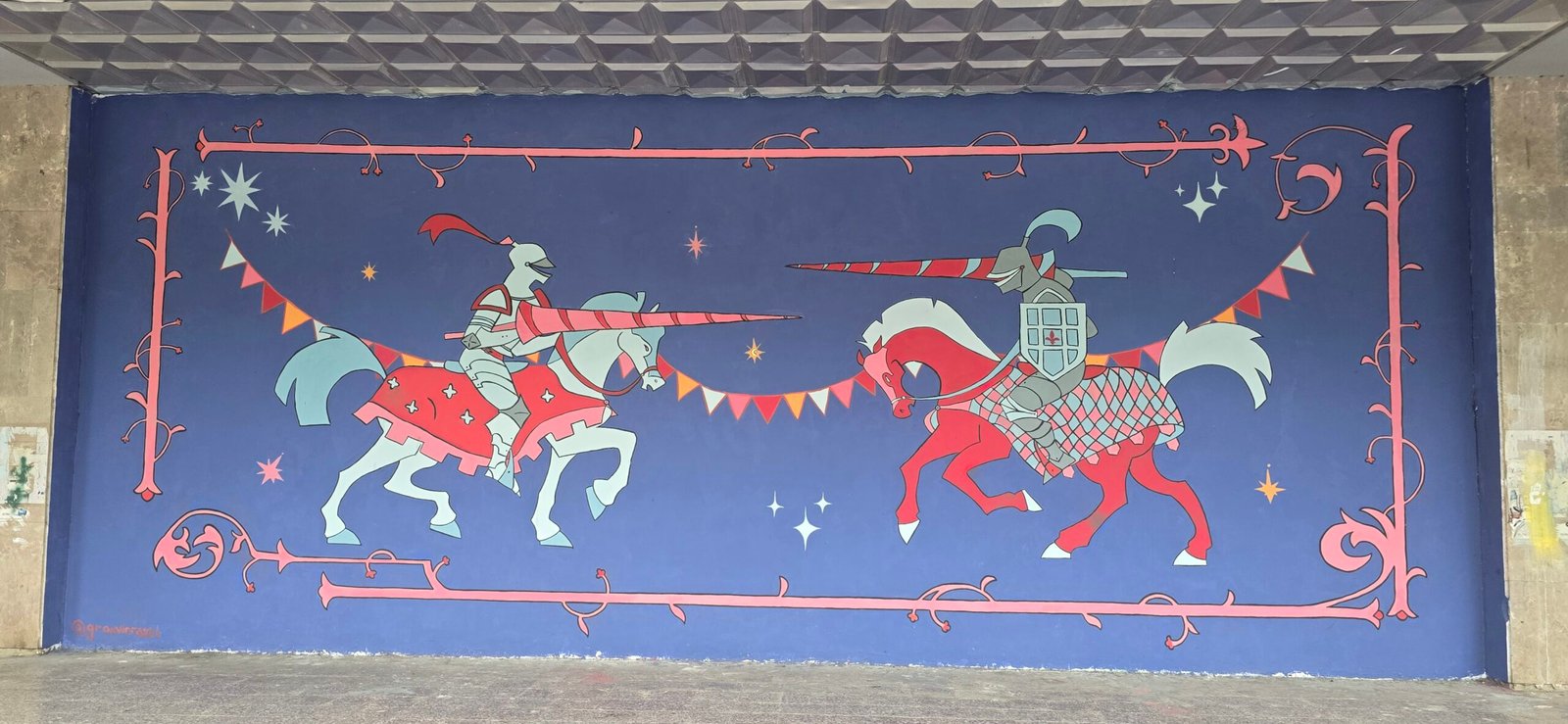
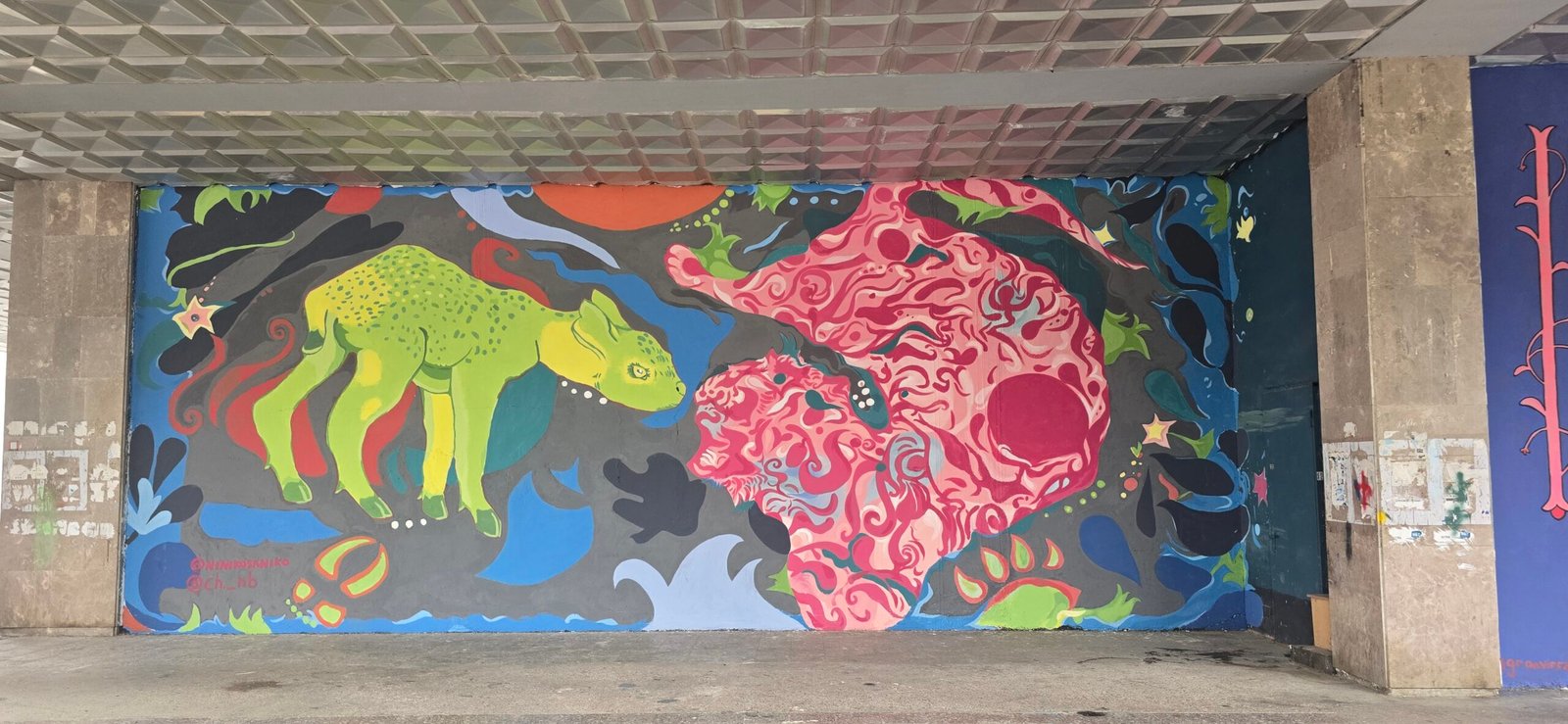
Next stop was the Tbilisi State University Central Library, a colossal modernist structure built in stages from 1971 through the 1980s by a team of nine architects, including Zurab Kopaladze, Bidzina Maminaishvili and Nodar Mgaloblishvili. Its most distinctive feature is the top-heavy upper floor: a row of huge, book-like concrete fins jutting out over the entrance, almost like the building itself is made of pages standing on end. It’s brutalism as a pun — a library shaped like an open book, if the book weighed several hundred tonnes.
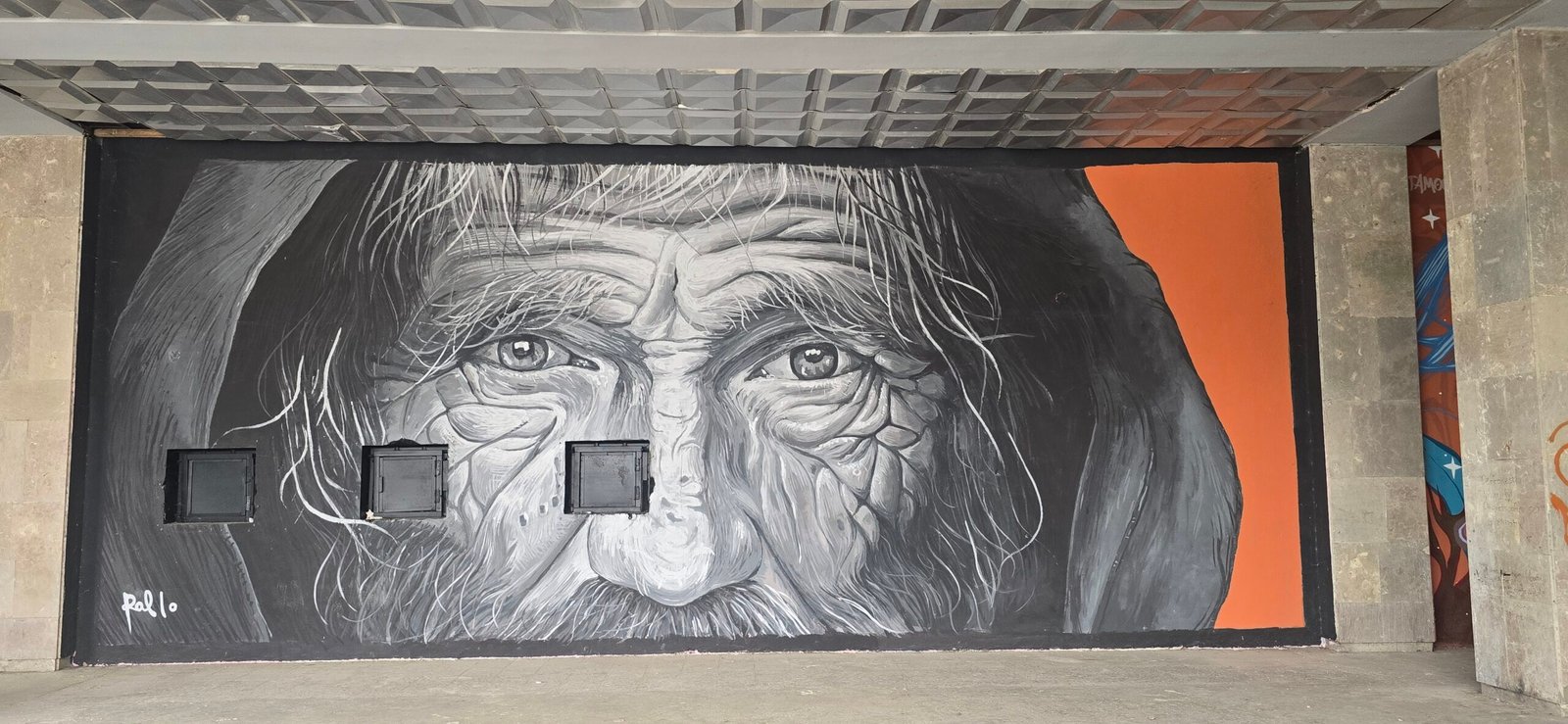
Just below and around the building is also where the tour’s most colorful moment happens: a stretch of wall covered in vivid street art murals, hot air balloons and local scenes painted in bright oranges and blues against the grey concrete. It’s become something of an unofficial photo spot — the kind of place where the “raw and unfiltered” brutalist tour suddenly gives you a burst of color to contrast against six hours of weathered concrete.
6. Suicide Bridge and the Old Soviet Cable Car
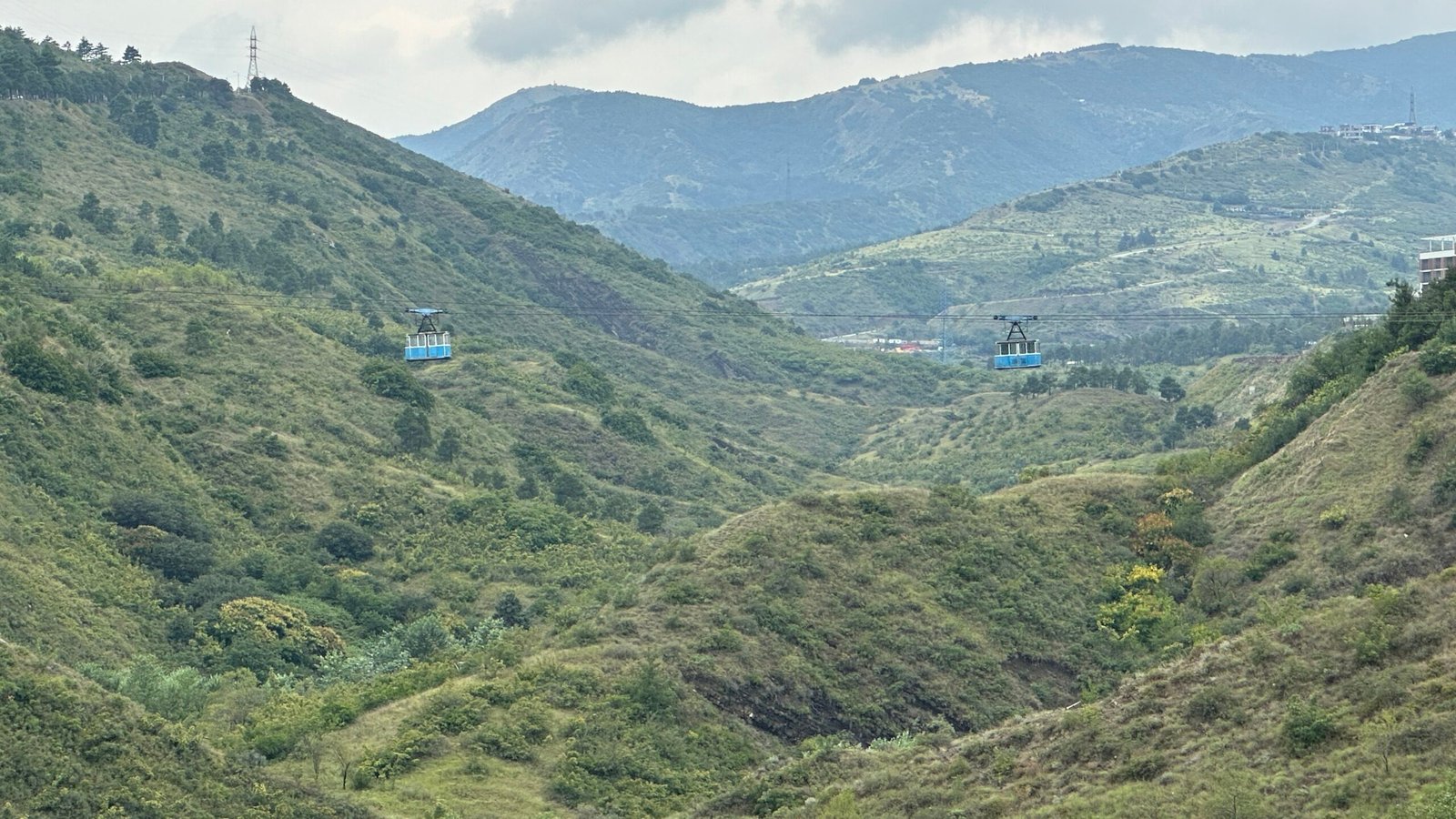
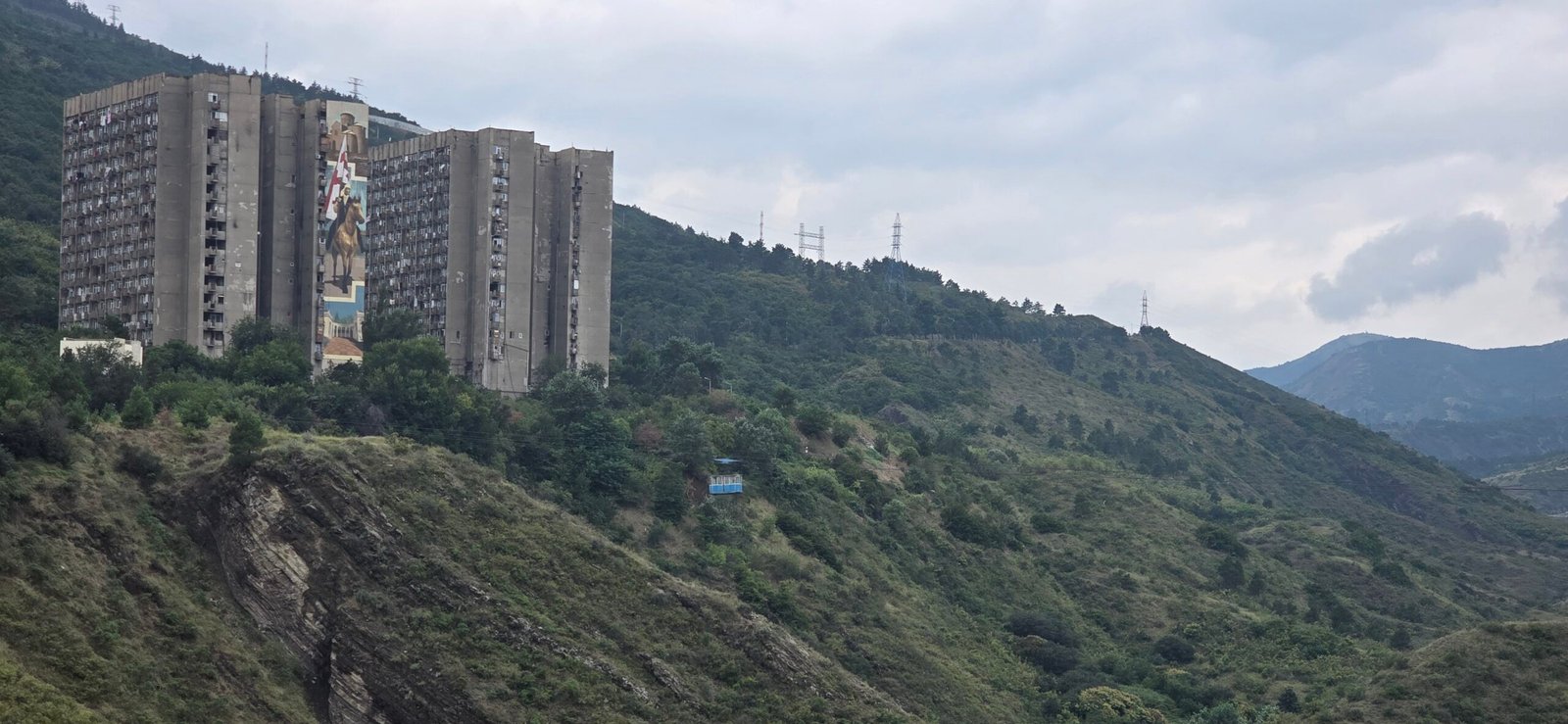
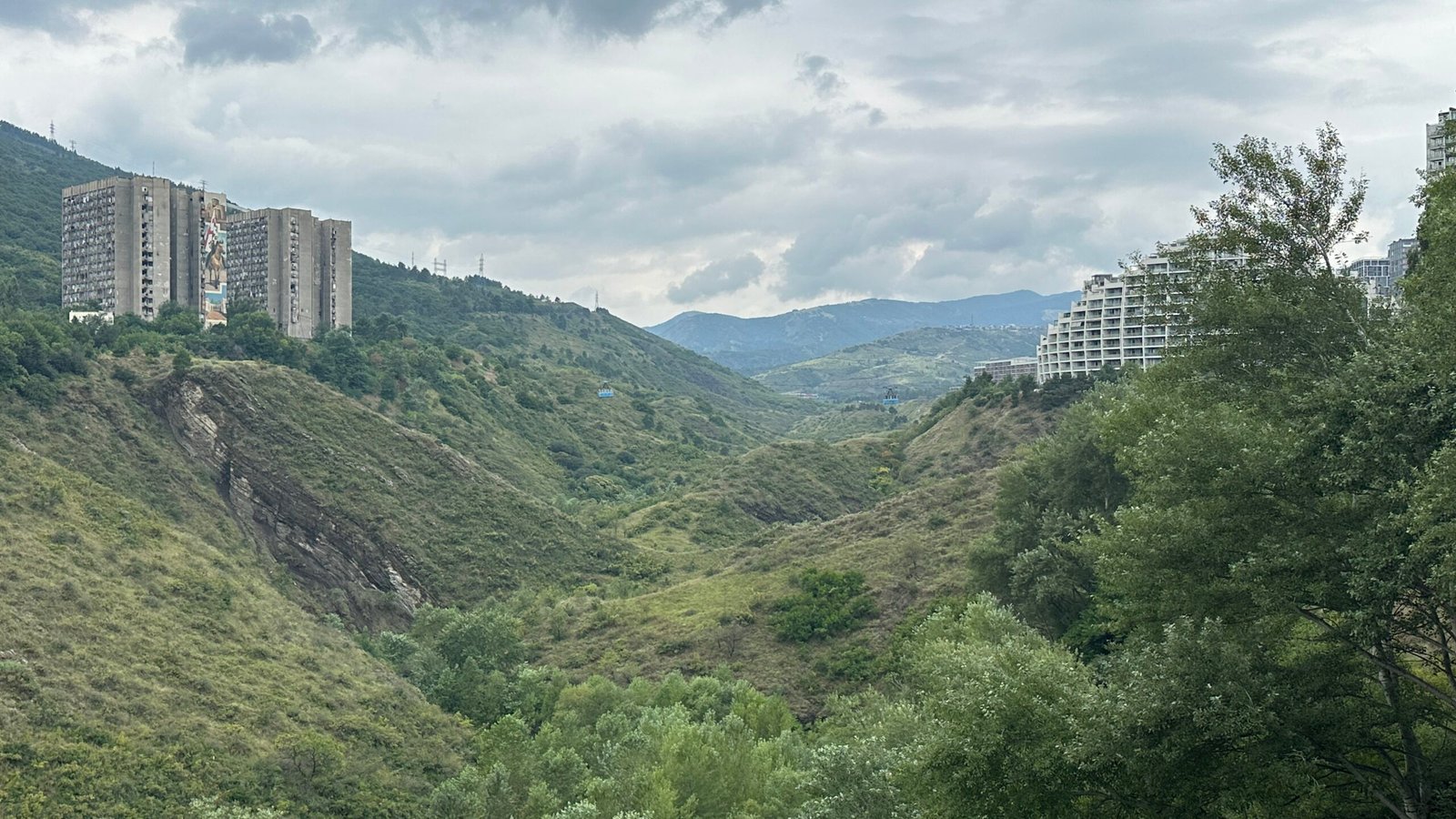
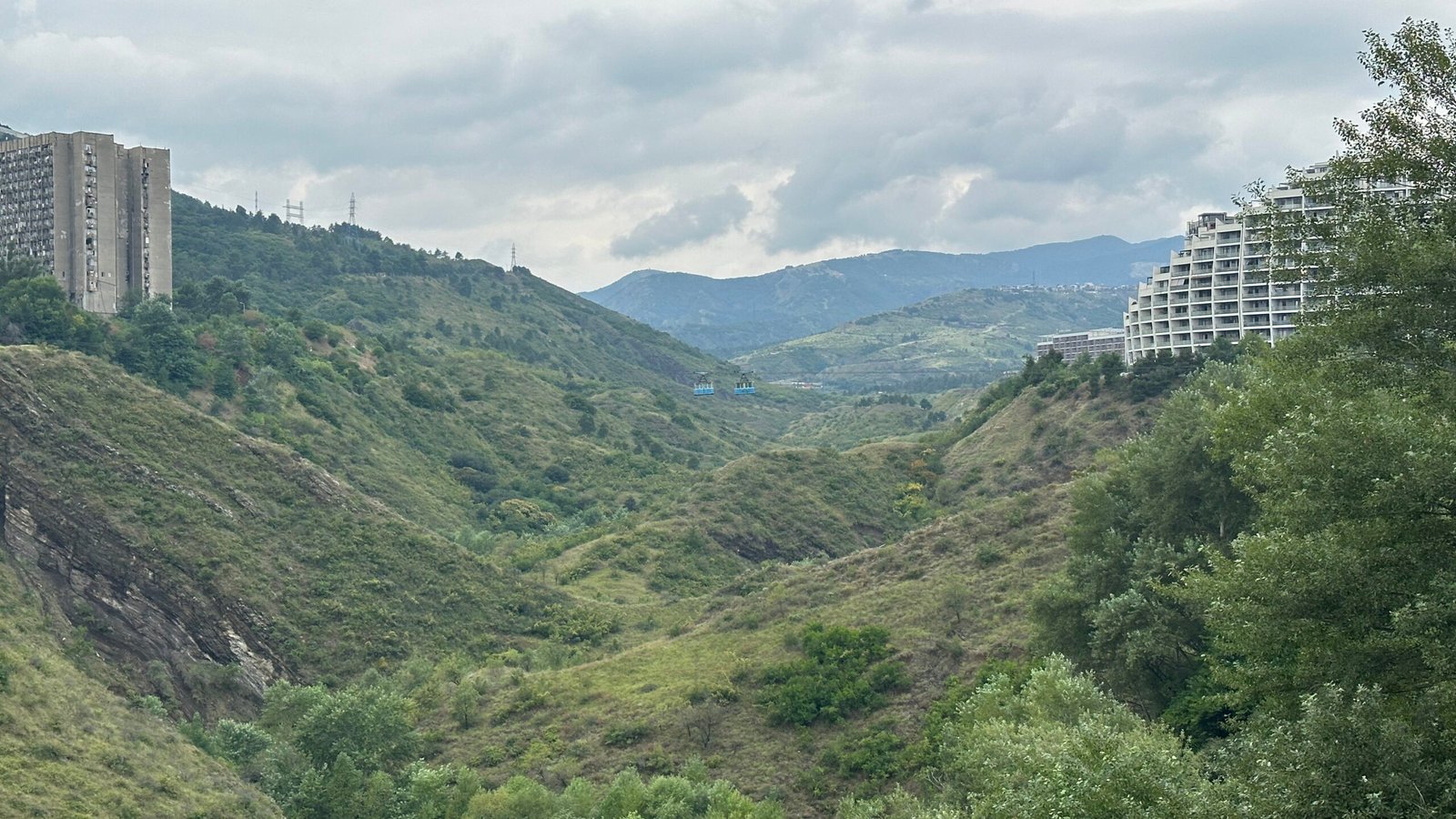
The last stop of the day was also the most haunting: a footbridge locals call, bluntly, “Suicide Bridge.” Our guide shared the darker local stories attached to it — the kind of history that never makes it into a standard city tour, tied to the hardship many Tbilisi residents lived through in the difficult years after the Soviet collapse. It’s not a place with a plaque or a Wikipedia page; it’s a piece of oral history that a guide has to actually tell you, standing right there, for it to mean anything at all.
From there we made our way to one of Tbilisi’s old Soviet-era cable car lines — the ropeway connecting Vake Park up to Turtle Lake, strung across a genuinely dramatic green valley on the edge of the city. Tbilisi actually had more than one aerial cable car system in Soviet times; the more famous one, running up Mount Mtatsminda, suffered a fatal crash in 1990 and was never rebuilt. This one survived, and riding in its small, boxy, distinctly retro-looking cabin, swinging out over the hillside with the city falling away below, is about as close as you can get to literally riding through Tbilisi’s past. It’s a five-minute ride that feels a lot longer, in the best way.
Ending the day suspended in a decades-old cable car, looking back over a city full of monuments to a system that no longer exists, felt like the right way to close out a tour that was as much about memory as it was about architecture.
The bigger picture
What struck me most, driving between these six stops, wasn’t just the architecture — it was the silence around it. Aside from Chronicle of Georgia, I didn’t see another tourist all day. No queues, no souvenir stands, no crowds jostling for the same photo angle. Just enormous, ambitious, sometimes tragic buildings standing quietly in their neighborhoods, doing whatever they’ve done for the last fifty years — housing families, gathering dust, or slowly being reclaimed by the hillside.
Tbilisi’s Old Town gets all the postcards. But if you want to actually understand this city — what it went through, what it built, what it lost, and what it’s chosen to keep — this is the tour that does it.
If you want to do this yourself: the tour runs about five hours and covers all six stops by private car with a guide, so there’s no walking or hiking involved beyond short stretches at each site. It’s a genuinely relaxed day — if you need a coffee, a bathroom, or just a break, the guide simply pulls over. Bring a camera (obviously), comfortable shoes for a bit of walking at each stop, and, if you can, ask your guide about the personal stories behind each building — that’s where this tour really comes alive.

Adrenaline junkie with a passion for exploring off-the-beaten-path destinations and finding unique ways to stay active. Expect stunning scenery, challenging workouts, awesome travel tips and a whole lot of fun. Let’s get sweaty and explore the world together!