
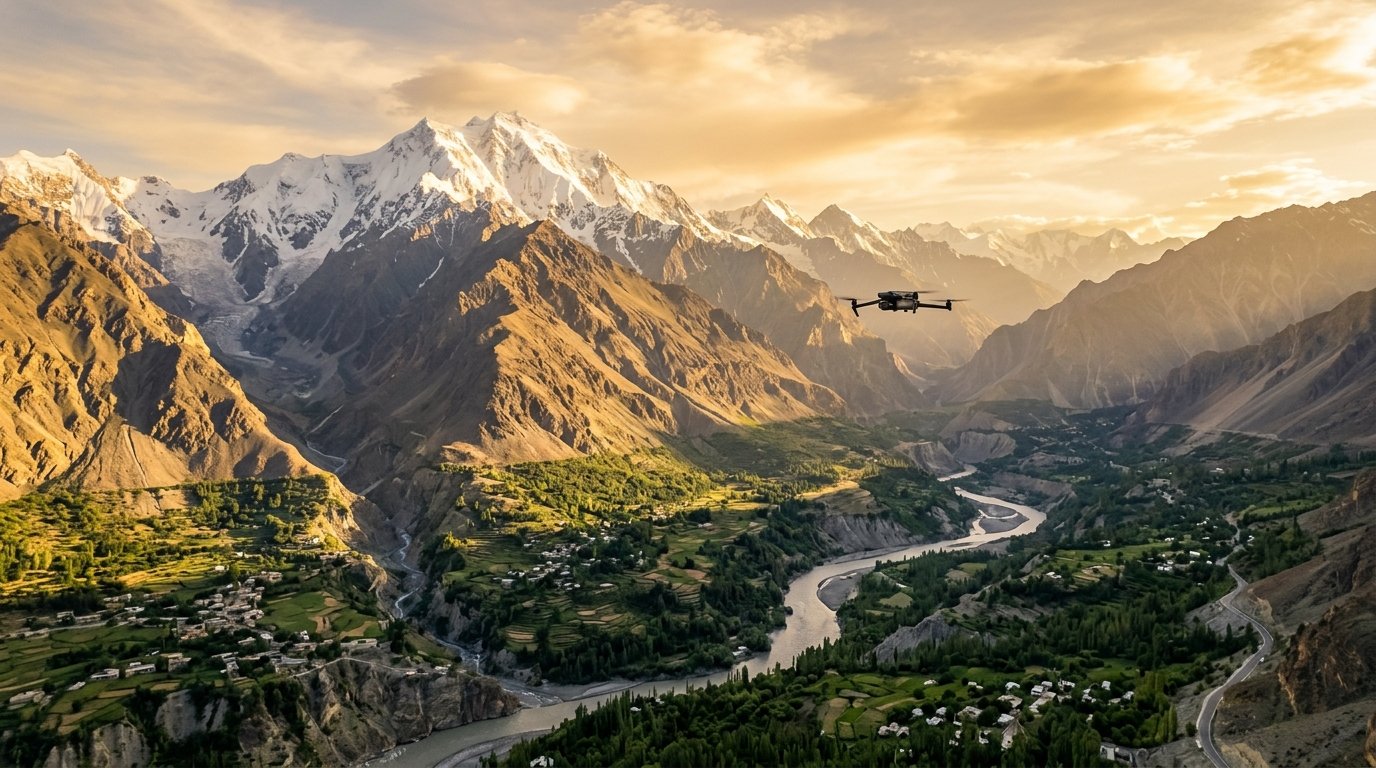
1. 🚦 The Short Answer
Recreational drones are heavily restricted and generally not recommended for foreign tourists visiting Pakistan. While civil aviation frameworks exist for local commercial operators, bringing or operating a drone as a foreigner without extreme pre-approval is viewed as a major security threat, and unpermitted drones are almost always confiscated at the border.
2. 🛃 Customs & Importation Rules
- Bringing a drone: It is highly risky for a foreign tourist to bring a drone into Pakistan. Unless you have prior written government clearance, bringing a drone in your luggage is effectively prohibited.
- Declarations: You must declare all restricted items, including drones, to customs upon arrival. Attempting to pass a drone through the Green Channel undeclared is illegal.
- Confiscation: If you arrive without a pre-approved No Objection Certificate (NOC) from the government, airport customs officials will immediately confiscate the drone. In many instances, confiscated drones are never returned to the traveler.
3. 📝 Registration & Permit Process for Tourists
- Pre-arrival registration: Yes, foreign tourists must secure a permit and clearance BEFORE arriving in Pakistan.
- The process: You must apply for a No Objection Certificate (NOC) and register your drone directly with the Pakistan Civil Aviation Authority (PCAA). This involves submitting your drone’s intended use, make, model, and specific flight locations. Due to strict national security and anti-terrorism laws, tourist applications require deep clearance from security agencies and are rarely approved.
- Fees and timeline: Document review and security clearance processing can take anywhere from 30 to 60 days. Registration fees vary depending on the drone’s specific weight category.
4. 🚫 Key Flight Rules & Restrictions
- Standard operational rules: If miraculously granted permission, you must fly during daylight hours, in good weather, and strictly maintain Visual Line of Sight (VLOS) at all times.
- Weight class limits: Under PCAA regulations, Class I drones (under 250g, like the DJI Mini) are limited to a maximum altitude of 200 feet. Class II drones (250g to 2kg) are capped at an altitude of 400 feet.
- No-Fly Zones: Pakistan enforces absolute, zero-tolerance no-fly zones. You cannot fly within 10 nautical miles (18.5 km) of any airfield, within 2 km of international borders, or anywhere near military bases, nuclear facilities, government buildings, or crowded urban areas. Unauthorized aerial photography near sensitive sites will lead to immediate arrest and potential espionage charges.
5. 🔗 Official Sources & Links
For official inquiries and the latest regulatory updates, travelers should consult the Pakistan Civil Aviation Authority (PCAA).
Disclaimer: Aviation and customs laws change frequently. Travelers should always double-check with the official civil aviation authority or their local Pakistani embassy prior to booking their trip.
Adrenaline junkie with a passion for exploring off-the-beaten-path destinations and finding unique ways to stay active. Expect stunning scenery, challenging workouts, awesome travel tips and a whole lot of fun. Let’s get sweaty and explore the world together!