
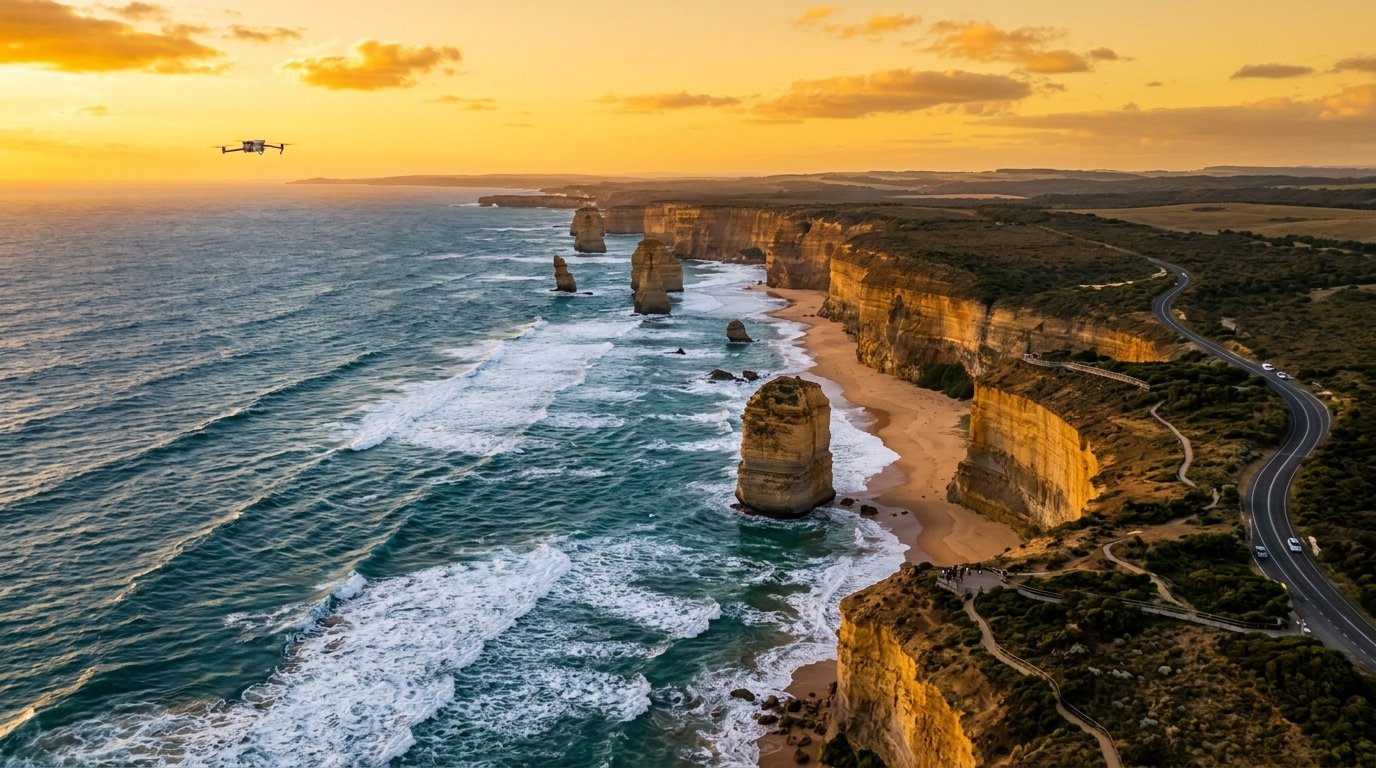
1. 🚦 The Short Answer
Recreational drones are generally allowed for tourists visiting Australia, provided you follow the basic safety rules set by the Civil Aviation Safety Authority (CASA). If you are flying purely for fun and recreation, you do not need to register your drone or hold a license.
2. 🛃 Customs & Importation Rules
- Airport Customs: Tourists can legally bring drones into Australia. They are considered personal electronic devices, so no special customs declarations or import permits are required for the drone itself.
- Battery Rules: Due to strict airline and aviation safety laws, all spare lithium-polymer (LiPo) drone batteries MUST be packed in your carry-on luggage. Never put loose lithium batteries in your checked baggage.
- Confiscation: Your drone will not be confiscated at the border as long as your batteries are stored safely in your carry-on and the drone is clearly for personal use.
3. 📝 Registration & Permit Process for Tourists
- No Registration Required: Foreign tourists flying strictly for sport or recreation do not need to register their drone or obtain an operator accreditation before arriving. This exemption applies to recreational drones of all standard consumer weights (up to 25kg).
- Exceptions: If you plan to fly for any commercial purpose (including monetized YouTube channels, sponsored content, or selling photos), you must register the drone with CASA, which requires an Aviation Reference Number (ARN) and incurs a fee.
4. 🚫 Key Flight Rules & Restrictions
- Maximum Altitude & Sight: You must not fly higher than 120 meters (400 feet) above ground level. You must maintain Visual Line of Sight (VLOS) at all times, meaning you can see the drone with your own eyes. Night flying is prohibited.
- Distance from People: You must keep your drone at least 30 meters away from other people. You must never fly directly over people, populated beaches, sports events, or crowded parks.
- Weight Class & Airports: If your drone weighs more than 250g, you must stay at least 5.5km away from controlled airports. Sub-250g drones (like the DJI Mini) can technically be flown within 5.5km of airports but must not exceed 45 meters in altitude and must strictly stay out of approach and departure flight paths.
- No-Fly Zones: Sydney Harbour is a strict no-drone zone. Furthermore, flying in most Australian National Parks (especially in New South Wales and the ACT) is strictly prohibited without special environmental permits. Never fly near emergency operations, such as bushfires or car accidents.
5. 🔗 Official Sources & Links
To verify the latest regulations and to download a CASA-verified safety app (like OpenSky) to check local no-fly zones, visit the official Civil Aviation Safety Authority (CASA) Know Your Drone website.
Disclaimer: Aviation laws change frequently. Travelers should always double-check official government sources and local state park authorities before their trip to ensure full compliance.
Adrenaline junkie with a passion for exploring off-the-beaten-path destinations and finding unique ways to stay active. Expect stunning scenery, challenging workouts, awesome travel tips and a whole lot of fun. Let’s get sweaty and explore the world together!