
1. 🚦 The Short Answer
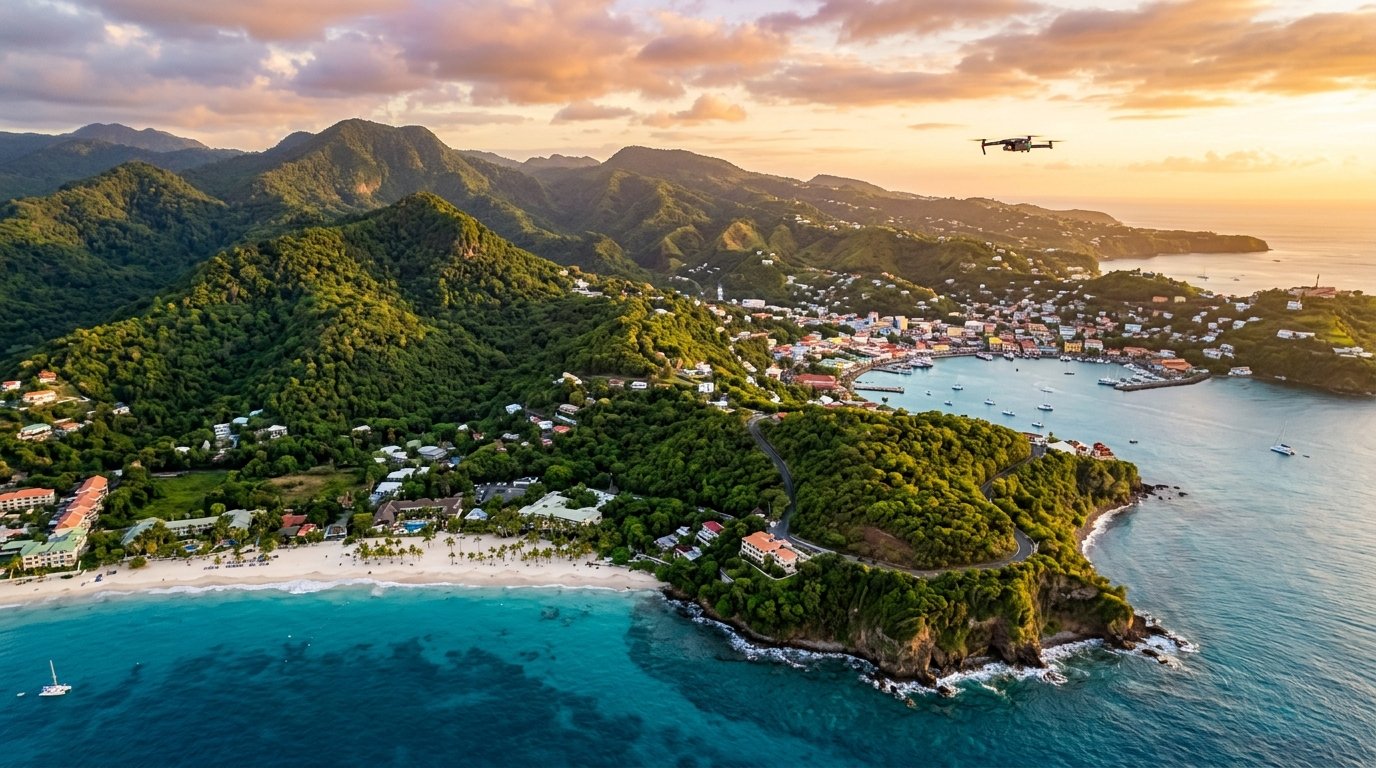
Recreational drones are allowed in Grenada, but foreign tourists are subject to strict registration rules and must obtain a flight permit from the Royal Grenada Police Force (RGPF) before flying.
2. 🛃 Customs & Importation Rules
- Importation: Tourists can legally bring drones into the country through airport customs for personal and recreational use.
- Declarations: It is highly recommended to declare your drone at customs. Presenting your pre-approved police flight permit upon arrival will help ensure a smooth entry and avoid any risk of temporary confiscation at the border.
- Batteries: Follow standard international airline regulations by packing all spare lithium-ion drone batteries safely in your carry-on luggage, never in checked bags.
3. 📝 Registration & Permit Process for Tourists
- Advance Permit Required: Yes, tourists must request permission prior to arriving. While general aviation rules are set by the Eastern Caribbean Civil Aviation Authority (ECCAA), the Royal Grenada Police Force handles the actual drone permits.
- The Process: You must email the RGPF at cops@rgpf.gd. Include a cover letter, your full name, a copy of your passport, travel dates, drone manufacturer and model, and a list of your intended flight locations.
- Fee and Timeline: Applications typically take 3 to 5 business days to process. Once approved via email, you must visit the Police Headquarters in St. George’s upon arrival to pay a nominal fee of $10 XCD (about $4 USD) and collect your stamped permit.
- Pre-Flight Coordination: As an additional safety step, approved operators must call the Maurice Bishop International Airport (MBIA) Air Traffic Control at least 30 minutes before every individual flight to receive final airspace clearance.
4. 🚫 Key Flight Rules & Restrictions
- Maximum Altitude: You may fly up to a maximum altitude of 300 feet (91 meters) Above Ground Level.
- Visual Line of Sight: You must maintain unaided, direct visual contact with your drone at all times. Night flying is prohibited without special exemption.
- Weight Classes: Grenada does not currently offer legal loopholes for sub-250g drones (like the DJI Mini series). All drones, regardless of weight, require an RGPF permit.
- Safety Distances: Your drone must be equipped with a functional “Return to Home” fail-safe feature. You must maintain a distance of at least 50 feet from obstacles, buildings, and people, and 100 feet laterally from vehicles or crowds.
- No-Fly Zones: Do not fly within 3 miles of Maurice Bishop International Airport. Seaports, military bases, prisons, and official government residences are completely off-limits.
5. 🔗 Official Sources & Links
For the most current information, or to reach out to the authorities to begin your permit application, you can use the links below:
- Royal Grenada Police Force (RGPF) Official Facebook
- Eastern Caribbean Civil Aviation Authority (ECCAA)
Disclaimer: Aviation laws and customs policies change frequently. Travelers should always double-check official government sources and contact local authorities directly shortly before their trip.
Adrenaline junkie with a passion for exploring off-the-beaten-path destinations and finding unique ways to stay active. Expect stunning scenery, challenging workouts, awesome travel tips and a whole lot of fun. Let’s get sweaty and explore the world together!